Astana, 18 November. The International Monetary Fund mission that worked in Kazakhstan from 4 to 17 November projects inflation at 9.6% at the end of 2026 and 8.4% at the end of 2027, and considers an increase in the base rate justified.
By the mission’s assessment, the country will reach the National Bank’s 5% target only by 2029. The mission set out its findings in a concluding statement, whose publication the National Bank of Kazakhstan announced on 18 November.
As the National Bank summarised it, the mission noted that tighter monetary policy and prudential measures and more efficient liquidity management helped bring inflation down, as did a stronger tenge and slower growth in food and non-food prices. Annual inflation fell to 9.2% in October. The IMF expects it to keep falling, but gradually, and the mission stressed the need for even tighter monetary policy.
The statement’s forecast figures and its conclusion on the rate were cited by the QazTrading channel: the statement says that raising the base rate appears justified. As the channel summarised it, the mission considers further easing premature and believes tight policy should be kept until inflation sustainably approaches the target. In its decision of 23 October the National Bank cut the rate to 15.75% a year, and since June, as QazTrading recalls, it has lowered it from 18%. The next rate decision is due on 4 December.
The mission sees the sources of the demand that props up prices in the budget. As QazTrading summarised it, rising state spending, transfers from the National Fund and quasi-fiscal activity by state companies are fuelling demand, so the fund advises tightening fiscal policy, introducing mandatory limits on all National Fund transfers and gradually abolishing inefficient tax breaks. The mission calls utility tariff increases, which will resume in 2027, a risk to inflation and opposes indexing them mechanically to past inflation. In its own notice the National Bank lists among domestic risks budget revenue shortfalls, expanding quasi-fiscal activity, tariff pressure and elevated inflation expectations.
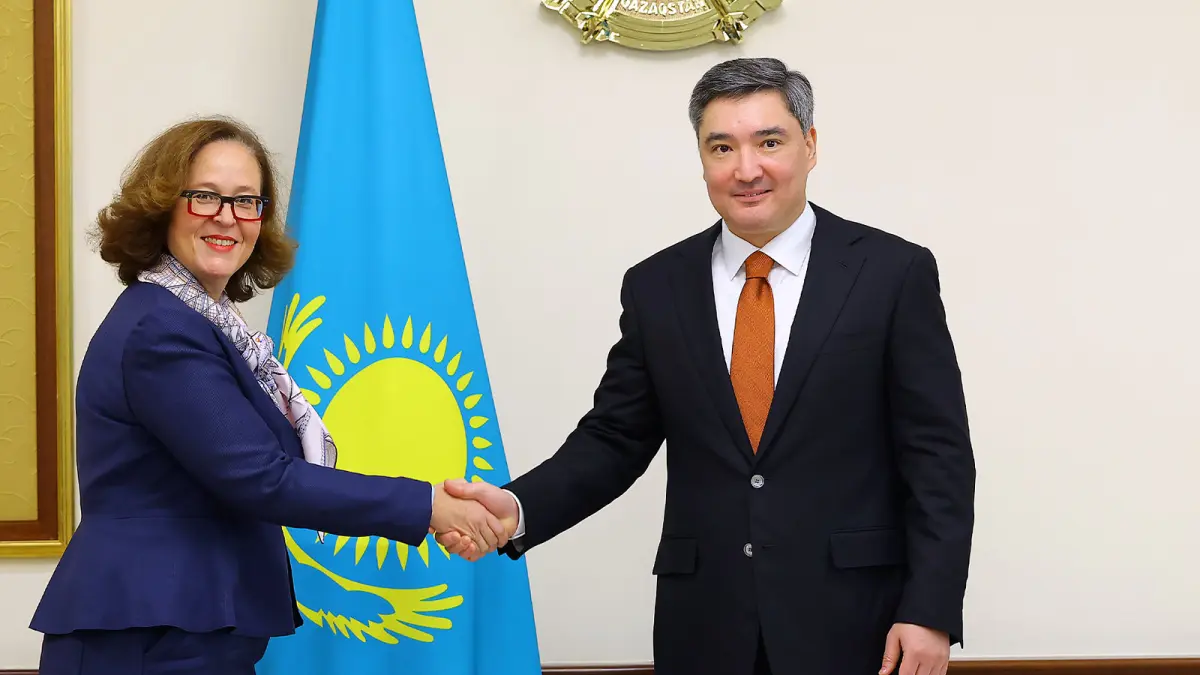
Real GDP growth, by the mission’s forecast, will be about 4.6% in 2026 and accelerate to 4.8% in 2027. In its report on the Prime Minister’s meeting with mission chief Amina Laresh, at which the results of the mission were reviewed, the government gives a different figure — GDP growth of 4.5% in the first ten months of 2026: these are data for part of the year, not an annual forecast. At that meeting Laresh gave a positive assessment of the macroeconomic situation in Kazakhstan, and Olzhas Bektenov said he hoped the mission’s recommendations would become a useful guide for further improving the country’s macroeconomic and macroprudential policy.
What it means: The IMF mission is suggesting that the National Bank move in the opposite direction from its recent decisions: since June the rate has been cut from 18% to 15.75%, while the fund considers raising it appropriate. The mission’s year-end forecast of 9.6% is above October’s 9.2%, meaning the fund does not expect inflation to keep falling at its previous pace.
Who benefits: Neither the mission nor the National Bank names winners or losers. The rate decision will be taken by the National Bank on 4 December, and for it an increase remains a recommendation, not an obligation. The IMF names budget spending, National Fund transfers and quasi-fiscal activity by state companies as sources of the demand that props up prices, so the fund’s advice concerns not only the National Bank but also the government.
Background: Once a year the IMF sends a mission to each member country for consultations under Article IV of the fund’s Articles of Agreement: experts study the economy and meet officials. The previous mission worked in Kazakhstan from 3 to 12 June. As the National Bank reported at the time, it noted the fall in inflation from 12.9% in September 2025 to 10.4% in May 2026 and stressed the importance of restrictive monetary policy until the inflation target is reached.