Tehran, 19 October. Iran's Islamic Revolutionary Guard Corps promised to unveil "new targets" and "new weapons", drawing attention to major undersea internet cables running along the bed of the Strait of Hormuz.
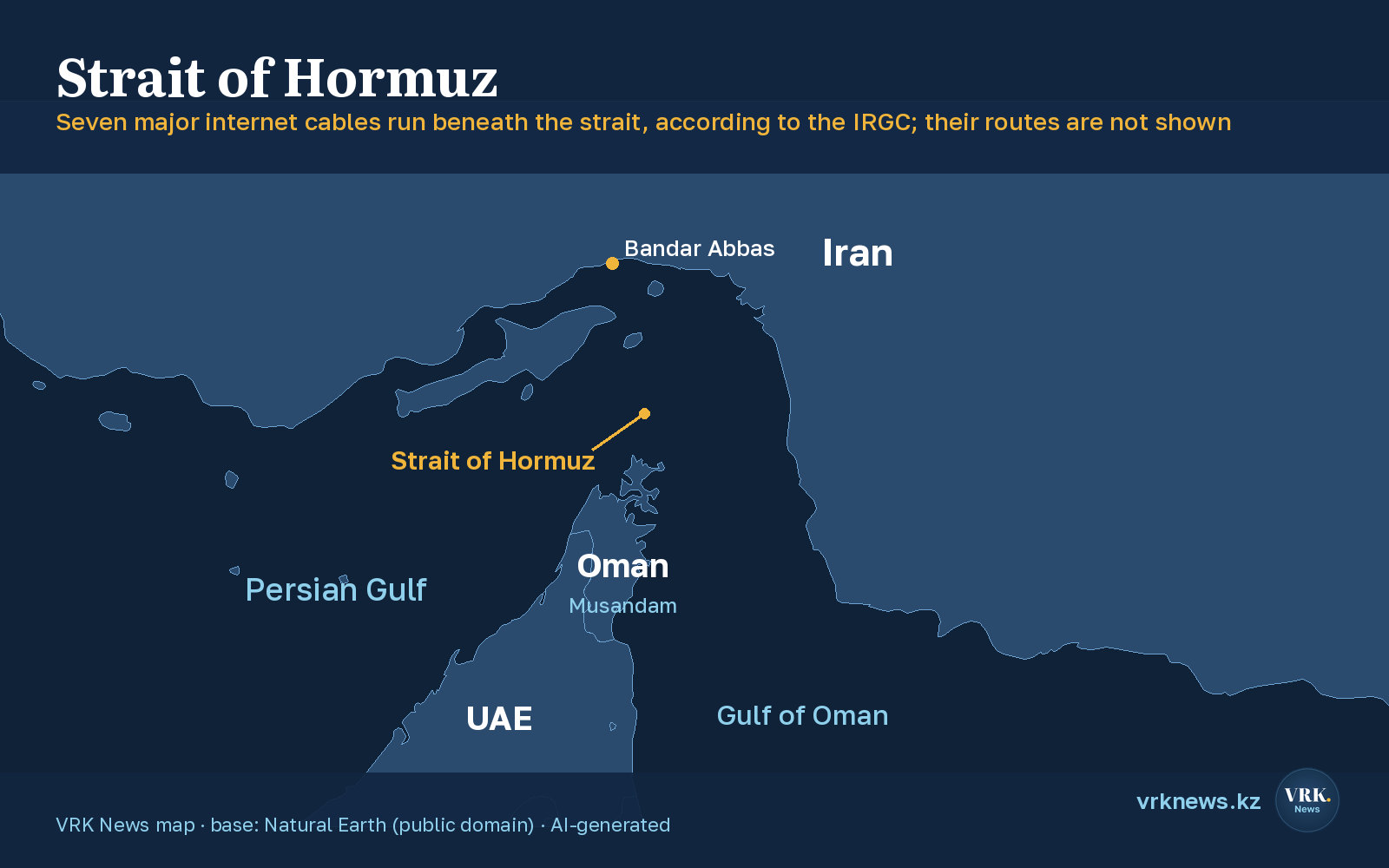
"Seven major internet cables run beneath the Strait of Hormuz," IRGC spokesman Hossein Mohebbi said, claiming that all internet and commercial data traffic passed through them. "We just want them to know that new targets will be unveiled. New weapons will be unveiled," he added. Mohebbi also vowed to drive what he called the remnants of US power out of the region. He spoke at a ceremony at Tehran's Sacred Defense Museum, as reported by the Iranian state broadcaster.
It was not the first threat to the cables. In early October, Mohsen Rezaei, secretary of Iran's Supreme National Security Council, said that in the event of a new war Tehran could target undersea internet cables, data centres and artificial intelligence facilities linked to the United States: "We have not yet included these assets among our targets."
Undersea cables carry most international internet traffic, and damage to even a few of them can slow communications across entire regions. The threat to the cables adds to the threat to shipping: the IRGC has already reported tankers hitting mines in the strait, and Iran keeps on the table an offer to reopen Hormuz within days if the United States accepts its conditions.
Background: On 28 February the United States and Israel launched a war against Iran; Tehran responded with missile and drone strikes and effectively closed the Strait of Hormuz, Washington imposed a naval blockade on Iranian ports, and in June the two sides signed a memorandum on freedom of navigation in the strait.
List of sources used: Anadolu, Anadolu, CGTN
Artificial intelligence was used in preparing this material.