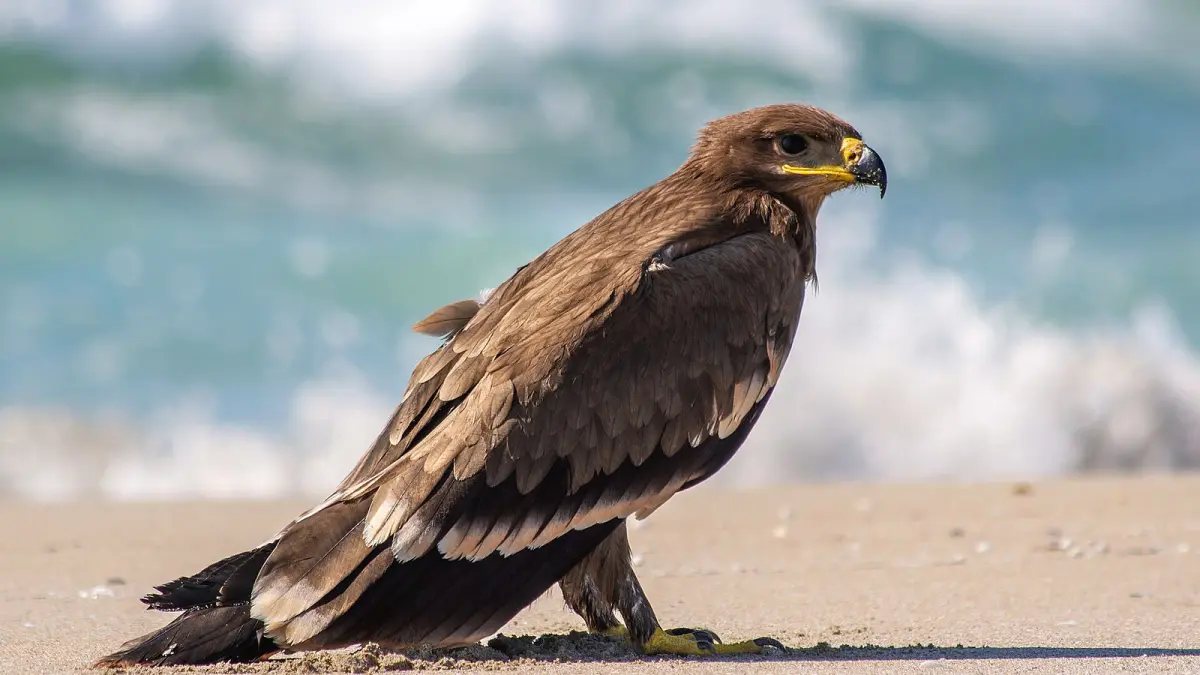
Aktau, 24 October. An autumn field camp has ended in Mangystau region, where ornithologists, zoologists and volunteers from Kazakhstan, Russia, Germany, England and Italy spent almost a month collecting data on bird migration, Lada.kz reports.
The camp, called "Birds and Animals of Mangystau Region", ran from 28 September to 24 October in two 14-day shifts: the first on the Ustyurt plateau, the second in the Kenderli area. It was organised by the Karaganda-based EcoMuseum together with foreign partners. Participants identified bird species, counted them with binoculars and spotting scopes, photographed and filmed them and entered their observations into a dedicated app. Local specialists also took part: Alina Sharipova, a vet at the ZOO LEKAR clinic, and Meruyert Lytkina, head of the Umit Mangistau public foundation, both of whom rescue birds of prey and Red Book species.
In autumn, the routes of many birds pass through Mangystau, including rare raptors: the steppe eagle, imperial eagle, golden eagle, saker falcon, honey buzzard and greater spotted eagle. According to Sharipova, changes in migration can only be assessed by comparing data with previous years: the dates birds are recorded, their numbers, the weather and the state of their habitats.
Specialists name habitat disturbance, disturbance of animals at breeding and resting sites, pollution, traffic and the expansion of economic activity among the risks to desert ecosystems. They single out the Hyrasia One project, a complex of wind and solar power and green hydrogen production in Mangystau region: roads, power lines and other facilities could affect animals' habitats and movements, and the participants believe the risks should be assessed on the basis of studies of specific sites.
What it means: While large energy projects are being prepared in Mangystau, scientists are gathering baseline data on where and when migrating birds pass through and rest there.
Who benefits: Conservation groups and vets get information for rescuing rare birds. Energy project developers get a basis for environmental assessment of sites. According to the participants, it is too early to draw conclusions about shifts in migration.
Background: Hyrasia One is a project to produce green hydrogen using wind and solar power in Mangystau region.