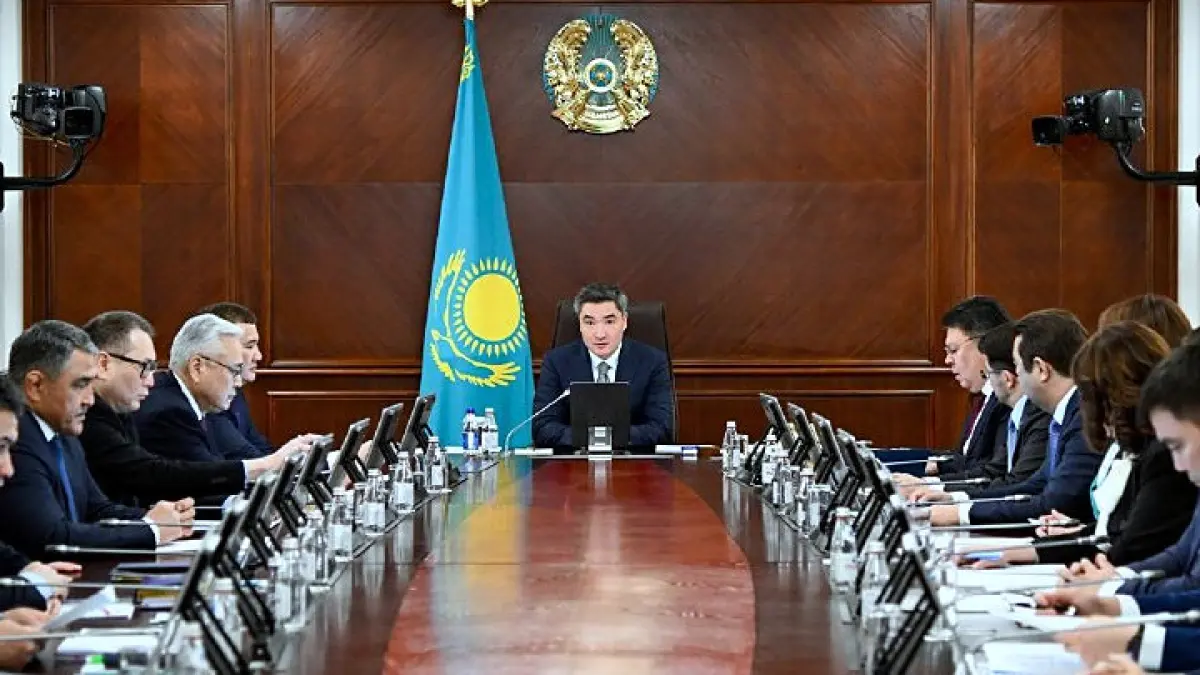
Astana, 29 October. Prime Minister Olzhas Bektenov instructed the ministries of national economy and finance to study international experience within a month and propose approaches to taxing especially wealthy citizens, the government said; the instruction was given at a cabinet meeting on implementing the President's address.
"A separate issue is the taxation of owners of large fortunes. The ministries of national economy and finance are to study international experience within a month and propose approaches to taxing especially wealthy citizens," Bektenov said. The Ministry of National Economy was also told to finalise a package of targeted amendments to the new Tax Code and agree it promptly with other state bodies.
The meeting did not say who would count as especially wealthy, what the rate would be or what would be taxed – income, property or capital. The Ministry of Finance was also told to raise tax collection in the regions, shrink the shadow economy and complete the digitalisation of tax and customs administration, including with artificial intelligence tools. By 20 November the Ministry of National Economy and the National Bank are to draft measures to better coordinate fiscal and monetary policy in order to bring inflation down.
Separately, the authorities plan to use data from banks' information systems to assess citizens' wealth. From 1 January 2027 social assistance will be granted on the basis of need; as Bektenov told a session of the Kurultai, wealthy people should not receive state assistance.
What it means: The President's proposal to discuss a higher rate on large fortunes has become an instruction with a deadline: in a month the government should have concrete options. What the tax will look like and whom it will affect is not yet known.
Who benefits: The budget – if a new tax brings revenue on top of the rates already raised in 2026. Citizens with ordinary incomes – the government intends the burden to fall on owners of large fortunes, not on everyone.
Background: The new Tax Code has been in force since 1 January 2026. It raised value added tax from 12% to 16% and introduced a progressive personal income tax scale: 10% for everyone and 15% on annual income above 8,500 monthly calculation indices (about $80,000). In his address on 28 October the President said it was time to discuss a higher rate for owners of large fortunes, stressing that nobody intends to restrict legal assets.
We have also reported that a tax on large fortunes is the next step after the progressive income tax.


