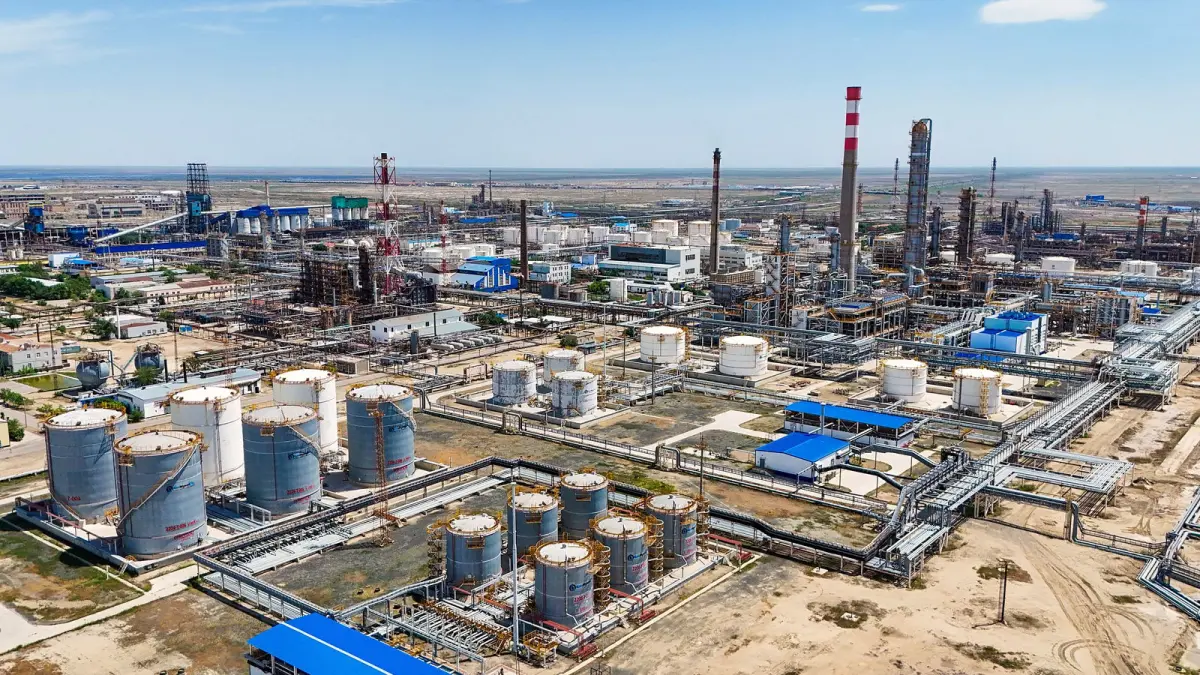
Atyrau, 19 November. The Atyrau oil refinery will raise its annual feedstock throughput from 5.5 million to 6.7 million tonnes, KazMunayGas said.
The increase will come from switching units to a three-year non-stop cycle and re-equipping the light products loading rack. KMG chief executive Askhat Khassenov reviewed the plant’s performance on a trip to Atyrau Region on 18 November.
In the ten months of 2026 the refinery processed about 4.7 million tonnes of oil and produced over 1.6 million tonnes of motor gasoline, more than 1.7 million tonnes of diesel fuel and about 190,000 tonnes of jet fuel. The light products yield exceeded 80.5% and refining depth 91%; the plant produces an average of 6,600 tonnes of diesel fuel a day.
The refinery is running 17 strategic and investment projects. The programme for moving to a longer turnaround interval includes 47 measures, 36% of which have been completed. To make the power supply more reliable, external grids are being rebuilt, a power line and a back-up gas turbine plant are being built, and the rail infrastructure for receiving feedstock is being expanded.
By the end of the year 71 of the 75 tanks will be fitted with floating roofs: according to KMG, this cuts hydrocarbon emissions from each tank by 90%. Since October, data from the plant’s environmental monitoring posts have been published on its website and sent to Kazhydromet every 20 minutes. Khassenov ordered strict compliance with the investment project deadlines.
What it means: A three-year non-stop cycle means stopping the plant for repairs less often and therefore processing more oil a year with the same capacity. The Atyrau refinery already produces more diesel fuel than gasoline.
Who benefits: The domestic fuel market gets more locally made oil products, and KMG gets more use out of its own refinery. Atyrau residents are promised lower emissions and open air monitoring data.
Background: The Atyrau refinery is one of Kazakhstan’s three large refineries, along with Pavlodar and Shymkent, and belongs to the KMG group. In October the resettlement of residents of houses near the plant from its sanitary zone was discussed.



