The government spent Tuesday on communications, and the talk was down to earth: not about the digital future in general, but about the last hundred metres from the trunk line to the house, about frequencies, cables and which messenger officials should use. And in the middle of the meeting came a decree that left the cabinet without its minister of industry and construction.
Midday in figures
- 1.3 trillion tenge
investment in communications over three years - 92%
villages with mobile internet by the end of 2027 - 7 million
registered Aitu users, 350,000 of them daily - 4
satellite operators with stations in Kazakhstan from 2027 - 1.3 tonnes
drugs seized by the KNB in August–October
According to the Government of Kazakhstan and the National Security Committee
- 1.3 trillion tenge
From the ministry to the railway
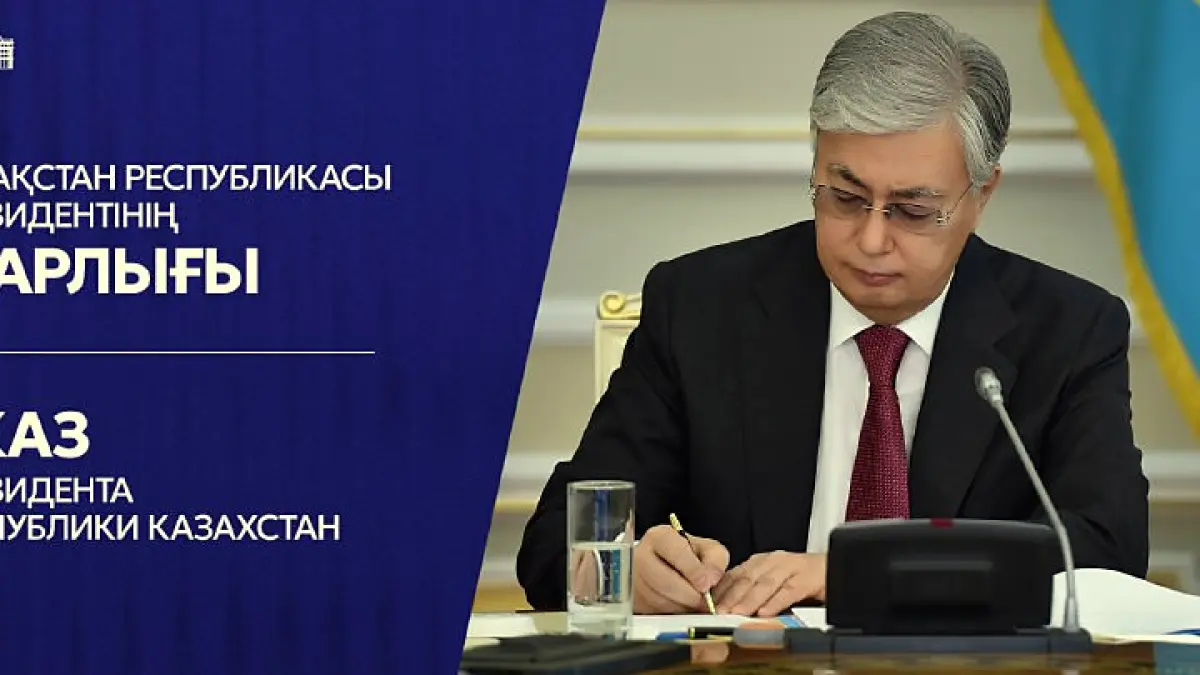
Akorda published the decree relieving Yersaiyn Nagaspayev of his post as Minister of Industry and Construction at 11:46. The announcement fitted into one sentence: no reason, no successor, and no word on who will run the ministry in the meantime. Forty minutes later the Samruk-Kazyna fund named his new job: its management board appointed Nagaspayev chairman of Kazakhstan Temir Zholy. The company, where he was a managing director in 2021–2025, had been without its previous head Yelzhas Otynshiyev since the KNB detained him on 11 November. At 12:31 a second personnel decision followed: Igor Lepekha was relieved of his post as Deputy Minister of Internal Affairs. Only the day before, Nagaspayev had stood before deputies at a Government Hour in the Kurultai and reported that manufacturing had grown by 9.3% in ten months, faster than at any time in the past 25 years.
The deputies were asking about something else that day. Deputy Chair of the Kurultai Daniya Yespayeva pointed out that Kazakh goods made up only 21.3% of oil and gas sector procurement in the first half of the year, and the Kurultai recommended that ministries review state support for manufacturers. Akorda does not explain whether there is any link between that debate and the decree. One thing is clear: the ministry on which raw materials for processors, building materials and purchases of domestic goods depend has been left without a head for a while.
Connecting to the doorstep
The government meeting opened with figures that are easy to be proud of. Deputy Prime Minister and Minister of Artificial Intelligence and Digital Development Zhaslan Madiyev reported that more than 1.3 trillion tenge will be invested in telecommunications over three years. The average mobile internet speed has risen from 73.6 to 93.4 Mbit/s in two years, and the country will abandon 3G networks by the end of 2027. The average mobile tariff, he said, is about $10 a month against a world average of $27, and seventh place among 55 countries for cheapness allows the government to speak of affordability.
Prime Minister Olzhas Bektenov listened to these figures with a practical ear. Under the Accessible Internet national project, fibre will reach 61% of villages by the end of the year, but in many of them the trunk line is there while the connections to homes are not. The project must result in consumers actually being connected, not just in lines being brought to settlements, Bektenov said, giving the ministry until the end of the year for a site-by-site schedule for connecting villages and a month for a new map of "white spots". And so the kilometres of laid cable gave way to a simple question: is the router on in people's homes.
Where fibre will not go, the bet is on space. In 2027 Amazon LEO and China's Shanghai Spacecom will join OneWeb and Starlink, and according to Madiyev Kazakhstan will become the first country in Central Asia where all four operators have ground stations. Kazakhtelecom and Amazon LEO promise satellite internet for more than 120,000 households and are already building stations in Akkol and Alatau.
What the operators want
The operators came to the meeting not only with reports but with a list of conditions. Beeline's head Jabbor Kayumov pointed out that with a 41% market share his company holds only 9% of the frequencies, and asked for spectrum to be redistributed for 5G, for a "single window" for construction and for tax deductions. Kazakhtelecom's chairman Bagdat Musin proposed giving communications the status of a basic service on a par with water and heating and obliging developers to run fibre to every flat. He also asked for a tougher fine for cutting cables: at present it does not exceed 519,000 tenge, although networks were cut 459 times in ten months alone.
Bektenov replied with instructions due by spring: to work out approaches to equal competition among operators by the end of the first quarter of 2027, and within two months to simplify the installation of base stations and approve a schedule for commissioning data centres. The last instruction also covers the 100 MW AKASHI campus in Astana, whose first building is 81% complete and is due to open at the end of 2027. The prime minister warned that completed data centres must not stand idle for lack of power or customers.
All of this rests on a fresh presidential decree. The day before, the Head of State instructed the government to approve a Comprehensive Plan for a people's digital economy by 1 December, and rural connectivity is the foundation without which digital employment remains a mere phrase.
A messenger by order
Bektenov made a separate demand of civil servants. Official information must be sent only through this national messenger, he said of Aitu. According to Madiyev, the messenger has 7 million registered users, but only about 350,000, or one in twenty, use it every day. By the end of the year Aitu is promised 75–80% of the eGov portal's services, compared with 55 now. The order named a goal but neither deadlines nor liability for correspondence in other messengers.
Beyond communications
The Ministry of Agriculture outlined plans to add capacity for more than 200,000 tonnes of poultry meat a year. Self-sufficiency in chicken has risen from 58% to 78% in five years, but exports for nine months came to 14,200 tonnes against 32,000 tonnes for the whole of last year. The KNB reported on three months of work against the drug trade: 19 supply channels, five clandestine laboratories and more than 1.3 tonnes seized, 525 kg of it a synthetic opioid. There was personnel news from the ombudsman too: Artur Lastayev appointed Anvar Sabirov, his deputy there for almost three years, head of the National Centre for Human Rights. Vienna hosted the 13th meeting of the Kazakh-Austrian intergovernmental commission, where, according to the Ministry of Transport, the main topic was the Trans-Caspian route.
Neighbours and sport
Uzbekistan, meanwhile, is celebrating a ratings success. S&P Global Ratings has raised its sovereign rating to BB+, the highest in the country's history, Spot reports. Kazakhstan, whose BBB− rating S&P affirmed in February, remains one notch higher, but the gap between the neighbours has narrowed to the minimum.
Kazakh boxers are also heading to Tashkent: the National Olympic Committee has approved 11 of them for the World Boxing Cup final, to be held from 28 November to 3 December. In Almaty the women's handball team opened the home Asian Championship with a 37:18 win over Australia and is competing for one of four places at the 2027 World Championship.
What lies ahead
This evening, at 22:00 Astana time, Semey play Athletic in the first leg of the UEFA Futsal Champions League round of 16. By 1 December the government must approve the Comprehensive Plan for a people's digital economy, and within a month update the map of communication "white spots". The main personnel question of the day remains open: who will head the Ministry of Industry and Construction.



