On Monday the world rewrote several rules of the game at once. The biggest maker of chips for artificial intelligence got back the chief it had lost eleven days earlier, and that same evening Washington blacklisted the company at the centre of the scandal. The European Commission proposed a 22nd package of sanctions against Russia, near the Strait of Hormuz tankers again struck mines, according to Iran, and the war between Russia and Ukraine reached the coast of Libya.
The day in figures
- 60
Russian banks the EU proposes to cut off from SWIFT - 70
plus shadow-fleet vessels on the new EU list - 7
companies, including Megaspeed, on the US export control list - 3
tankers that hit mines in the Strait of Hormuz, according to the IRGC - 31%
rise in Nvidia shares on the day of Huang’s return
According to the European Commission, the US Bureau of Industry and Security, the IRGC and TASS
- 60
Huang’s return and the blacklist
Nvidia’s board reinstated Jensen Huang as president and chief executive, and the chipmaker’s shares, according to trading data, rose by more than 31%. The return did not happen without the White House. According to Semafor, as relayed by RBC, US President Donald Trump joined the board meeting and urged it to bring Huang back, while White House communications director Steven Cheung said: “We must protect our geniuses.”
The scandal is not over, though. A few hours after Huang’s return, the US Commerce Department’s Bureau of Industry and Security added Singapore-based Megaspeed International and six other companies from Malaysia, Singapore and Thailand to its export control list. According to media reports, Megaspeed employed Alice Huang, the woman suspected of spying for China with whom the Nvidia chief had a relationship. Advanced US technology, including Nvidia graphics processors, can now be sold to these companies only under an export licence. Nvidia itself, according to TASS, will continue its internal investigation. The story is not a foreign one for Kazakhstan: last week President Kassym-Jomart Tokayev, as Tengrinews recalled, called Huang “a true legend” and thanked him for his visit to Astana.
The twenty-second package
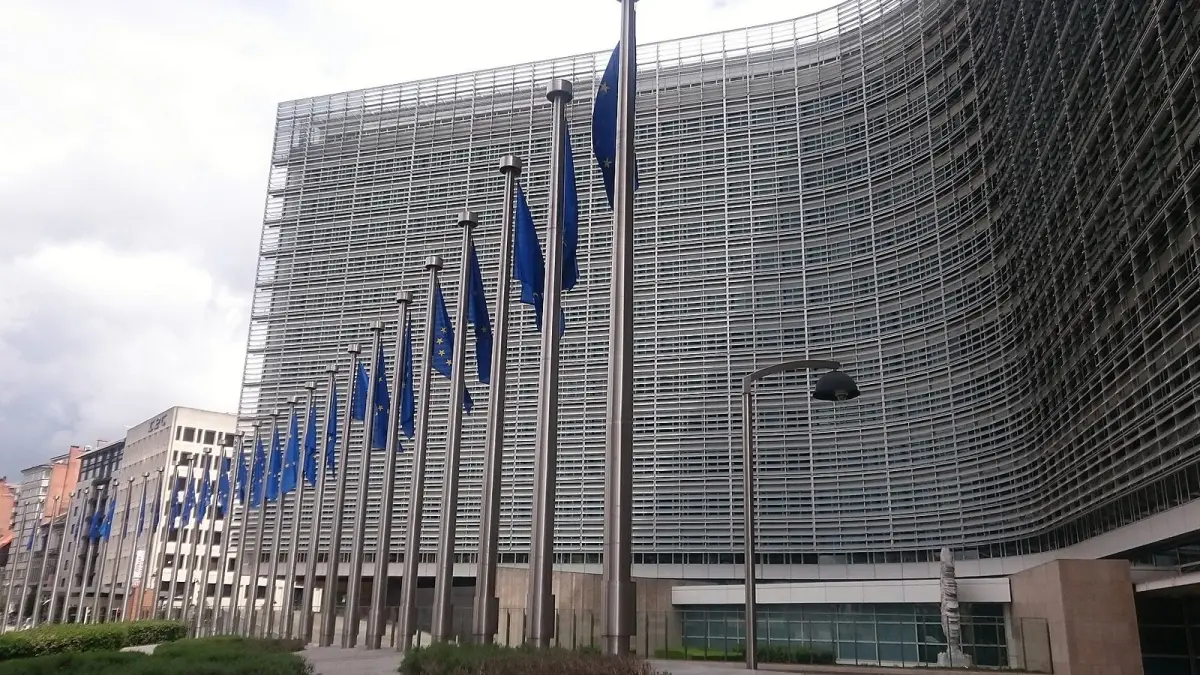
European Commission President Ursula von der Leyen presented the 22nd package of sanctions against Russia in Strasbourg. The transaction ban is to be extended to some 60 more Russian banks, all of which will be removed from SWIFT. Special attention goes to crypto and payment networks, and, in von der Leyen’s words, not only Russian ones but also those in third countries that help to evade sanctions; for this work the EU has set up a Crypto Sanctions Task Force. The energy services ban will be widened so that European companies cannot build, operate or repair Russian energy infrastructure, including refineries, and for the first time it will cover electricity. More than 70 vessels will be added to the shadow-fleet list, and tankers insured in Russia are to be banned.
The package also goes beyond the economy. Russian ex-combatants would be barred from entering the EU, and Europeans would be banned from holding posts in the governing bodies of Russian companies. At sports events in the EU, Russian teams and athletes would not be able to compete under the Russian flag, and the display of official Russian symbols would be banned. For the package to take effect, all EU countries must approve it. The statement does not specify which third countries are meant in the crypto section; Kazakhstan is not named in it.
Hormuz and Libya
The mine war in the Strait of Hormuz continues. Iran’s Islamic Revolutionary Guard Corps, as Al Jazeera reported, said three oil tankers had “suffered a severe explosion and fire after hitting naval mines”, and Iran’s navy warned vessels against taking “unauthorised routes”. Qatar’s Prime Minister Sheikh Mohammed bin Abdulrahman Al Thani told Al Jazeera that the Middle East cannot withstand another escalation between the US and Iran. For Kazakhstan the strait is above all about the price of oil: tension in the Gulf also affects the price of CPC Blend, the grade the country ships through Novorossiysk.
The war between Russia and Ukraine, meanwhile, has spread far beyond the front. Ukrainian President Volodymyr Zelensky confirmed the destruction of the Russian corvette Merkuriy off the Libyan coast. Musa al-Koni, deputy chairman of Libya’s Presidential Council, described the strike on the port of Benghazi, in which, he said, civilians were hurt, as tantamount to a declaration of war. Libya, according to TASS, intends to take the case to the UN International Court of Justice. German Chancellor Friedrich Merz said Europe is ready for talks with Russia, while NATO Secretary General Mark Rutte called demands for the alliance to return to its 1997 borders unacceptable.
In Russia itself, Monday evening was marked by an arrest. Murmansk Region Governor Andrei Chibis was detained in Moscow in a fraud case, Russia’s Interior Ministry said; according to the ministry, the case concerns the theft of 39 million roubles and the embezzlement of more than 1 billion roubles in a road reconstruction project.
The court and artificial intelligence
The United Kingdom imposed sanctions on Myanmar’s leader Min Aung Hlaing and military figures after the 19 November ruling of the UN International Court of Justice, which found that Myanmar committed genocide against the Rohingya. UN Secretary-General António Guterres called for a global artificial intelligence safety framework to be created within a year.
What lies ahead
EU countries will begin discussing the Commission’s proposals. The OPEC+ ministerial meeting on 29 November will set production guidelines for 2027. The G20 summit will meet in Florida on 14 December, and Russia, according to the Russian Foreign Ministry’s ambassador-at-large, will be represented there, although the delegation has not yet been decided.



