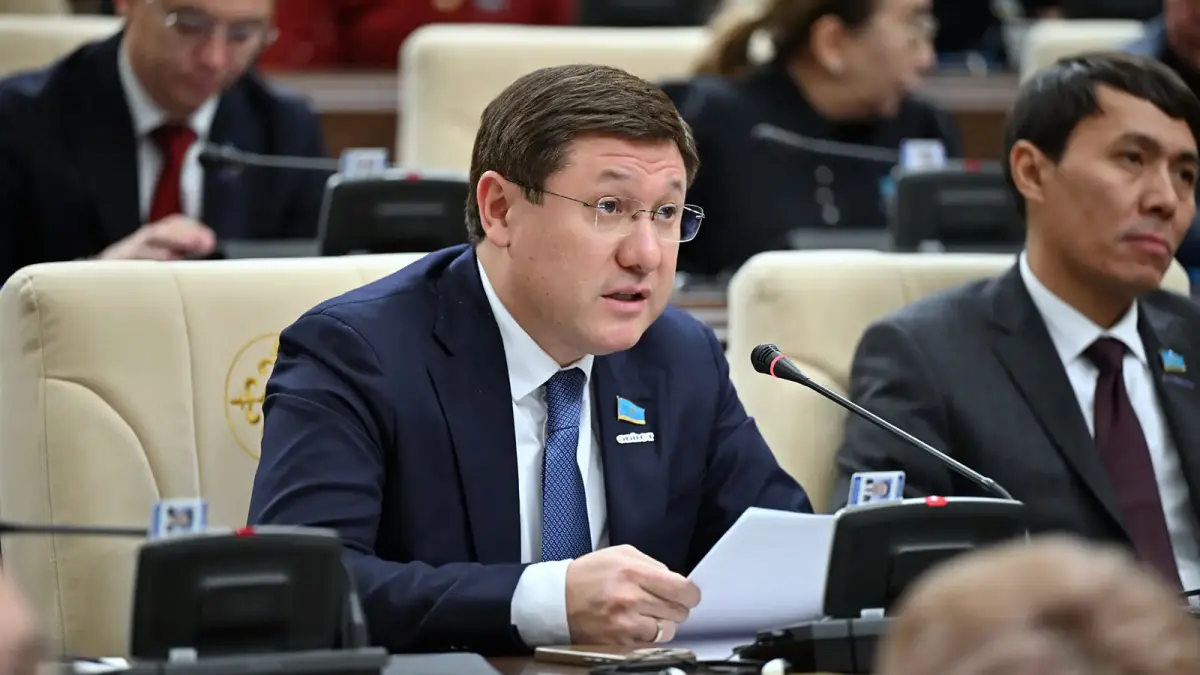
Astana, 24 November, . At its sitting on 25 November the Kurultai will consider at first reading amendments to the Code on Public Health and the Healthcare System.
The bill widens the circle of living organ donors among relatives, lets patients see the digital trail of their medical records and introduces the concept of medical tourism for the first time, deputy Arman Dzhansengirov told Tengri Health.
Under Article 210 of the code, a living donor of an organ or tissue can currently be a legally capable person over 18 who is genetically related to the recipient and/or tissue-compatible with them. The bill proposes replacing the principle of genetic relationship with that of kinship. Donors could then include not only full siblings but also first and second cousins, uncles or aunts, if they are tissue-compatible. Kinship and consent will still be checked by ethics commissions attached to regional health departments, but donors will be interviewed individually, including with a psychologist, to make sure they are not under pressure and have not been promised money. The bill does not cover donation after death.
A separate amendment would allow a patient’s full siblings under 18 to donate haematopoietic stem cells, the cells from which new blood cells are formed. Such transplants are needed, in particular, for leukaemia. The deputy said this would be possible from the age of 12, on medical grounds and only with the consent of parents or legal guardians; the child will be able to refuse before the procedure begins.
The second part of the amendments concerns digital data. Patients will be able to see which medical worker opened their record and why, and CT, MRI and X-ray images will go into a single Health Ministry database. Patients will not be able to correct a record themselves: they will have to apply to the medical organisation. The code will state that medical confidentiality also applies in digital form; the bill does not introduce separate liability for leaks of medical data.
A doctor will be required to inform the spouse, parents or children of a patient who cannot speak for themselves, for example one in a coma, about their condition, diagnosis and treatment plan. Local authorities will be allowed to pay for or subsidise travel for patients who need nuclear medicine, radiotherapy or proton therapy in Astana or Almaty. Expert review of medicines and of medical devices will be separated. The mechanism for a one-off import of a drug not registered in Kazakhstan will be tied to cancer, orphan and certain systemic diseases.
Medical tourism is aimed mainly at foreigners. According to Dzhansengirov, more than 2,000 foreigners come to Kazakhstan for treatment every year, while more than 3,000 Kazakh citizens combine trips abroad with treatment. Sales of medicines through online pharmacies and marketplaces, and bloggers’ advice on drugs, are being discussed separately and are not part of this bill.
What it means: The bill changes three things almost every family runs into: who can give a kidney or part of a liver to a relative, who can see a medical record, and what to do when a needed drug is not available in the country. First reading is only the start: the document will go through three readings and may be changed along the way.
Who benefits: Patients who need a transplant from a living donor but have no suitable full siblings: the circle of possible donors widens. Clinics and tour operators, which the law recognises for the first time as participants in medical tourism.
Background: The working group on the bill started work on 30 September and has held about 18 meetings. The deputy expects the law to be considered before the end of 2026. At the same sitting on 25 November the Kurultai will also consider at first reading amendments on energy saving and the ratification of the UN Convention against Cybercrime, the parliament’s press service said.



