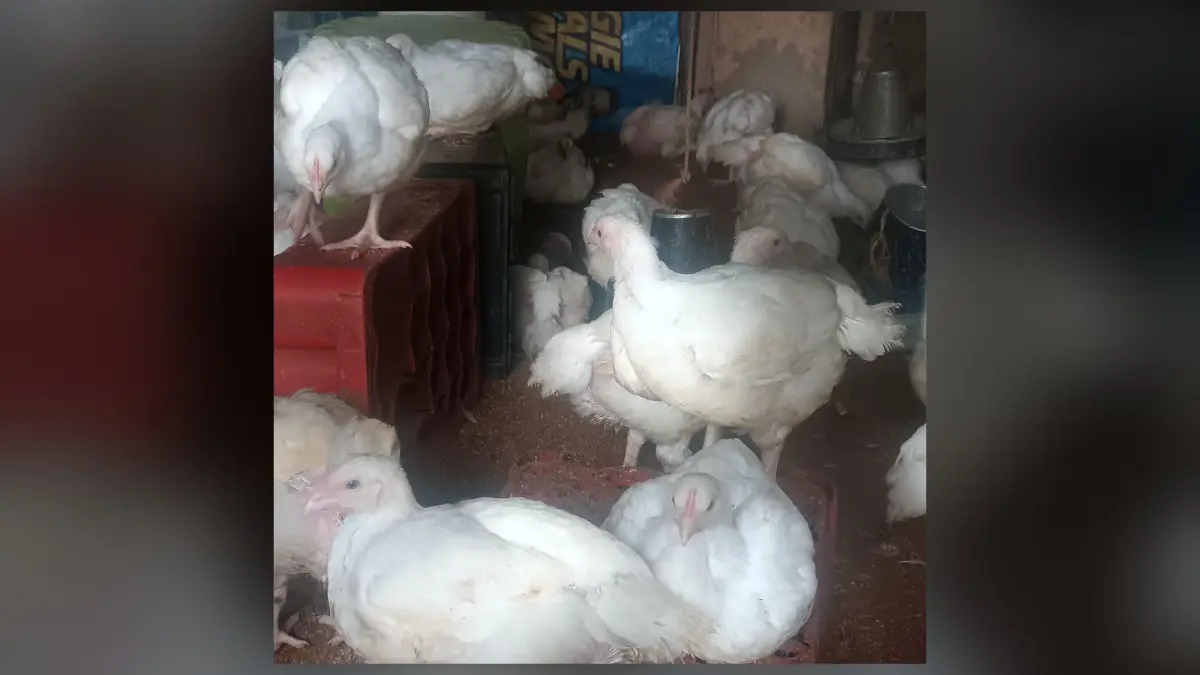
Astana, 24 November. New investment projects will add capacity for more than 200,000 tonnes of poultry meat a year, while Kazakhstan's self-sufficiency in poultry has risen from 58% to 78% over five years, the Ministry of Agriculture said.
The country now has 70 poultry farms. Of these, 37 specialise in eggs, with a combined capacity of 4.5 billion eggs a year, and Kazakhstan already fully supplies its domestic egg market. Another 33 enterprises produce poultry meat, with a combined capacity of 510,000 tonnes a year.
Most of the growth will come from two projects. According to the ministry, Aitas JSC and Alel Agro JSC will provide about 170,000 tonnes of the promised 200,000 tonnes of new capacity. If the plans are carried out, poultry meat capacity will rise by about 40% on the current 510,000 tonnes.
Exports are a less even story. In 2025 Kazakhstan exported 32,000 tonnes of poultry meat, and in the first nine months of 2026 just 14,200 tonnes, less than half of last year's volume. Supplies go to the countries of the Eurasian Economic Union, Azerbaijan, Mongolia and Qatar. A protocol on exporting poultry meat to China has been signed, and Kazakh producers are now seeking to be added to China's register of exporters.
The country is fully self-sufficient in eggs and three-quarters self-sufficient in chicken, so here the question of which came first has been settled in favour of the egg. The industry relies on cheap money: investment loans are issued at 2.5% a year for up to ten years, and 28 billion tenge in subsidies has been allocated to meat poultry farming in 2026. About 1 billion tenge of that goes to making day-old chicks and breeding eggs cheaper. Producers can buy feed at a fixed price from a reserve fund of 201,000 tonnes of feed grain.
What it means: Kazakhstan still imports about a fifth of the chicken it eats and hopes to close the gap with two large projects. Exports, meanwhile, are shrinking, and their growth depends on access to the Chinese market.
Who benefits: Poultry farms that receive loans at 2.5% and subsidies, above all Aitas and Alel Agro. For chicken importers, rising domestic output means a smaller market.
Background: Self-sufficiency shows what share of consumption a country covers with its own production. For eggs it has reached 100%, for poultry meat 78%.



