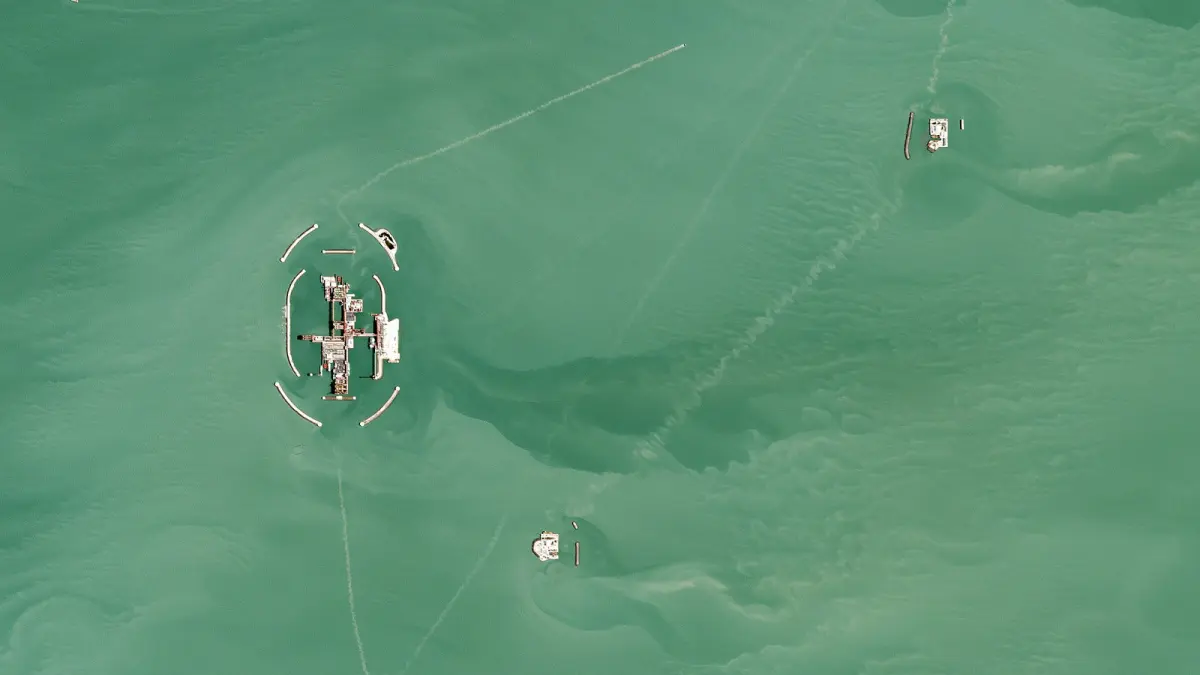
Astana, 22 October. An international arbitration tribunal has rejected about $12bn of Kazakhstan's $20bn claim over disputed costs against the shareholders of the North Caspian project (the Kashagan field), finding that the government filed too late, while the dispute over the remaining roughly $8bn will continue, Bloomberg reported, citing sources.
The government sought to prove that spending of that size by the North Caspian Operating Company (NCOC) consortium in 2011–2015 was unjustified, inflated or linked to corrupt schemes. These are costs which, under the production sharing agreement, investors recover from the oil produced before sharing profit oil with the state: Kazakhstan demanded that they be declared non-recoverable because of opaque and related-party deals. The tribunal ruled that the limitation period for spending in those years had expired, but left claims of about $8bn in force.
The cost dispute is only part of a large, closed proceeding. Kazakhstan's claims against the oil companies — Eni, Shell, ExxonMobil, TotalEnergies and other consortium members — exceed $150bn in total, most of it, about $138bn, for lost profits: production at Kashagan started years late and the state lost revenue. KazMunayGas, Eni, Shell, TotalEnergies and ExxonMobil each hold about 16.8% of the project.
An environmental dispute is running in parallel. In early October Bloomberg reported that ExxonMobil had opposed a proposal by the other consortium members to settle it for about $5.2bn, or 2.3 trillion tenge, and had won TotalEnergies over to its side. In August the agency wrote that ExxonMobil was considering investing $80bn in the western part of Kashagan on condition that all disputes were settled; KazMunayGas chief executive Askhat Khassenov replied at the time: "There are no backroom talks with ExxonMobil." Economist Saparbai Zhubayev said on the Decaf. podcast that Kazakhstan could end up without compensation in the environmental dispute if the companies prove in arbitration that they met all their contractual obligations.
What it means: Kazakhstan lost not on the merits but on timing: more than half of its claims over Kashagan costs were cut on formal grounds because the limitation period had passed. The remaining $8bn and the main lost-profit claims have yet to be decided. The tribunal has not published its ruling: it is known only from Bloomberg's sources.
Who benefits: The ruling favours the consortium's shareholders: the 2011–2015 costs remain recoverable, meaning they are paid for with the project's oil rather than out of their profits. For the state this means a smaller share of profit oil than it hoped to win through arbitration. The sources carry no official comment from the government or the companies.
Background: Kashagan is an offshore field in the Kazakh sector of the Caspian; its oil is exported as part of the CPC Blend grade through the Caspian Pipeline Consortium. The project was originally operated by Eni-led Agip KCO before management passed to NCOC; according to Bloomberg, settling the disputes with Kazakhstan has been linked to possible ExxonMobil investment in the western part of the field.
List of sources used: Bloomberg, Nationalbusiness, Oil and Gas of Kazakhstan, Ulysmedia, Petrocouncil
Artificial intelligence was used in preparing this material.