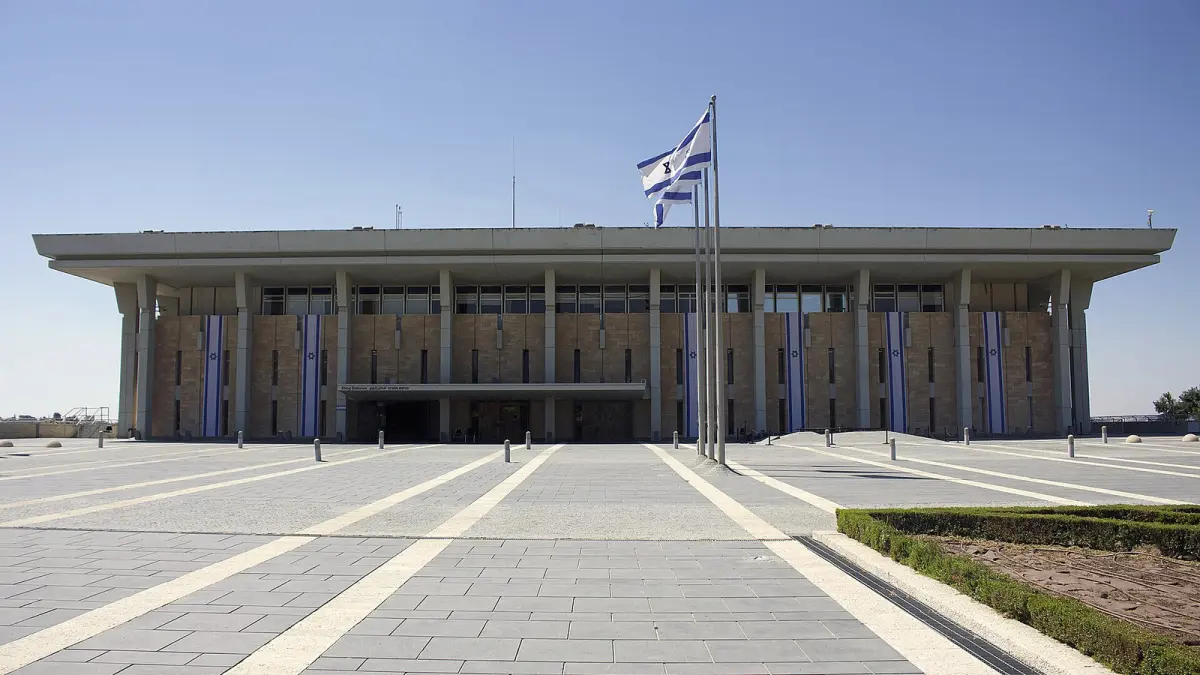
Jerusalem, 27 October. Israel is voting for a new Knesset in the first election since the 7 October 2023 attack and the wars that followed in Gaza, with Lebanon and with Iran, and the first held on schedule rather than early since 1988; final polls by the three main television channels put former chief of staff Gadi Eisenkot's Yashar party narrowly ahead of Prime Minister Benjamin Netanyahu's Likud, Anadolu Agency reported.
About 7.3 million people are eligible to vote, including some 1.2 million Palestinian citizens of Israel. There are 12,018 polling stations, most open from 7:00 to 22:00 local time (10:00 to 01:00 Astana time); election day is a public holiday. Thirty-seven parties and lists are competing for the Knesset's 120 seats. Voters choose parties, not candidates, and the threshold is 3.25% of the vote. No party in Israel's history has ever won a majority on its own, so the prime minister is determined by a coalition of at least 61 votes.
The polls give Yashar 22–23 seats, Likud 19–21 and B'Yachad, the alliance of former prime ministers Naftali Bennett and Yair Lapid, 14–15. Netanyahu's right-wing and religious bloc can count on 50 seats, the opposition bloc on 52–56 and Palestinian-led parties on 14–16. Neither camp has a clear path to 61. After consulting the parties, President Isaac Herzog will ask whoever has the best chance of forming a majority to form a government, which is not necessarily the leader of the largest party.
Netanyahu, 77, has been prime minister for more than 18 years in total; his campaign has focused on security. He is criticised for his government's failure to prevent the 7 October attack and its refusal to set up a state commission of inquiry; he is also on trial for corruption, charges he denies. Eisenkot, 66, led the army from 2015 to 2019, joined the emergency government after 7 October and left it criticising the conduct of the war in Gaza. He backs an inquiry into the failures of 7 October and an end to broad military-service exemptions for ultra-Orthodox men but, like Netanyahu, opposes a fully sovereign Palestinian state under present conditions.
On the eve of the vote, the Supreme Court rejected a petition by the Arab rights group Adalah and the Joint List to ban polling officials and party observers from carrying firearms at polling stations. The petition followed plans by Likud and Finance Minister Bezalel Smotrich's Religious Zionism party to send about 2,000 observers to polling stations in Arab and mixed towns. The court accepted the state's position that the police saw no concrete threat.
What it means: Israel is deciding whether to extend Netanyahu's rule; the polls give his main rival a slight lead but no one a majority, so the outcome will probably be settled by coalition talks rather than by the count itself.
Who benefits: If Eisenkot's camp falls short, the Palestinian-led parties, the Joint List and Ra'am, which the polls give about nine and five to seven seats, could become decisive. The results of each small party near the 3.25% threshold could reshape the balance: parties that fail to enter the Knesset lose all their votes.
Background: Exit polls are expected as soon as polling stations close at 22:00 local time, with the first official results overnight. If neither camp can form a majority, Netanyahu could remain caretaker prime minister during negotiations, possibly until another election.
We have also reported that CNN said Trump refused to back a strike on Iran before Israel's election.


