On Thursday 29 October Kazakhstan worked in three capitals at once. President Kassym-Jomart Tokayev was in Ankara for the opening of the 13th summit of the Organization of Turkic States [1][2], Prime Minister Olzhas Bektenov flew to Bishkek for the intergovernmental council with Kyrgyzstan [3][4], and Kurultai Chairman Aibek Dadebay spoke in Dushanbe at the forum of Central Asian parliaments [5][6]. At home, the Address of 28 October continued to be broken down into concrete instructions, and the national carrier for the first time took to the air with internet on board.
29 October
- 3
capitals where Kazakhstan’s top officials worked that day - 5
countries that agreed to link their QR payment systems - 6.5 trillion tenge
from the National Fund for infrastructure until the end of 2029 - 132,500
passengers at Petropavlovsk airport in 2025 - 2.54 billion dollars
frozen after the Binance incident
Based on the issue’s materials
- 3
Ankara: a Turkic summit without Baku
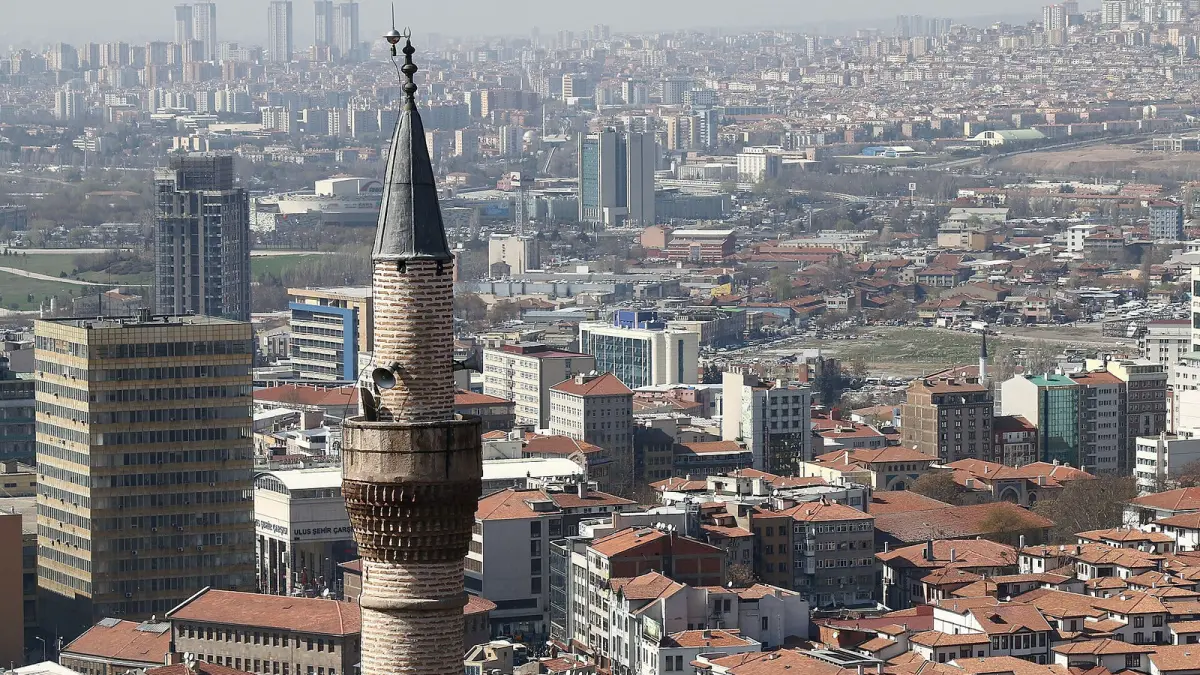
The summit of the Organization of Turkic States opened in the evening at the Külliye presidential complex; the heads of state opened the Alley of the Turkic World with national pavilions in Ankara’s Beştepe park, and the Kazakh pavilion showed a yurt, the “Saka Hunter” sculpture and copies of the Orkhon monuments [1][2]. The meeting takes place amid a dispute between Ankara and Baku over headscarves in Azerbaijani schools; Azerbaijani President Ilham Aliyev did not come, citing the final of the FIFA youth championship in Baku [1]. In the evening Donald Trump phoned Turkish President Recep Tayyip Erdogan; Erdogan told him the summit would take decisions to advance an organisation of more than 200 million people [7].
For Kazakhstan, Ankara continues a two-day visit: on 28 October Tokayev and Erdogan set a goal of 15 billion dollars in trade [8]. In parallel Turkey strengthened ties with other members: Uzbek President Shavkat Mirziyoyev signed five documents with Erdogan, including an agreement on a High-Level Council for Business Support and a protocol expanding preferential trade [9][10]. The main session of the summit and its final documents are expected on 30 October.
Bishkek and Dushanbe: neighbours without intermediaries
In Bishkek Bektenov was to hold talks with the Chairman of Kyrgyzstan’s Cabinet of Ministers Adylbek Kasymaliev, attend the second forum of interregional cooperation and the 14th meeting of the intergovernmental council [3][4]. At the previous, 13th meeting in Astana in November 2025 the two sides confirmed the goal of 3 billion dollars in trade by 2030 [4]. The final documents of this meeting had not been published by the morning of 30 October. Fuel adds to the agenda: in October Kyrgyzstan began receiving fuel from China by rail [11], and on the same day Europe announced the release of 42 million barrels of oil and diesel from reserves [12] — the fuel shortage is felt from the Atlantic to the Tien Shan.
In Dushanbe the parliaments of the five countries adopted the Dushanbe Declaration [5]. The Kurultai proposed accelerating the Framework Convention on Water Use and a standing dialogue on water and the Aral Sea involving the International Fund for Saving the Aral Sea, as well as a Central Asian partnership programme in artificial intelligence [6][13]. The forum, first convened at Kazakhstan’s initiative in Turkestan in 2023, met for the fourth time [14]. The same day in St Petersburg, Kurultai deputy Marat Kozhayev was elected chairman of the CSTO Parliamentary Assembly’s standing commission on political affairs [15].
Payment systems continued the regional line: the central banks of Kazakhstan, Kyrgyzstan, Tajikistan, Uzbekistan and Azerbaijan agreed to work out by the end of the year how to link their national QR payment systems so that citizens can pay in neighbouring countries with their own bank’s app [16].
The Address: from speech to lists
A day after the Address, deputies of the Kurultai Committee on Regional and Infrastructure Development went through its construction plan: about 6.5 trillion tenge from the National Fund until the end of 2029, about 70 healthcare facilities and the start of construction of about 50 education, sports and culture facilities; the government is to prepare an initial list of projects by the end of the year [17]. The day before, the government had already issued the first instructions — from a moratorium on business inspections to bonuses for district medics [18]. First Deputy Prime Minister Nurlybek Nalibayev’s meeting on Petropavlovsk airport belongs to the same line: passenger traffic there grew 6.5-fold in four years, and the next step is a new runway and international flights [19].
The digital agenda
Air Astana operated its first flight with satellite Wi-Fi — Almaty to Tashkent on an Airbus A321LR; connectivity is provided by SES, and internet is free for everyone until 31 January 2027 [20]. This is the result of regulatory work by the ministry, not just technology: permission for non-geostationary satellite connectivity in aviation came with a presidential decree in June [21]. The Ministry of Health began a pilot of electronic emergency notifications of infectious diseases in East Kazakhstan and Pavlodar regions, Astana and Almaty [22]. The Ministry of Justice, in a document on the new law “On Justice Bodies”, set out digital transformation as a separate area — and admitted weak oversight of private bailiffs [23]. There was no news on the digital tenge during the day.
Separately, an external signal. Overnight Binance, which has a Kazakh unit licensed by the AIFC and is a partner of the state Alem Crypto Fund, suspended all operations after more than 3 billion dollars flowed out of its wallets [24]. For a country building a crypto reserve and calling itself a future crypto hub, it is a reminder of the risks of the infrastructure the industry relies on.


