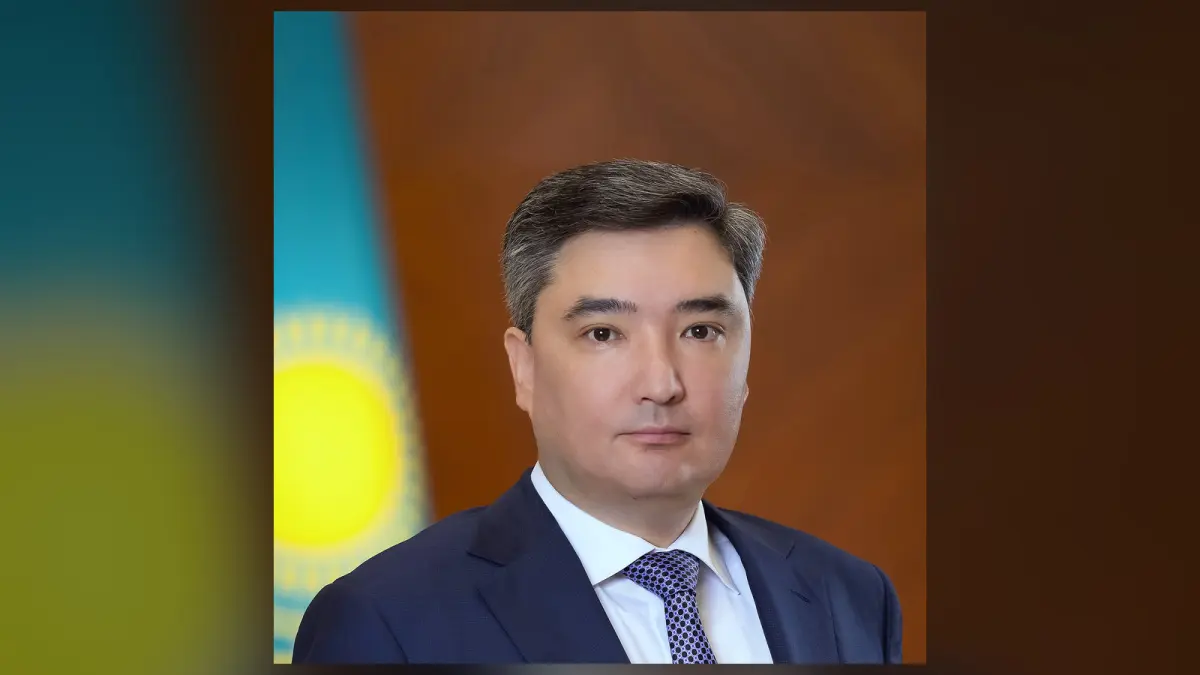
Antalya, 11 November. Prime Minister Olzhas Bektenov, on the President’s instruction, spoke at the 31st Conference of the Parties to the UN Framework Convention on Climate Change (COP31) in Antalya (Türkiye) and invited partners to create an International Water Organization under UN auspices, the Government said.
He also described other climate measures taken by Kazakhstan.
The summit, according to the Government, brought together heads of state and government of more than 70 countries and heads of the largest international organisations and financial institutions. Bektenov recalled that the President’s “Taza Kazakhstan” (Clean Kazakhstan) initiative has become a nationwide movement and is enshrined in the Constitution: more than 6 million Kazakhstanis take part in nature protection activities, and about 1.7 billion trees have been planted across the country in five years. Another 270 million seedlings are planned for 2027, which will make it possible to reach the President’s goal of planting 2 billion trees. He also noted that the UN recognised Kazakhstan’s initiative and declared 22 April the International Day of Greening the Planet.
On water, Bektenov said: “Solving environmental problems requires closer cooperation.” In April Astana hosted the first Regional Environmental Summit, which adopted the Declaration on Ecological Solidarity of Central Asia. At the basis of this shared commitment, he said, lies water security, and the President put forward an initiative to create an International Water Organization under UN auspices. “We invite all interested partners to take part in this process,” the prime minister said.
In energy, the share of renewable sources has grown fourfold in six years and reached 8% in 2026; the plan is to bring it to 15% by 2030. Bektenov mentioned a joint project of Kazakhstan, Azerbaijan and Uzbekistan for a green energy corridor to export clean electricity, the Alatau City low-emission city project, and the use of artificial intelligence and satellite monitoring to forecast natural risks.
On the sidelines of the conference the prime minister visited Kazakhstan’s national pavilion. Its exhibits include interactive AI guides Umit and Amur in the form of Turan tigers, reforestation and methane-reduction projects, and a green energy corridor across the Caspian to Europe. Separate exhibits are devoted to recycling lithium-ion batteries, plastic and tyres, to restoring the North Aral Sea and to preserving the Caspian ecosystem. Also shown are a regional carbon AI platform and the Caspian Climate Shield adaptation system.
At the session the Kazakh delegation signed agreements on renewable energy and gas infrastructure modernisation worth about 1.2 billion dollars. They provide for building wind farms of 150 MW in Turkistan Region and 1 GW in Kostanay Region, and the Aqyl Energy project to install 1.35 million smart gas meters with remote data transmission. Bektenov also met Moldovan Prime Minister Vasile Tofan: the sides discussed trade, investment and transport links, including use of the Trans-Caspian International Transport Route and Moldova’s logistics infrastructure.
What it means: The speech combines three lines: a national tree-planting project with concrete figures, the regional agenda of water, and energy with deals worth 1.2 billion dollars. The Government does not name the partners to the agreements, so the sum remains a statement by the delegation rather than a calculation based on contracts.
We have also reported on how Kazakhstan presented a unified climate investment platform at COP31.



