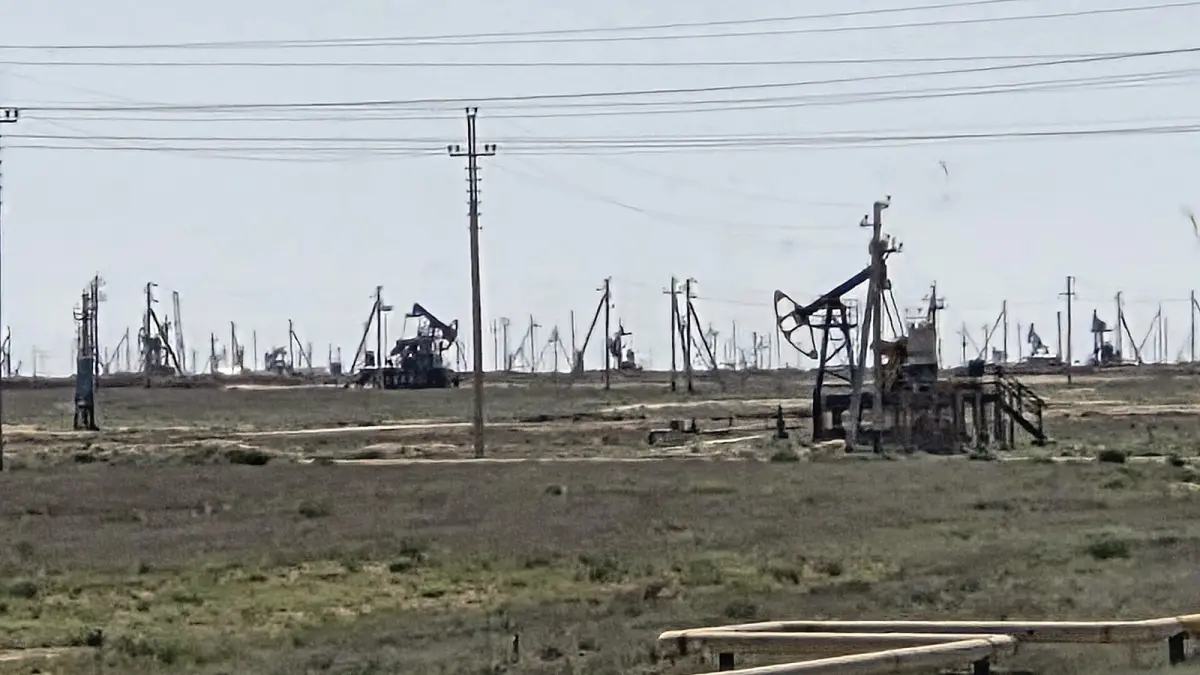
Astana, November 16. Kazakhstan produced 77.9 million tonnes of oil, including gas condensate, in January–October 2026, 6.8% less than in the same months of last year, the Bureau of National Statistics reported.
Oil and condensate output
- 8.6 million tonnes
in October 2026 - +6.5%
on October 2025 - 77.9 million tonnes
in January–October - −6.8%
on January–October 2025
According to the Bureau of National Statistics
- 8.6 million tonnes
In October alone output reached 8.6 million tonnes, 6.5% higher than in October 2025.
The bureau gives exact figures in the tables accompanying the bulletin “Industry in January–October 2026”, published on November 16. In October 8,556.7 thousand tonnes of oil and condensate were produced, against 8,034.7 thousand tonnes a year earlier and 7,662.6 thousand tonnes in September: month-on-month growth was 11.7%. Over ten months the total came to 77,907.5 thousand tonnes, compared with 83,626.7 thousand tonnes in January–October 2025.
The Energy Ministry has explained the September fall and the October recovery. Scheduled maintenance at Karachaganak, according to the ministry, ran from September 7 to October 1, so most of the losses fell in September; according to the ministry’s preliminary data, about 8.5 million tonnes were produced in October. Official statistics have confirmed this estimate.
The year-on-year fall is visible in the indices as well. The industrial production index in mining over ten months stood at 96.6%. The bureau attributes this to lower output of crude oil (93.1% of last year’s level) and natural gas (92.2%). In physical terms, 52,548.5 million cubic metres of gas were produced in January–October against 57,773.8 million a year earlier, 9% less. Associated petroleum gas amounted to 33,181.2 million cubic metres (95.2% of last year’s level), and natural gas in gaseous state to 19,367.2 million (84.5%). In October 5,916.5 million cubic metres of gas were produced, 3.1% more than in October 2025.
At refineries the picture is the opposite. Petrol output in October was 558.5 thousand tonnes, 45.8% more than a year earlier, and diesel fuel output 631.6 thousand tonnes, 47.4% more. Over ten months petrol output rose by 6.8% to 5,170.8 thousand tonnes, diesel fuel by 7% to 5,573.4 thousand tonnes and jet fuel by 23.8% to 755.4 thousand tonnes. Fuel oil output fell: 1,189.7 thousand tonnes, or 73.1% of last year’s level.
The annual forecast is still a long way off: Energy Minister Yerlan Akkenzhenov in early November expected 96 million tonnes of oil for the year. To get there, 18.1 million tonnes must be produced in November and December, that is, more than 9 million tonnes a month on average. In October, already after the maintenance, output was 8.6 million tonnes.
What it means: The October year-on-year growth is the result of Karachaganak returning after maintenance, not a turnaround in the trend: over ten months the country produced 5.7 million tonnes less oil and condensate than a year earlier. Refining, meanwhile, is growing, and refineries are turning out more petrol and diesel fuel than a year ago.
Who benefits: The domestic fuel market gets more domestically produced petrol, diesel fuel and jet fuel. Oil exporters are losing volumes: according to Akkenzhenov, without the attacks on the infrastructure of the Caspian Pipeline Consortium (CPC), the country would have produced 101 million tonnes in 2026.
Background: The largest fields – Tengiz, Kashagan and Karachaganak – ship oil for export via the CPC pipeline as the CPC Blend grade; via the Transneft system Kazakhstan supplies the KEBCO grade, which has been separated from Russian Urals since 2022. The Bureau of National Statistics counts oil together with gas condensate, so its figures do not match estimates for OPEC+, which do not include Karachaganak condensate.
We have also reported on preliminary data showing that oil output rose by 8% in October after maintenance at Karachaganak, and on Akkenzhenov expecting 96 million tonnes of oil for the year.



