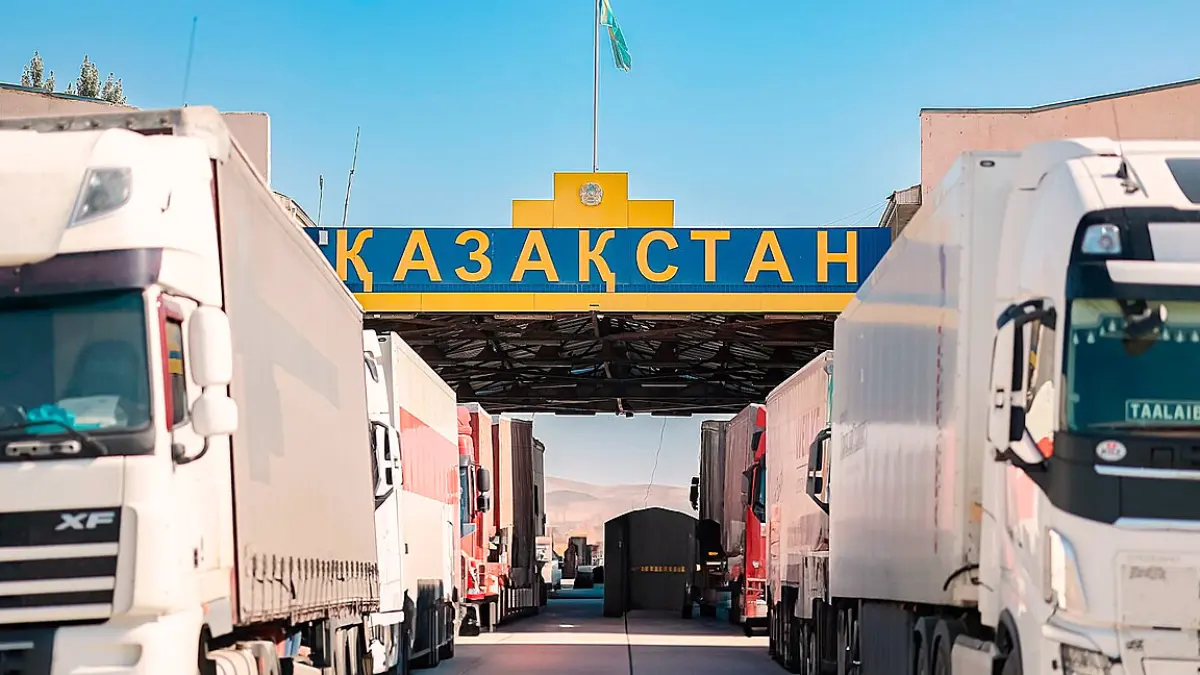
Astana, November 16. Since the start of 2026 the police have stopped 595 cases of illegally fitted additional fuel tanks with a total volume of 159.5 tonnes, the Ministry of Internal Affairs said.
Most violations were found in Zhambyl region (386), Turkestan region (119) and Kostanay region (80).
The ministry classed these cases as part of the fight against the illegal export of fuel out of the country. According to the ministry, the drivers were held administratively liable under Part 7 of Article 590 of the Code of Administrative Offences and fined. The additional tanks were removed and the vehicles returned to their owners. The ministry did not say how large the fines were. Round-the-clock police posts have been set up near 48 road checkpoints on the state border.
In retellings of the announcement on Telegram channels the figures were presented as the volume of petrol already taken out of the country. The ministry’s announcement says something different: it concerns cases that were stopped, that is, fuel that never reached the border, and tanks that were removed. The ministry does not specify the type of fuel.
The year-to-date count of such cases more than doubled in four months. In July the ministry reported 255 cases since the start of the year; at that time 195 foreign nationals and 60 citizens of Kazakhstan had been held liable, and 59 police posts were operating at road checkpoints. As early as June, police officers together with the state revenue authorities inspected 16 vehicle service stations in the village of Korday in Zhambyl region where additional tanks are fitted. Administrative cases were opened against six owners, and within a month the police stopped the export of about 12 tonnes of fuels and lubricants and found 54 vehicles with modified fuel tanks, the ministry said at the time.
Zhambyl region accounted for almost two thirds of all cases this year. Roads to Kyrgyzstan run through it, through Turkestan region to Uzbekistan and through Kostanay region to Russia.
The checks stem from the ban on fuel exports. Kazakhstan has extended the ban on exporting petrol, diesel fuel and a number of other petroleum products by road until May 22, 2027, including to member states of the Eurasian Economic Union (EAEU). An exception is made for fuel in vehicles’ standard tanks: it may be taken out no more than once a day. The previous ban was in force from May 21 to November 21, 2026, according to the order of the Minister of Energy; the new one begins without a break.
What it means: Fuel cannot be taken out of the country in a jerrycan or an extra tank: only what is in the standard tank is allowed, and only once a day. The police regard an additional tank fitted at a workshop as an illegal modification of the vehicle, remove it and fine the driver. The year-to-date count of such cases has risen from 255 in July to 595, and the main route is the border with Kyrgyzstan.
Who benefits: The export ban, as the Ministry of Energy explains it, is needed to keep fuel on the domestic market. The losers are drivers who carried fuel across the border in modified vehicles: they pay a fine and lose the tank, while the owners of workshops that fit such tanks come under inspection.
Background: The Ministry of Energy bans the export of petrol and diesel fuel by six-month orders; the previous ban was in force from November 20, 2025 to May 20, 2026. Fuel exports in circumvention of the ban are also investigated by the National Security Committee: in October it uncovered a scheme to export petroleum products through the port of Aktau.
We have also reported on the extension of the ban on exporting petrol and diesel fuel until May 22, 2027 and on the National Security Committee uncovering exports of petroleum products worth 45 billion tenge through the port of Aktau.



