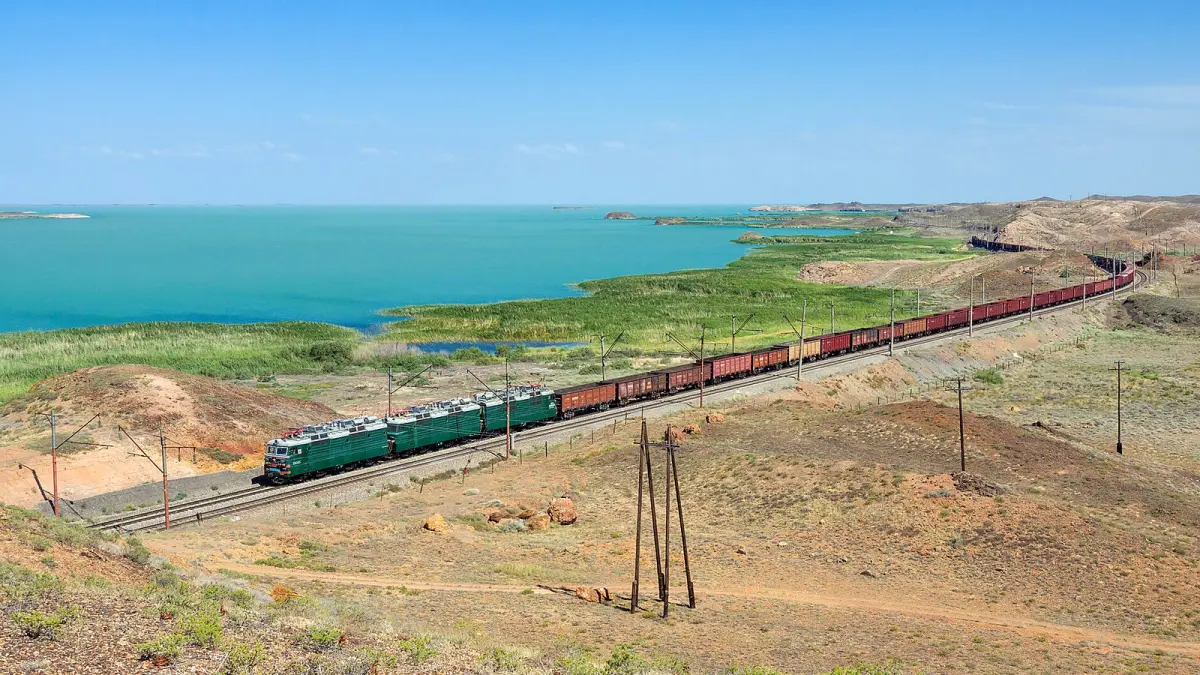
Astana, 23 November. Since late summer Russian Railways has approved only part of the requests to carry Kazakh coal to Russian seaports, and Kazakhstan is studying detours through Belarus, Georgia and Latvia, the Ministry of Transport said in reply to a request from Ulysmedia.kz.
According to the ministry, the restrictions mean coal producers cannot ship their output in the planned volumes. The issue has been referred to the Intergovernmental Commission on Cooperation between Kazakhstan and Russia, and a decision by the commission’s co-chairs is awaited. In November the transport agencies and railway administrations of the two countries will hold talks to discuss freight volumes for 2026 and plans for 2027.
The ministry listed four directions being studied instead of Russian ports. The first is via Belarus, through Orsha station. The second is along the Trans-Caspian International Transport Route, which crosses the Caspian Sea and the Caucasus, to the Georgian port of Poti. The third runs through Dina Nurpeissova station towards Poti as well, and the fourth leads to the Latvian ports of Riga and Ventspils. “All these options are still at the study stage,” Ulysmedia.kz quotes the ministry as saying.
Export figures show the scale of the problem. In August about a million tonnes of Kazakh coal were shipped through Russia, in September 500,000 tonnes and in October just 30,000 tonnes, with the last consignments going only to Belarus and Poland, the outlet wrote. According to the same data, the Russian side did not approve a single request to carry coal to Baltic ports for October and November. Congestion on Russian railways is named as the cause: because of shipping difficulties in the Black and Azov Seas, some freight has been diverted to the Baltic.
What it means: Kazakh coal, which for years reached Europe through Russian ports, has run into congestion on the Russian railway, and shipments have fallen dozens of times in two months. The detours are only being studied for now: the ministry gives no timing or volumes for them.
Who benefits: The losers are coal producers that cannot ship what they planned, and their European buyers. The solution depends on the co-chairs of the intergovernmental commission and on the November talks between railway administrations, where volumes for 2027 will be discussed.
Background: The Russian route matters for coal producers. In the first half of 2026 alone, 7.8 million tonnes of Kazakh coal were shipped through Russia in transit, 20% more than a year earlier, Vedomosti wrote. The main buyers remain European countries, above all Poland and the Netherlands.



