The world on Friday was finding out who pays and who answers. In Brussels, EU leaders argued about the budget for almost 14 hours and agreed neither on its size nor on who will pay for Ukraine in 2027. Rome said it had not been warned about Kyiv’s strike in Libya, and Ukrainian President Volodymyr Zelensky admitted that there had been no coordination. French statisticians recalculated the third quarter, and instead of minus 0.1% the figure came out at minus 0.2%. And the consortium that agreed to buy Lukoil’s overseas business has not said which Kazakh stakes it includes.
The day in figures
- €1.78 trillion
the compromise EU budget for 2028–2034, €204 billion less than the European Commission proposed - €45 billion
the loan to Ukraine for 2027, backed by 24 countries - −0.2%
France’s GDP in the third quarter, according to revised figures from the French statistics institute INSEE - 350,000 barrels of oil equivalent a day
output of the overseas assets of Lukoil that the Eldridge consortium is buying - 3 December
the date of Armenian Prime Minister Nikol Pashinyan’s trip to Moscow
According to Brussels Signal, INSEE, the Associated Press and Interfax
- €1.78 trillion
Brussels: a budget without agreement and a loan to Ukraine without a decision
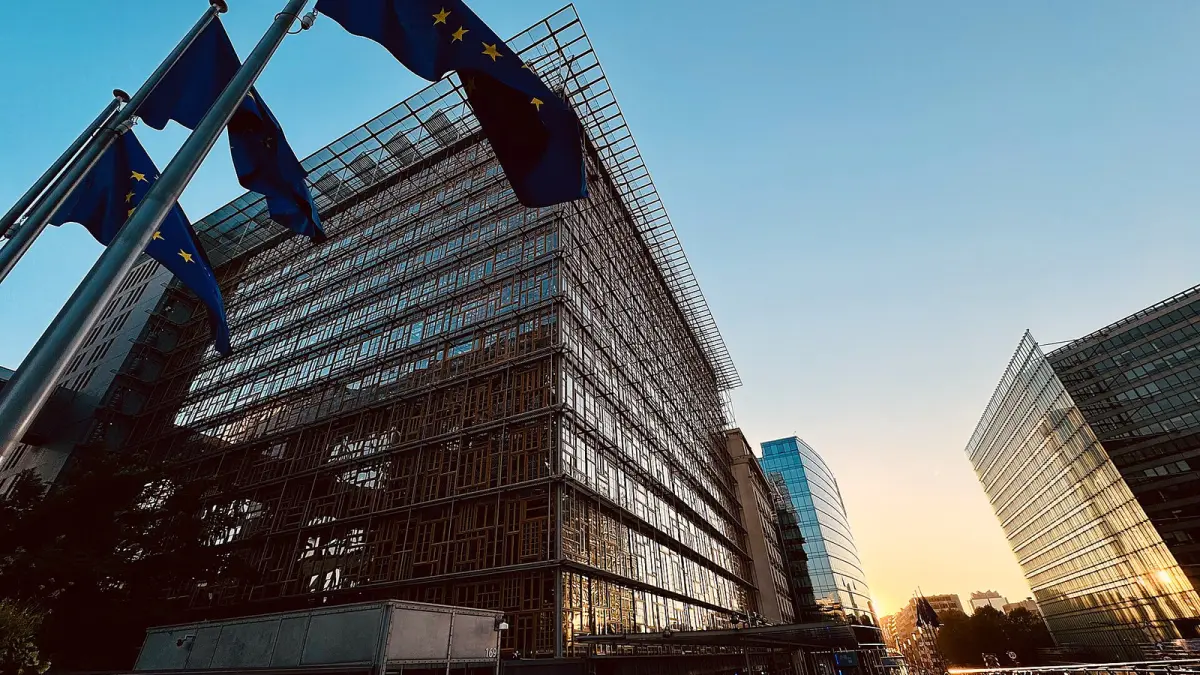
The special EU summit, called over the budget for 2028–2034, ended shortly after midnight, and the second day, planned for Friday, was cancelled. European Council President António Costa brought a compromise of €1.78 trillion — about €204 billion less than the proposal of the European Commission, which had asked for almost €2 trillion — and it satisfied no one. The “frugal” countries — Germany, the Netherlands, Sweden, Denmark, Austria, Finland and Belgium — want deeper cuts and more spending on defence and competitiveness, while the 17 countries that defend cohesion policy do not want to cut payments to poorer regions and farmers. When no one in the room budged, Costa and European Commission President Ursula von der Leyen began to meet leaders in small groups; the “frugals” considered that format unfair and walked out of it.
German Chancellor Friedrich Merz, as Parliament Magazine writes, said that the cuts would not stop at €204 billion. Italian Prime Minister Giorgia Meloni said that “light years” remained before a deal, and Hungarian Prime Minister Péter Magyar put the chances of agreement at the summit at “practically zero”. French President Emmanuel Macron called the €200 billion cut a “strategic mistake” and set a firm deadline: “it can be concluded by 31 December, but this is the absolute limit”. The reason is the presidential election in France in April 2027; without a deal by January, talks will, he said, resume only in the second half of 2027.
The budget dispute pushed aside the discussion of the loan to Ukraine: the decision on the €45 billion meant to cover the country’s military needs in 2027 was also postponed to December. Costa said that the Commission’s proposal had been backed by 24 countries; Hungary, Slovakia and the Czech Republic are not taking part, and Bulgaria is ready to contribute only to the non-military part. Zelensky put Ukraine’s need for external financing in 2027 at €115 billion on 24 November. Before the summit Merz threatened to block the whole budget unless all EU countries take part in long-term financing for Ukraine, while Czech Prime Minister Andrej Babiš called such a linkage “completely absurd”.
Paris: the contraction proved deeper
France, whose president is demanding that the EU budget be wrapped up by 31 December, has received new figures from its statisticians. The National Institute of Statistics and Economic Studies (INSEE) revised its estimate: GDP fell by 0.2% in the third quarter — the first estimate of 30 October was minus 0.1% — after zero growth in the second. Investment in fixed capital fell by 0.9% and exports by 1.6%, and foreign trade took 0.6 percentage points off growth; household consumption rose by 0.3%. The statistics do not yet show two quarters of decline in a row: after minus 0.2% in the first quarter, the second stood still. The preliminary estimate of consumer prices for November is plus 2.9% year on year, after 3.4% in October.
Benghazi, Rome and Mar-a-Lago: who is widening the war
The Russian corvette Merkuriy sank on 22 November in the port of Benghazi after a strike by naval drones; Zelensky confirmed that the strike was carried out by Ukrainian forces, which also hit a Ka-27 helicopter and the cargo ship Angara, which, according to Kyiv, was carrying weapons. Authorities in eastern Libya reported the deaths of two Libyan naval servicemen, and Musa al-Koni, vice-chairman of Libya’s Presidential Council in Tripoli, called the attack, as Newsweek reports, “a declaration of war on the Libyan state”.
Italy said it had not been warned. In an interview with the BBC, Zelensky, as the Kyiv Independent reports, said: “Our forces never attack without any coordination with other partners.” Italian Foreign Minister Antonio Tajani replied in an interview with Sky TG24 that no one in Italy had been informed and that Zelensky’s words were untrue. Giuseppe Conte, leader of the Five Star Movement, demanded that Meloni report to parliament. On Friday evening, after a conversation with Meloni, Zelensky wrote on X that “the recent operation in Libya was carried out without prior coordination with our European partners.” The Italian government’s statement, as reported by Il Foglio, says that Meloni expressed concern: the operation violated Libya’s sovereignty and threatens to spread the conflict to the Mediterranean.
The same question — who is widening the war — was on the table at the meeting of NATO Secretary General Mark Rutte and US President Donald Trump at Mar-a-Lago on the evening of 25 November. Two texts came out under the heading “joint statement”. In the NATO version it says that the two sides discussed “the importance of Russia avoiding any actions that deliberately or inadvertently widen the war”. In the version that Trump posted on Truth Social, as Newsweek notes, “Russia” is replaced by “Russia and Ukraine”: the obligation not to widen the war is extended to both sides.
Lukoil: Kazakh stakes in someone else’s deal
On Wednesday a consortium led by the American investment company Eldridge announced the signing of an agreement to buy Lukoil International GmbH — Lukoil’s overseas business, which came under US sanctions in October 2025. The consortium includes the US International Development Finance Corporation (DFC), Catena Investment Holding of the UAE and the investment bank Xtellus Partners. They will pay not in money but in restricted-circulation shares of Lukoil and other Russian companies, which will sit in a special account for five years or until sanctions are lifted. As the Associated Press reports, citing the consortium, the DFC will receive a stake on behalf of the United States, and the overseas assets produce about 350,000 barrels of oil equivalent a day in 11 countries. The deal needs approval from the Office of Foreign Assets Control (OFAC) of the US Treasury: Lukoil’s January agreement with the American investment group Carlyle excluded the Kazakh assets and did not receive approval. We wrote about the deal itself on 25 November.
Which Kazakh stakes are part of the deal, the consortium does not name: its statement lists Central Asia among the regions of the portfolio, but the assets are not named individually. On Friday Forbes Kazakhstan wrote, citing a source familiar with the details, that the deal includes Lukoil’s 5% in Tengizchevroil and 13.5% in Karachaganak, and that closing may take about a year. Kursiv notes that 12.5% of the Caspian Pipeline Consortium (CPC) is registered to Lukoil International GmbH itself, while the Kalamkas-More and Khazar projects (50%) and Al-Farabi (49.99%) Lukoil shares with KazMunayGas (KMG). Which of these assets will pass is, according to the publication, not yet known. The remaining stakes in Tengiz, by the same data, belong to Chevron (50%), ExxonMobil (25%) and KMG (20%), and in Karachaganak to Shell and Eni (29.25% each), Chevron (18%) and KMG (10%). Exemptions from US sanctions, as follows from KMG’s annual report for 2025, apply to Tengizchevroil, the CPC and Karachaganak, but not to Kalamkas-More and Khazar.
Kazakhstan’s Ministry of Energy replied to Forbes Kazakhstan that it does not comment on information from anonymous sources; KMG promised to give details when specifics emerge on the joint projects, and Tengizchevroil is preparing a comment. Whether the purchase of the Kazakh stakes has to be agreed with Kazakhstan’s authorities is not known. Energy Minister Yerlan Akkenzhenov said in January that Kazakhstan has a priority right to buy out Lukoil’s stakes and that the ministry had sent a corresponding letter. If the stakes in Tengiz and Karachaganak are indeed part of the deal, among the co-owners of the country’s two largest oil and gas projects there will be an entity in whose capital a US government corporation participates.
Yerevan: the agenda before the meeting
Moscow named the subject of its talks with Yerevan in advance. Dmitry Peskov, press secretary of Russian President Vladimir Putin, said that at the meeting with Armenian Prime Minister Nikol Pashinyan the question of Armenia’s choice would arise “mainly”: “Whether it will be made, when it will be made, in what way.” The wish to “sit on two chairs”, in his words, must be confirmed or refuted, because orientation towards the European Union and integration in the Eurasian Economic Union (EAEU) “do not correlate with each other”. Security and the Russian base in Gyumri will also be touched on. The trip was agreed some time ago, and Pashinyan named the date, 3 December, earlier, as Interfax recalls. The base is located there under a 1995 treaty, and a 2010 amendment extended its stay to 2044.
What lies ahead
EU leaders will return to the budget and the loan to Ukraine at the summit on 17–18 December; Costa, as expected, will present an updated proposal in the coming days. Pashinyan, according to Interfax, will come to Moscow on 3 December. Whether Meloni will answer to parliament on Libya, as the opposition demands, has not yet been reported. For Kazakhstan the main thing remains OFAC’s decision: it determines whether the deal closes and whether Lukoil’s Kazakh stakes pass to the new owners, if they are part of it.



