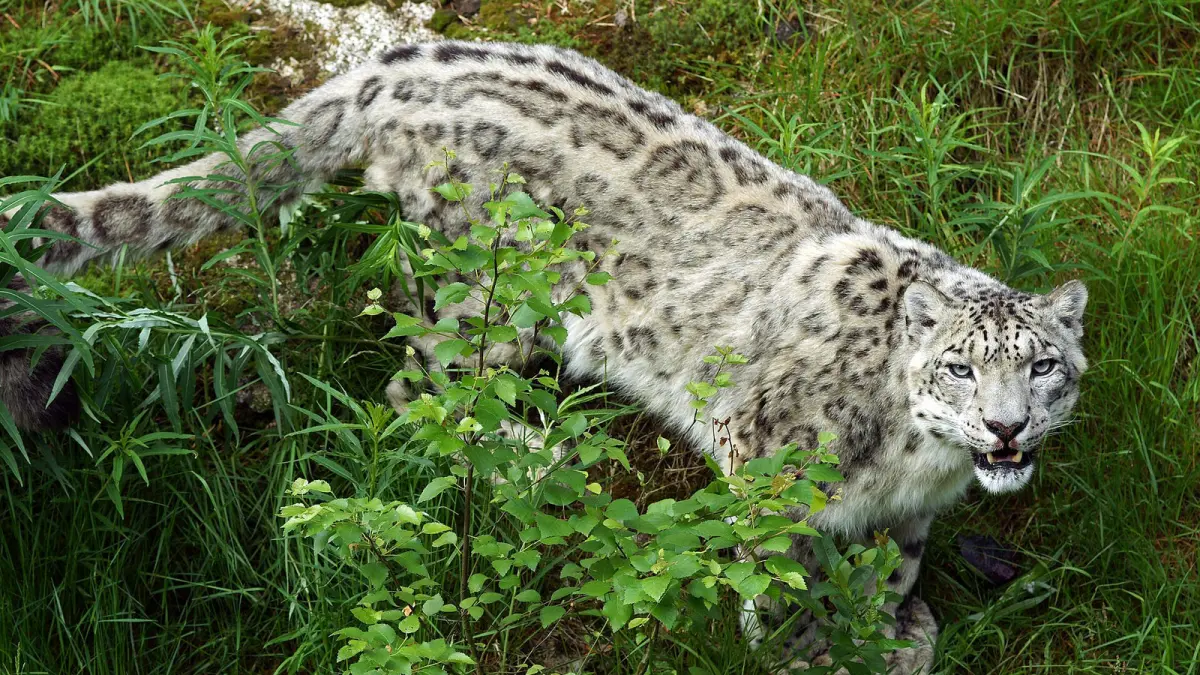
Katon-Karagay, 19 October. In Katon-Karagay State National Nature Park a snow leopard was caught, named Altai and fitted with a satellite collar; this is the first such work in the Southern Altai.
The collar was fitted on the endangered predator by specialists from the national park and the Institute of Zoology. It will be used to track the animal's movements and determine its routes and home range. Snow leopards live in inaccessible high mountains and are hard to observe in the wild, so satellite equipment provides data on their movements without people having to stay near the animal. The leopard was named after the place it lives.
The snow leopard is also known by its Russian name irbis, a word borrowed from Mongolian; in Kazakh the animal is called barys. It is listed in the Red Book, and every individual counts: according to the Ministry of Ecology's Committee for Forestry and Wildlife, Kazakhstan's snow leopard population has reached about 190.
Data from the satellite collar will show how far the animal travels in a season, where it hunts and how it crosses ridges; they will help to better understand the life of snow leopards in the Southern Altai and to choose measures to protect them. Previously this could only be learned from tracks and camera-trap images, which show only the places where a camera stands.
Background: Other outlets also reported the first collar fitted on a snow leopard in the Southern Altai; Katon-Karagay is Kazakhstan's largest national park, on the border with Russia and China.
List of sources used: Tengrinews, Zakon.kz, 24.kz
Artificial intelligence was used in preparing this material.