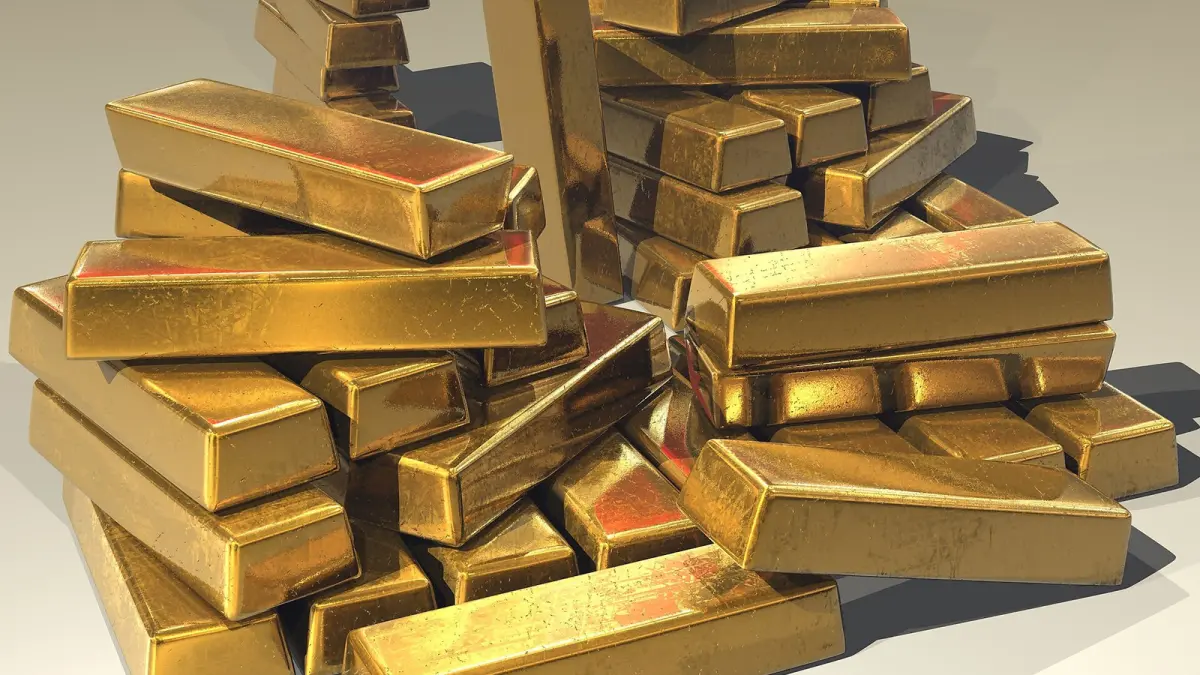
Astana, 21 October. The National Bank of Kazakhstan, in recent years one of the world's biggest buyers of gold, is moving to selling it: by the end of the year the metal's share of international reserves will be cut from about 78% to 75%, Deputy Chair Aliya Moldabekova said in an interview.
The main reason is the yield on US government bonds: last week the yield on ten-year US Treasuries reached a 24-year high. "We have not seen such levels of yield for a long time," Moldabekova said, explaining that this makes the dollar attractive for investment while reducing the investment appeal of gold: unlike bonds, the metal pays no interest.
The gold built up in the reserves over several years. The National Bank has a priority right to buy all gold mined in the country, and Kazakhstan, according to the regulator, ranks eighth in the world for gold production. After the National Bank suspended sales of the metal in February 2025, its holdings grew to 386 tonnes, and gold's share of reserves reached about 78%, an excessively high level in Moldabekova's view. "With such a share of gold, our reserves begin to resemble a portfolio made up of a single asset," she said. International reserves, which stood at $66.4 billion at the end of September, must, she said, remain highly liquid, that is, quickly convertible into cash.
According to the World Gold Council, in the first eight months of 2026 the National Bank was the world's fourth-largest buyer of gold.
The National Bank plans to achieve half of the reduction by selling options and the rest by selling physical gold. An option is a contract that gives the buyer the right to buy or sell an asset at a price agreed in advance, while the seller is paid for granting that right. If the price of gold falls below $4,000 per troy ounce, Moldabekova said, the metal's share of reserves may approach the target on its own, without additional sales. Beyond 75% the regulator is not planning ahead for now: "First we need to reach the 75% level, after which we will continue to monitor how the situation develops."
Since the war between the US and Iran began at the end of February, gold has fallen by about 20%: in January an ounce cost a record $5,600, and since June the price has fluctuated between $4,000 and $4,300. Moldabekova nevertheless expects prices to rise: "Given the significant uncertainty that persists, we nevertheless expect some increase in the value of gold."
What it means: The National Bank is changing course: it does not intend to keep accumulating gold, because the metal has taken up almost four-fifths of the reserves, and high US interest rates have made the dollar more attractive. By the end of the year part of the gold will go to market, and the reserves will depend less on the price of a single metal.
Who benefits: According to Moldabekova, the point of the decision is to keep the reserves liquid and to earn interest income on dollar assets, which gold does not provide. Who will buy the metal and how much the sale will bring in was not stated in the interview; the National Bank itself expects gold to rise further, which is why it is not planning beyond the 75% target.
Background: Other central banks are also selling gold: early in the year Turkey and Russia sold part of their holdings, although according to the World Gold Council central banks as a whole are still buying, led by Poland, China and Uzbekistan.
List of sources used: National Bank of Kazakhstan, QAMS QazTrading
Artificial intelligence was used in preparing this material.