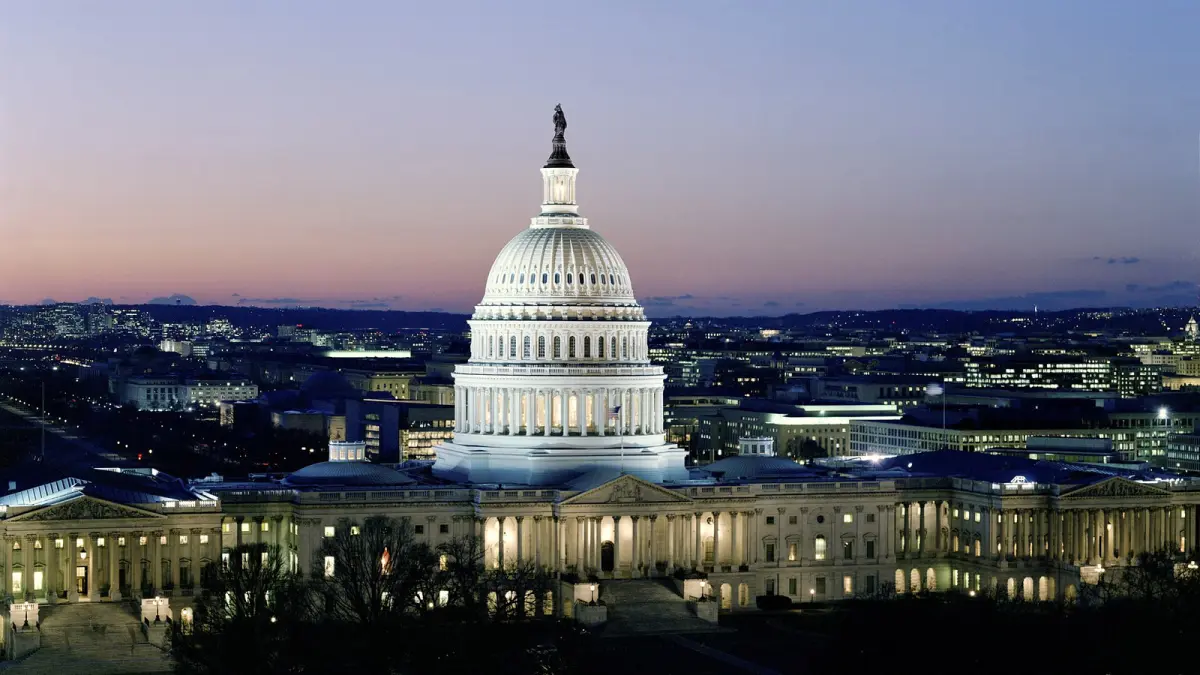
Two days before the US midterm elections, decisions that Washington could have taken earlier are queueing behind the ballot box. Iran has been given a pause until Tuesday, Kyiv has resumed strikes on Russian oil refineries against Washington’s wishes, and Netanyahu is urging the US president to strike Iran right after the election.
Tuesday as the point of reference
The word “midterm” means the middle of a term: these elections fall halfway through a president’s four-year term and show whether he keeps the voters’ support. The House of Representatives is re-elected in full, and the Senate is renewed by a third. This year the vote is set for 3 November, and the results will come in the night of 4 November Astana time.
The military pause around Iran depends on this date. According to Axios, Trump and Netanyahu had a frank conversation on 1 November: the Israeli prime minister insists on striking Iran immediately after the election, but Trump for now wants to let negotiations run their course, and this strategy worries Netanyahu. The same Axios reported back on 8 October that Trump had ruled out strikes on Iran before the election. At the same time, as the outlet writes, the Americans are preparing for a possible resumption of major combat operations after the election. Tehran warned on Sunday that a new war with the United States could last longer than the previous one, and Tehran Times writes that Iran named MI6, the Royal Navy and the Royal Air Force of Britain under reciprocal measures against London; what those measures are, the headline does not say.
Netanyahu has a domestic deadline as well. According to Anadolu, after inconclusive elections Israel’s opposition is seeking control of the Knesset, intends to replace the speaker and to advance legislation aimed at Netanyahu.
Ukraine: refineries, Turkey and a truce
Kyiv, meanwhile, is not waiting for Tuesday. The Guardian’s headline of 1 November reads: Ukraine has defied Trump and resumed attacks on Russian oil refineries. Zelensky said back on 15 October that the “energy ceasefire” was over, Al Jazeera recalls. Russian officials acknowledged on 1 November that overnight a drone had hit an “industrial enterprise” in the eastern part of the Moscow region after Ukraine said its target had been a major refinery, WION reports.
On the other side of the scale are talks about a meeting. In an interview with CNN Türk Zelensky said he is ready to meet Putin in Turkey, RBC reported. Moscow’s answer is not given in these reports.
The local ceasefire around Oleshky in the Kherson region ended, Anadolu notes, without reported violations. France 24 called it the longest truce of this war, though limited to one area. We covered the ombudsmen’s mission separately.
Bulgaria: Yotova wins the runoff
Bulgaria held the second round of its presidential election on 1 November. In the first round on 25 October, incumbent President Iliana Yotova received 34.76% of the vote (528,951) and former deputy caretaker prime minister Andrey Gyurov 31.95% (486,232), the Central Election Commission reported. Turnout was then a record low. Now exit polls give the win to Yotova: according to the polls she wins the runoff, though the commission has not yet confirmed the result. Anadolu writes that Yotova will become the country’s first elected female president.
Washington: “Mr Veto” and a party split
Trump, as RBC reports, said that if the Democrats win he would block their initiatives for “a month or two”; TASS quotes him saying he would become “Mr Veto”. Meanwhile in Michigan the Democrats split over their Senate candidate. Two days before the election, Democrat Haley Stevens endorsed Republican Mike Rogers in the Senate race against her fellow Democrat Abdul El-Sayed. Anadolu reports that Trump welcomed the endorsement.
There is also a trade story. Canadian Prime Minister Mark Carney and Trump discussed a framework for a new bilateral trade agreement amid tariff disputes.
The UN is left without peacekeepers in Western Sahara
The UN peacekeeping mission in the disputed Western Sahara has ended after 35 years, France 24 reported. Secretary-General António Guterres warned of a risk of renewed hostilities: the mission ended after a Russian veto, Anadolu reports.
What it means for Kazakhstan
For Kazakhstan, Washington’s calendar matters through oil. On 1 November seven OPEC+ countries kept the previous mandatory production levels for December, 1.628 million barrels a day for Kazakhstan; The National also reported the decision. How a possible resumption of strikes on Iran and the strikes on Russian refineries will affect the market is not addressed in OPEC+ statements.
Three signals will show the direction. The first is the election result in the night of 4 November: whether the Democrats win one chamber or both. The second is the White House statement on Iran in the first days after the count. The third is Moscow’s answer to Zelensky’s readiness to meet in Turkey.



