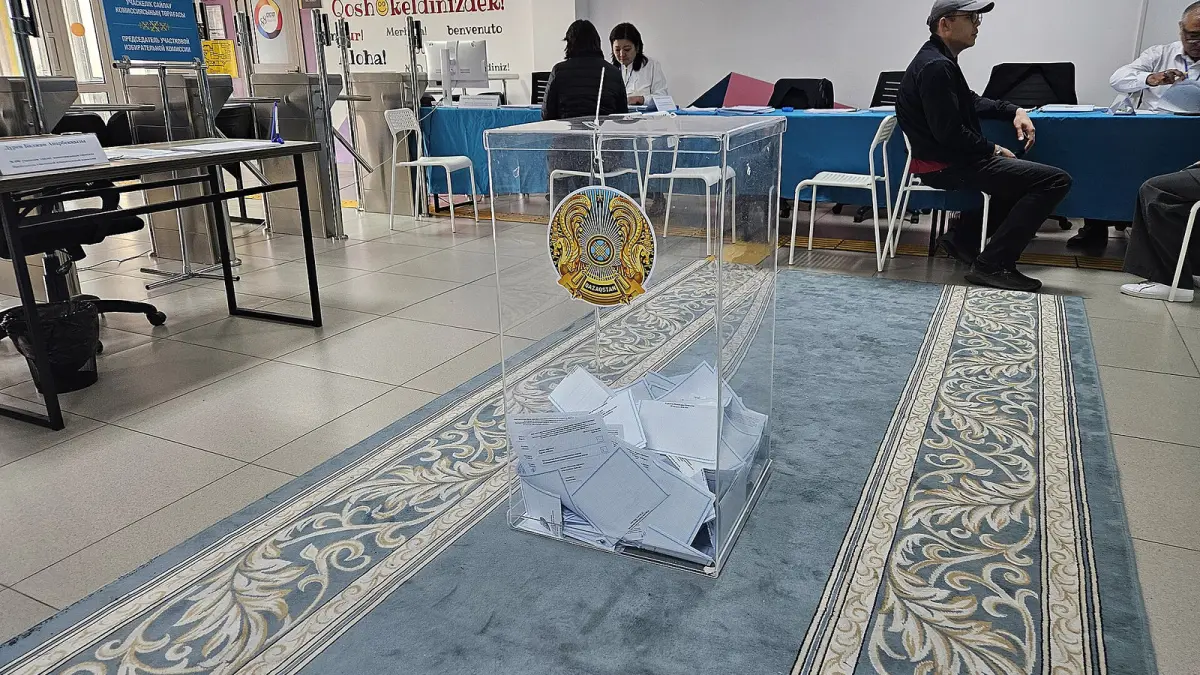
Sometimes a house stands but has no owners. Since 12 October that has been the situation of all of Kazakhstan’s maslikhats at once: the President’s decree deprived deputies at every level of their powers in a single day, and new ones will be elected only on 29 November. Between those dates lie almost seven weeks, and for all that time the country is without local representative assemblies. Those weeks fell in the budget season, when by law the last word belongs to the maslikhat. But the draft budget, as the President himself said in March, reaches deputies “at the last moment”.
Maslikhats without maslikhats
- 228
maslikhats to be elected on 29 November - 3,447
deputies in them - 7
parties admitted to the elections, Amanat is not taking part - 3.5 years out of five
how long the previous convocation served - 15 days
the new deadline for answering a deputy’s inquiry, previously a month - 10 days
the time in which a maslikhat approves the budget after the law on the republican budget is signed - 1 March
the final deadline for the local budget if the maslikhat has not managed by the end of the year
From the review materials
- 228
The twelfth of October
The decree “On the early termination of the powers of maslikhats of all levels” was signed by the President on 12 October. As Akorda reported, consultations were held before the signing with Prime Minister Olzhas Bektenov and Kurultai Chairman Aibek Dadebai, as paragraph 5 of Article 88 of the Constitution requires. The decree took effect on the day of its publication, and the Central Election Commission was instructed to do everything necessary to call and hold extraordinary elections.
This is not the first dissolution for the maslikhats. In January 2023 the President had already terminated the powers of maslikhats at all levels, and on 19 March of that year 3,415 deputies in 223 maslikhats were elected; today the figure is 3,447 seats in 228 assemblies. Thus two successive convocations did not serve out their five-year terms: the one elected in January 2021 and the one elected in March 2023. Deputies of the regional maslikhat in Kostanay told Nasha Gazeta that they managed to work three and a half years out of five.
The President himself named the reason as early as 24 September, at the first session of the Kazakhstan Halyk Kenesi (People’s Council). The overwhelming majority of maslikhat deputies, he recalled, were elected from the Amanat party, and that party no longer operates independently: it has merged into Adilet. The legal procedures will soon be completed, and then, the President said, the “question of the legitimacy of most of the deputy corps” will arise. He called the elections to the maslikhats the final stage of the transformation of the entire system of public administration. At the consultations on 12 October, according to Akorda, he added that the full-fledged work of maslikhats is needed to protect citizens’ legitimate interests, approve local budgets and oversee regional development, and expressed confidence that renewing the deputy corps would significantly strengthen local representative bodies.
The party that is no more
Amanat is the former Otan, founded in 1999; from 2006 it was called Nur Otan, and from 2022 Amanat, so the same majority party has had three names in more than twenty years. In 2023 it won 51.94% of the vote and 12 seats in the Almaty maslikhat and 65.17% of the vote in the election to the regional maslikhat in Aktobe Region. In spring 2026 a new party, Adilet, appeared: its founding congress was held on 7 May, and it received state registration on 1 June. The Amanat congress voted to merge into Adilet on 12 June, and the Adilet congress adopted the merger unanimously on 14 June: 613 delegates voted in favour. Maslikhat deputies from Amanat were told at the congress that for now they remain legitimate and that Amanat itself will exist for some time as a legal entity while the procedures continue. The President’s words in September read as a continuation of that sentence: the procedures will be completed, and the question of legitimacy will arise.
The first Kurultai elections took place on 23 August: Adilet received, according to the official results, 71.17% of the vote and 110 of 145 seats, while Amanat was no longer on the ballot. The President announced the early termination of the maslikhats’ powers on 24 September, signed the decree on 12 October, and on 13 October Amanat sent the Central Election Commission a letter: it will not take part in the extraordinary elections. Most seats in the maslikhats belonged to a party that had itself left the electoral stage. The mandates were orphaned, and the President called it a question of legitimacy.
A council without counsellors
The maslikhat is called a council of deputies, but it has duties more important than advice. It approves the local budget and reports on its execution, approves territorial development programmes and holds the akimat to account — such is the competence of maslikhats under the law on local government. Serving in this role means working without pay: only a few deputies, those who work on a permanent basis, receive a salary. Alexandra Sergazinova, until the dissolution a deputy of the regional maslikhat in Kostanay, told Nasha Gazeta that she had not received a penny for her work and that being a deputy had turned out to be “not a cheap pleasure”.
Holding the akimat to account was not always possible. Gulmira Ileuova of the Strategy centre said at a meeting of the Senate council in April 2025 that maslikhats have stayed in the akimats’ shadow all these years, and that their main trouble is dependence on the executive branch and a lost reputation. Lawyers at the Contur.kz portal also point to a lever built into the procedure itself: a draft maslikhat decision that reduces revenues or increases budget expenditure can be introduced only with the akim’s positive opinion. A maslikhat decision can be annulled only by a court, while an akim’s decision can also be annulled by the government or a higher akim. Put simply, the akimat holds the pen and the maslikhat holds the seal.
The President described this state of affairs himself in March, at the third republican forum of maslikhat deputies, which brought together about two thousand people. In his words, many powers of the maslikhats are worded vaguely, and this leads to failures in management. The draft budget is submitted for consideration at the last moment, deputies are given only general information without explanations, and the document is examined superficially: the estimate lands on the table when the train has already left. In the end the money goes to projects that do not meet people’s needs, while “responsibility is blurred, and sometimes there is no one to ask”. The President instructed that educated and respected deputies be included in the budget commissions at the akimats and that the term of maslikhat chairs be limited to two in a row.
Four months and a little more after the forum, on 14 July, the President signed a law that affects more than twenty codes and laws, and many of the March instructions found a place in it. Deputies received the right to take part in local budget commissions and to propose changes to the budget. The deadline for answering a deputy’s inquiry was cut from a month to fifteen calendar days, and the inquiry can now also be sent to prosecutors, to members of election commissions and to local branches of quasi-state companies. District maslikhats will be able to decide what share of property tax, up to half, to leave to villages and towns of district significance. Disciplinary penalties were introduced for deputies, and the chair of a maslikhat can no longer hold the post for more than two terms in a row. The main part of the law takes effect ten calendar days after its first official publication, while separate provisions, including the new wording of the article on deputies’ inquiries, take effect after sixty days, on 1 January or on 1 July 2027. The previous convocation managed to work under the new rules for only a few weeks; applying them in earnest is up to the new one.
The July law also provided for a case that arrived almost three months later: when the President dissolves a maslikhat, a full-time deputy will be paid an average monthly salary, but for no longer than three months. The provision is general, for any dissolution; the law says nothing about the decision of 24 September.
Empty chairs and a full budget
The dissolution fell in the middle of the budget season, and the Budget Code of 2025 does not know how to wait. The akimat must submit the draft regional budget, and the budgets of the capital and of cities of republican significance, to the maslikhat no later than 15 October. The draft district budget must be submitted no later than 1 November, and the drafts of the budgets of towns of district significance, villages, settlements and rural districts no later than 10 November. The first of these deadlines passed three days after the decree, when there was no one to submit the draft to: it is like serving a summons on an empty chair.
The maslikhat must approve the regional budget and the budgets of the capital and of cities of republican significance within ten calendar days after the President signs the law on the republican budget. The district budget is approved within ten days after the regional decision is signed, and the budgets of villages and towns of district significance within five days after the district one is signed. The Kurultai approved the republican budget for 2027–2029 in first reading on 14 October. Revenues for 2027 in it come to 25.4 trillion tenge, expenditure to 30.2 trillion, and the deficit to 4.6 trillion (2.3% of GDP); 7.4 trillion tenge a year, or 24.8% of the budget, is earmarked to support the regions. When the President will sign the law on the republican budget has not yet been reported.
For the case where a maslikhat does not manage in time, the Code keeps a way out in reserve. The akimat, by its own resolution, approves a local financial plan for the first quarter, in the amount of a quarter of the forecast annual budget, no later than 25 December; the plan remains in force until the maslikhat approves the budget, and in that case the budget itself must be approved no later than 1 March. The results of the vote of 29 November, according to the schedule, will be established no later than 3 December. The first session of a new maslikhat is convened by the chair of the territorial election commission no later than thirty days after the registration of deputies, provided at least three quarters of those elected are present; this is written, for example, in the rules of procedure of the Astana maslikhat. If the President signs the budget law in December, the ten days allowed for approval may expire before the new maslikhats convene. Then the first quarter of 2027 will pass under the akimat’s financial plan, and deputies will approve the annual budget no later than 1 March.
The state commission on oversight of “People’s Construction” will face the same uncertainty: the President proposed including in it deputies of the Kurultai and the maslikhats. There are no sitting maslikhats now, new ones will be elected on 29 November, and which convocation’s deputies will be invited to the commission was not specified in Akorda’s statements.
The first serious business of the new convocation will, most likely, be the budget, which is exactly what the President complained about: a document that is brought at the last moment and adopted in a tight timeframe. The law gives deputies the right to take part in budget commissions, but those just elected will have very little time before the first session to make use of that right.
Who is running
The elections on 29 November will be held under a mixed system: some deputies are elected by party lists and some in single-member districts, and in single-member districts candidates are nominated by parties and public associations, while self-nomination is also allowed. The term of office is five years. The Central Election Commission admitted seven parties: Ak Zhol, Auyl, Adilet, the Nationwide Social Democratic Party, Baitak, the People’s Party of Kazakhstan and Respublica. A party gets its election deposit back if it wins at least 5% of the votes of those who took part. Nomination ended on 27 October, the registration of lists and candidates closes at 18:00 on 1 November, after which campaigning begins; 28 November is the day of silence, and voting will take place on 29 November from 07:00 to 20:00, as approved in the Central Election Commission’s calendar.
Whether the former deputies will return, they themselves have no single answer. Ruslan Mamedov of the regional maslikhat intends to run for the Zhitikara District maslikhat: there, in his view, he will be of more use, and he leaves his seat in the regional one to the young. Alexandra Sergazinova is on the Ak Zhol list but is ready to give way to the young: behind her, she says, stood a whole team that prepared inquiries. Meruert Zhabayeva, who was elected to the seventh and eighth convocations, does not intend to run again, while Dinara Utebayeva thinks it is worth trying. Over three and a half years, according to Sergazinova, much changed: officials began sending documents in advance and “began to reckon with deputies”, because it is up to the maslikhat whether an agency gets budget money.
A voter who voted for Nur Otan in 2021 and for Amanat in 2023 will see Adilet on the ballot: three names in three campaigns in a row.
What remains unknown
It is unknown when the President will sign the law on the republican budget and how the deadlines for approving local budgets will fall if the signature comes in December. A reserve exit is provided only for the budget, and what will happen before the first session to other matters within the maslikhat’s remit, the Code does not say. Neither the turnout, nor the number of seats for parties and self-nominated candidates, nor how deputies’ new rights will work — taking part in budget commissions, distributing part of the property tax — is yet known. Questions remain for the Ministry of Finance, about the schedule for approving local budgets in December; for the Central Election Commission, about the timing of registering deputies and convening first sessions; for the akimats, about how they are preparing draft budgets for the new convocation.
What will change and what will not
The reforms have lined up in a sequence. The new Constitution took effect on 1 July 2026, parliament became the unicameral Kurultai, in July maslikhats received expanded powers, and in November a convocation will be elected that will have to apply them. The President called the elections the final stage of the transformation and gave as the reason for the dissolution the question of the legitimacy of most of the deputy corps. In March he instructed that the powers of maslikhats be clarified and the responsibility of deputies increased, and now he expresses confidence that renewing the corps will significantly strengthen local representative bodies.
Something else does not depend on the reform. According to Contur.kz, deputies’ budget initiatives still depend on the akim’s consent, and the long-standing trouble of maslikhats, as Gulmira Ileuova believes, is dependence on the executive branch and a weak reputation. The matters that deputies themselves talk about remain unfinished: a shortage of pastures, a square and a monument to Shokan Ualikhanov in Kostanay, cycle lanes stuck on design and cost documentation and money.
Who is right will be shown by the coming months, and it is not hard to check. It is enough to see how much time deputies get for the 2027–2029 budget, whether the fifteen-day deadline for answering an inquiry becomes ordinary practice rather than a line in the law, and whether in budget commissions they take part in decisions or only attend. The first of these tests will begin as soon as the President signs the law on the republican budget.



