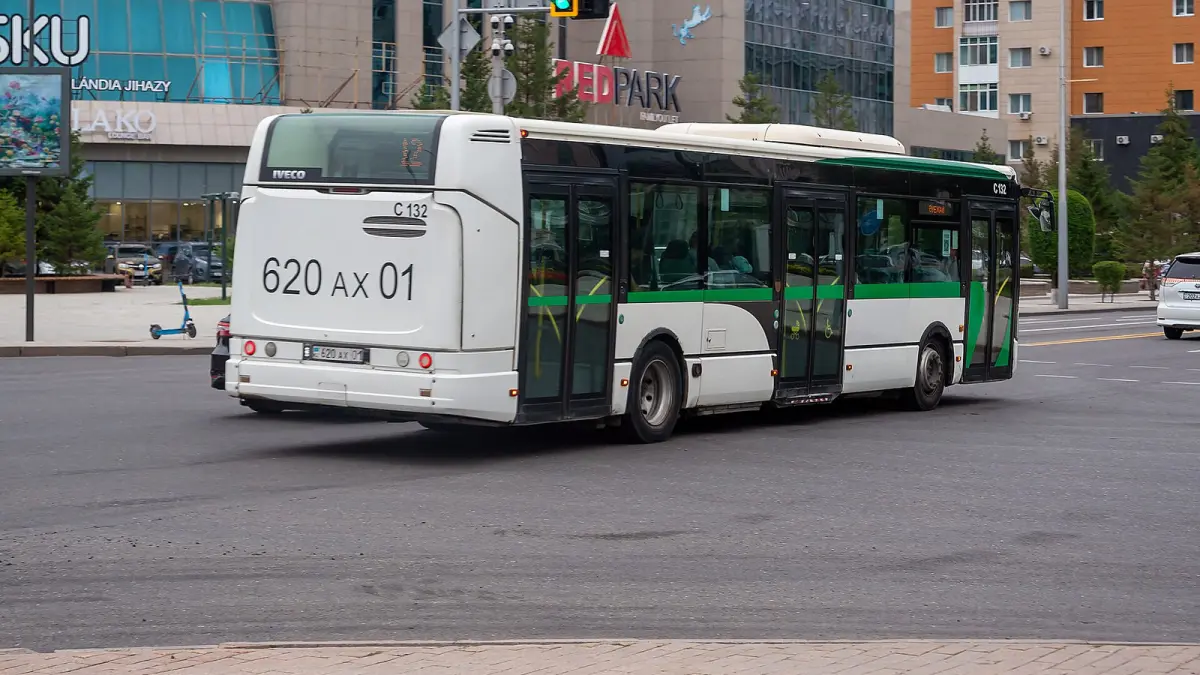
Astana, 9 November. The Astana akimat named mid-December on 9 November as the date for introducing a fare of 150 tenge for cashless bus payments, the akimat said on its website; the first proposal on 5 October named 1 December.
A cashless trip now costs 110 tenge, and the rise will be 40 tenge, or about 36%. The akimat's resolution with differentiated fares was approved on 15 October, Zakon.kz reported: it takes effect 10 calendar days after its first official publication, and when it was published the akimat does not say. Yet in the new statement the word "proposed" stands in the very sentence about the fare: "from mid-December it is proposed to set the fare for cashless payment at 150 tenge". Which date applies under the resolution, the akimat has not explained.
The akimat gave the same justification as on 5 October, with figures covering 12 years. The 90-tenge fare was introduced in 2014 and revised once; it is now 110 tenge. A litre of diesel cost about 107 tenge in 2014 and now costs 329 tenge, more than triple. Drivers' pay averaged 100,000–150,000 tenge and is now from 700,000 tenge, depending on the class of bus and the work schedule. In three years carriers have bought 1,127 new buses that meet modern safety, comfort and environmental requirements. The estimated cost of one trip in 2026, under the fare-calculation methodology, "significantly exceeds" the current fare, but the akimat does not give the figure.
The figures allow a comparison of price growth. Over 12 years diesel rose by 222 tenge a litre, while the fare rose by 20 tenge, or 22%. Under the resolution, fares depend on the method of payment. In a city bus a trip will cost 150 tenge by card or through electronic services and 300 tenge in cash. On express routes the fare will be 300 and 400 tenge, and on suburban routes 13 tenge per kilometre by card and 19 tenge in cash.
Concessions remain. War veterans and disabled people of the Great Patriotic War and those equated with them, old-age and long-service pensioners, mothers and families with many children, and disabled people travel free. The same applies to disabled children under 18 with one parent and to recipients of state benefits for old age and loss of a breadwinner who have reached pension age. Victims of political repression among participants in the events of 17–18 December 1986 are also exempt from payment. Since March 2020, children under 18 studying in Astana have travelled free.
What it means: The fare rise in Astana remains planned, but the date has moved from 1 December to mid-December, and the legal status of the decision is described differently in two akimat reports: in October "approved", in November "proposed".
Who benefits: Carriers: according to the akimat, they need money for fuel, drivers' pay, spare parts and renewing the bus fleet. Passengers who pay by card or through electronic services: for them a trip will be half the price of what cash payers pay. Concession holders see no change in the fare.
Background: The 90-tenge fare in Astana applied from 2014 and was later raised to 110 tenge. The new resolution cancels the akimat's resolution of 16 July 2024 No. 503-2348 on the previous fares, NewTimes.kz noted.
We have also reported on new bus fares being approved in Astana.



