American mediators managed to visit both the Kremlin and Dublin on 12 November and announced the next round of talks on Ukraine, this time with Europeans taking part. On the same day Nvidia’s board of directors announced the departure of the company’s founder, and in Kyrgyzstan the nomination of presidential candidates came to an end.
The day in figures
- 11
contenders for president of Kyrgyzstan - 30,000
voter signatures each of them must collect - 27 January 2027
election day in Kyrgyzstan - 17 November
Nvidia’s quarterly report
According to the Central Election Commission of Kyrgyzstan and Nvidia
- 11
The Kremlin: thanks and a new humanitarian operation
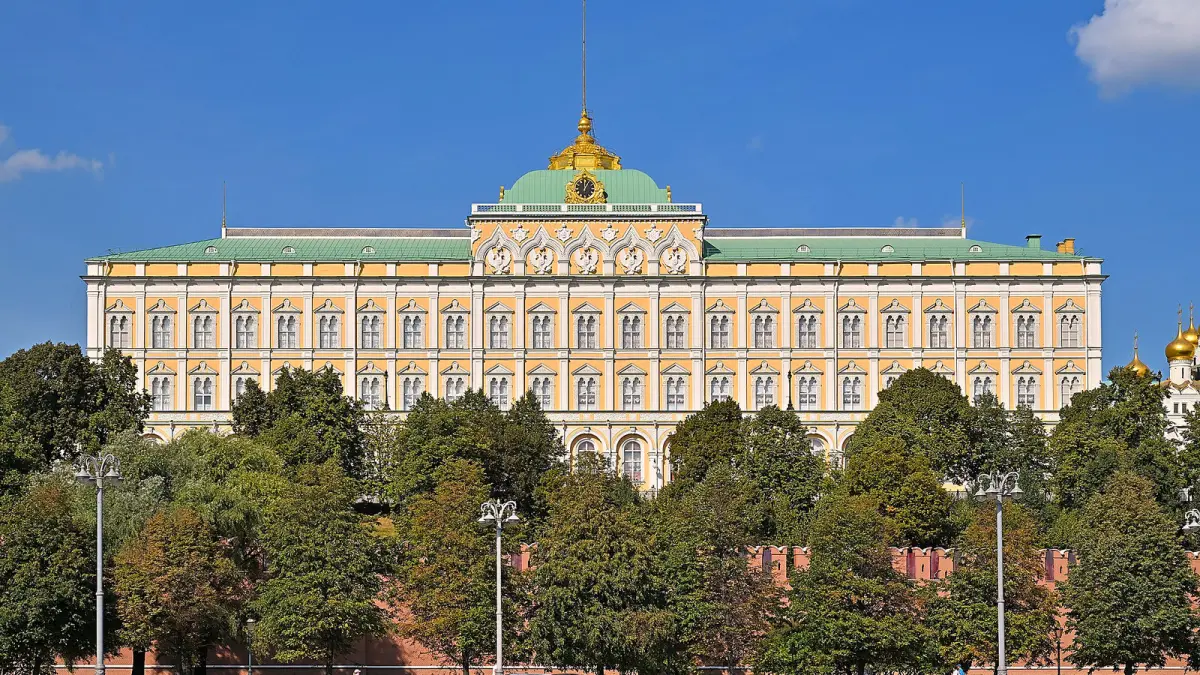
Russian President Vladimir Putin received in the Kremlin Steven Witkoff, special envoy of the US president, and businessman Jared Kushner. On the Russian side the meeting was attended by presidential aides Yuri Ushakov and Vladimir Medinsky and by Kirill Dmitriev, head of the Russian Direct Investment Fund. Putin asked that US President Donald Trump be thanked “for organising our contacts with the Ukrainian side” and said there was already a result on the humanitarian track: the sides are exchanging detained persons and preparing another major step.
Witkoff replied that the American side was ready to announce the resumption of work in the trilateral format. The details of the meeting were set out by Ushakov. According to him, the American negotiators supported Putin’s proposal to repeat in Kostiantynivka the humanitarian operation previously carried out in Oleshky, and the sides agreed to begin contacts on this. Moscow, Ushakov added, again supported the American idea of discussing the security of Russia and Ukraine as part of a future system of European security and recalled the draft agreements with the US and NATO that it proposed in 2021. All of this is the Russian side’s account; the Kremlin’s statements contain no Ukrainian assessment of these proposals.
Vnukovo and Dublin: Europeans are invited to the table
Before flying out of Moscow, Witkoff and Kushner spoke briefly to journalists from CNN. “People did not think we would resume trilateral talks. But we resumed them. We have set a new meeting,” Witkoff said. He confirmed that representatives of European countries would take part in the next round: “They are our partners, and it is important that they are involved in this process.”
From Moscow the envoys flew to Ireland, where they met Ukrainian President Volodymyr Zelensky. He named three outcomes of the week. The first is humanitarian: prisoners will be released, and Kyiv is counting on the largest exchange since the start of the war. The second is that Europeans are being involved more actively in diplomacy so that they have an equal seat at the negotiating table. The third is that further multilateral meetings are being prepared. Zelensky thanked Ireland, which hosted the European Political Community Summit and these talks.
The Moscow and Dublin meetings were preceded by two days of trilateral talks in Abu Dhabi. None of the sides has said when and where the next round will take place, which Europeans will take part or how many prisoners will be exchanged.
Iran: strikes postponed, exchanges of fire continue
The week’s second war has no diplomacy so far. Trump said at the White House that he had postponed new strikes on Iran at the request of allies in the Persian Gulf, Al Jazeera reports. A few hours earlier he had said he would not hesitate to launch new strikes. The Islamic Revolutionary Guard Corps, according to the same broadcaster, announced that it had struck a US early warning radar in Bahrain in response to an attack on a telecommunications tower in Sirik, Iran.
Nvidia without its founder
The most expensive news of the day came from California. Nvidia founder Jensen Huang stepped down as president and chief executive officer and left the board of directors; the company gave no reasons. Chief financial officer Colette Kress is acting in his place for now, and the board has a chair for the first time: Harvey Jones.
The resignation was preceded by two statements from the board. It launched an independent investigation following reports that Huang had been the target of a foreign intelligence effort, and at that time, on 8 November, declared its confidence in the head of the company. Four days later the same board accepted his resignation. We reported earlier on how Nvidia launched the review and how shareholders filed a lawsuit. For Kazakhstan this is not someone else’s story: Huang visited Astana on 23 October, and after that trip came a proposal to open a regional centre for physical artificial intelligence in the country. The statement on the resignation says nothing about these plans.
Kyrgyzstan: eleven applications
In Central Asia the countdown to a presidential election has begun. Kyrgyzstan’s Central Commission for Elections and Referendums said that 11 people had filed nomination applications, among them the incumbent president, Sadyr Japarov. Not all of them will become candidates: by 7 December each must collect at least 30,000 voter signatures, and registration ends on 23 December. The election itself is scheduled for 27 January 2027.
On the day nominations were closing, Japarov said he had received information about plans to provoke an interethnic conflict in the south of the country before the election. He named no names and gave an assurance that the state has enough forces to stop unrest.
What is known about the dates
Two of the three main stories already have a calendar: Nvidia reports to shareholders on 17 November, and in Kyrgyzstan signatures are being collected until 7 December. The talks on Ukraine so far have only one date, and it has passed: the next meeting has been set, but the sides have disclosed neither its day nor its place.



