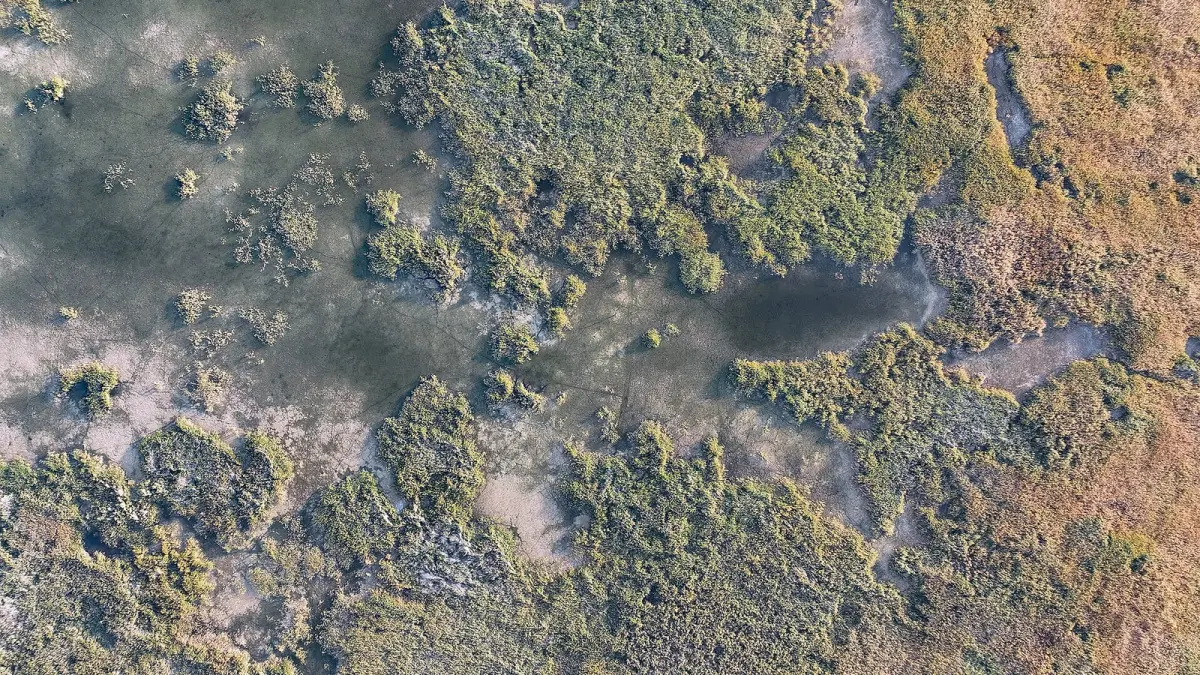
Astana, 13 November. A town for nuclear workers designed for up to 33,000 residents is to be built into the existing settlement of Ulken on the shore of Lake Balkhash, Almassadam Satkaliyev, chairman of the Agency of the Republic of Kazakhstan for Atomic Energy, said on 12 November.
The agency links the settlement’s development to the construction of a nuclear power plant (NPP).
He was speaking at a meeting with Kazakhstani specialists who work on the construction of the Akkuyu NPP in Türkiye. According to the head of the agency, Ulken will get housing, schools, medical facilities and centres for training and retraining staff, as well as hotels, services and businesses. “This will not be a separate workers’ settlement. It will be the development of Ulken with all the accompanying infrastructure needed for life,” Satkaliyev said.
The planning will provide in advance for what happens to the facilities put up for the construction itself: once the work is finished, they will be handed over for the needs of the settlement and of entrepreneurs. Ulken will also house a training centre where future plant staff will be trained and retrained. The agency promises modern digital solutions and intends to make the settlement one of the most advanced communities on the shore of Lake Balkhash. Its natural landscape and location, the statement says, offer opportunities for recreation and tourism.
Satkaliyev also named the number of people required. At the peak of construction, one plant will need up to 15,000 workers: construction engineers, welders, fitters, electricians, and automation and quality-control specialists. About 2,000 people will work at the finished plant: nuclear engineers, reactor operators, and specialists in nuclear and radiation safety and in equipment maintenance and repair. They are to be trained at specialised institutions in Kazakhstan, China and Russia. The Bolashak scholarship programme provides separate quotas for the nuclear industry for master’s and doctoral studies and for internships at foreign organisations. Specialists, the head of the agency assured, will be provided with housing.
At the same meeting Satkaliyev invited the Kazakhstanis employed at Akkuyu to apply their experience at home. “Any experience will be useful — in construction and in operation, across the whole range of specialities. If there is an intention, a wish to apply your experience and knowledge in Kazakhstan in some way, we will be glad to see you,” he said. The head of the agency said that Kazakhstan plans to build at least three nuclear power plants and that the next steps for the first two projects near Lake Balkhash are already clearer. The country trains staff with Russian and Chinese partners and is expanding cooperation with Hungary and the Republic of Korea.
During the same trip the Kazakhstani delegation toured the Akkuyu site, where four power units are under construction, and the plant’s training centre, where operating staff are trained. The units there are to be commissioned at one-year intervals.
The agency did not give a timetable for building the town, its cost or its sources of funding.
On the same day, 12 November, Minister of Ecology and Natural Resources Alibek Kuantyrov spoke at the UN climate conference in Antalya at an event on the international initiative to triple the world’s nuclear power capacity by 2050. Kazakhstan, the ministry said, reaffirmed its commitment to that initiative.
What it means: The authorities promise that Ulken will not become a separate workers’ settlement beside a building site: they want a permanent town with housing, schools and a training centre to grow next to the plant, and what is built for the construction to be handed over to the settlement later. The figure of 33,000 residents is so far a design figure: it has neither a deadline nor a budget.
Who benefits: According to Satkaliyev, the development of Ulken will give young people new opportunities for employment and careers, and nuclear specialists housing and training, including through Bolashak quotas. Entrepreneurs will get the facilities left after the construction.
Background: The first nuclear power plant, Balkhash, will be built by a Russian consortium led by Rosatom, while Kazakhstan is working on the construction of the second, Moiynkum, with the China National Nuclear Corporation, Energy Minister Yerlan Akkenzhenov said on 4 November. President of Kazakhstan Kassym-Jomart Tokayev received Satkaliyev on 22 October and instructed that the development of nuclear energy be kept under special control and the tasks of the Strategy for the Development of the Nuclear Industry be carried out on time.
We have also reported on the second NPP, Moiynkum, being discussed with the Chinese nuclear corporation.



