Bratislava, 24 November. The prime ministers of Slovakia, the Czech Republic, Poland and Hungary and the federal chancellor of Austria have called the new draft of the European Union's seven-year budget for 2028–2034 unacceptable.
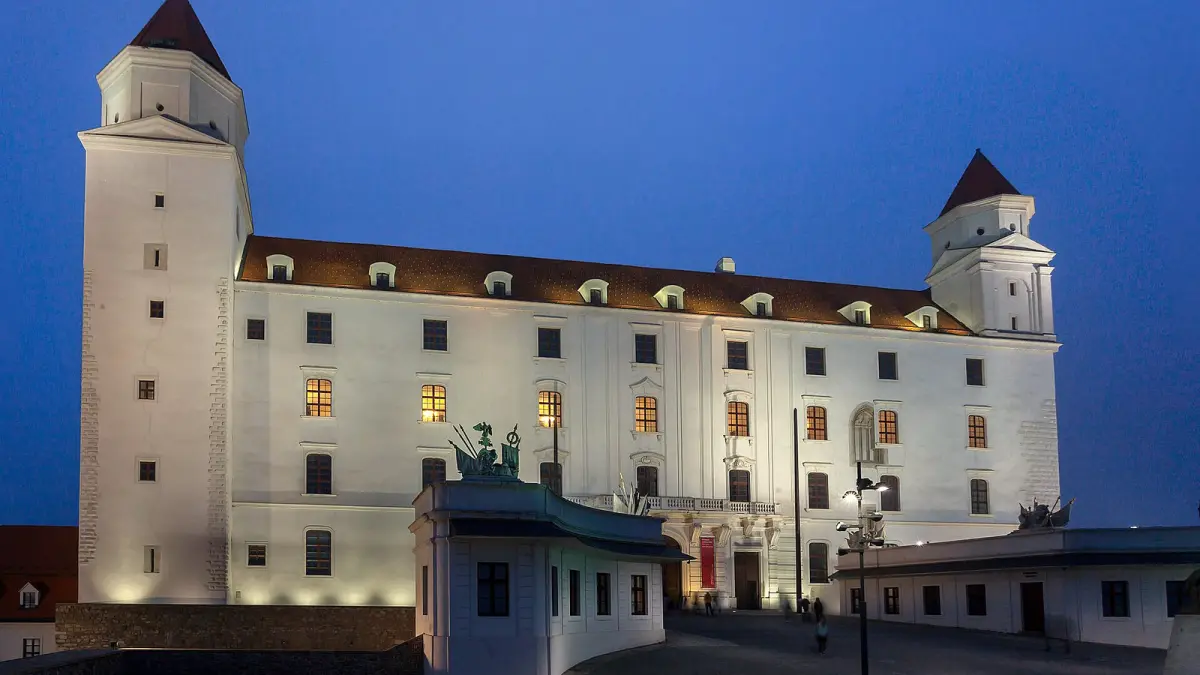
"All five of us here share the same view that this document is unacceptable because it fails to address fundamental issues," Slovak Prime Minister Robert Fico said at a press conference after a meeting at Bratislava Castle on 23 November.
The draft in question is a compromise presented on Saturday, 21 November, by the president of the European Council, António Costa. According to the Anadolu agency, his plan provides for 1.78 trillion euros, cuts planned spending by 10% and keeps a reserve of up to 100 billion euros for Ukraine. The agency does not specify in what prices the sum is given. For comparison, in July 2025 the European Commission proposed 1.763 trillion euros in constant prices, according to a document of the Council of the EU. The budget is adopted unanimously, so the objections of five countries can stop it.
Each leader has objections of his own. Fico insists on preserving cohesion policy, which funds lagging regions, and the common agricultural policy. The mandatory ceiling on subsidies for large farms of about 100,000 euros is, in his words, too low for the countries of the region with their large agricultural holdings. Polish Prime Minister Donald Tusk, as the TV channel TVP World reports, said he would never accept a budget that would drive up energy prices and weaken the security of the countries on NATO's eastern flank. Czech Prime Minister Andrej Babiš objects to topping up the budget with revenue from the European emissions trading system, and Austrian Federal Chancellor Christian Stocker called the draft "excessively optimistic, too expensive and unrealistic".
Ukraine is a separate dividing line. Fico opposes further military financing of Kyiv at the EU's expense and ruled out Slovakia's participation in the proposed 45 billion euro loan. Hungarian Prime Minister Péter Magyar said Hungary stands in solidarity with Ukraine but opposes making aid to it a mandatory part of the seven-year budget. Discussing the budget at the summit, he said, would be pointless, and Costa's proposal is "absolutely unsuitable as a basis for negotiations", TASS reports.
Besides the budget, the leaders agreed on joint demands on energy. The Visegrad Group countries will send EU leaders a letter proposing to postpone until 2030 the emissions trading system for buildings and road transport (ETS2), Fico said.
An extraordinary EU summit on the budget will be held in Brussels on 26–27 November. The EU ambassadors failed to prepare it: according to Politico, which spoke to diplomats, a three-hour discussion the day before ended without agreement and was accompanied by sharp exchanges.
What it means: Central Europe is acting as a single bloc against a slimmed-down budget and wants to keep money for regions and farmers. The seven-year budget cannot be adopted without the consent of the five countries, and Fico himself expects many rounds of negotiations, new proposals and amendments.
Who benefits: Large agricultural holdings in Central Europe, if the subsidy ceiling is raised as Fico demands, and regions that receive cohesion policy money. Ukraine risks becoming hostage to the dispute: Slovakia and Hungary object to mandatory aid to Kyiv from the common budget.
Background: The EU's multiannual financial framework sets ceilings on the Union's spending for seven years. The current one covers 2021–2027. The Visegrad Group is made up of Poland, the Czech Republic, Slovakia and Hungary; Slovakia has chaired it since July 2026.



