Twice in one day the world talked about deadlines. American mediators, according to Volodymyr Zelensky, want peace in Ukraine before January, while Vladimir Putin that same evening promised a response to strikes on Russian oil refineries. In the Middle East the Houthis attacked Riyadh’s business district, and Iran reported more tankers blown up near the Strait of Hormuz. Oil, meanwhile, keeps getting cheaper, and Uzbekistan ended a visit to Jordan with a strategic partnership agreement.
The day in figures
- before January
the deadline for a peace deal that, according to Zelensky, Trump’s envoys are pressing for - 11
people injured in a Houthi attack on a Financial Centre tower in Riyadh - below $90
a barrel of Brent - $7.4 billion
Xiamen Airlines order for 50 Boeing 737 MAX 8 aircraft - 19
documents signed by Uzbekistan and Jordan
According to Bloomberg, SPA, 24KZ, the press service of the President of Uzbekistan
- before January
Peace on a timetable
Ukrainian President Volodymyr Zelensky said in an interview with Bloomberg, summarised by Tengrinews, that US special envoy Steve Witkoff and Donald Trump’s adviser Jared Kushner are pushing for a peace agreement “as soon as possible”, ideally before the start of January. According to Zelensky, Kyiv is being asked for significant concessions while Moscow shows no readiness to end the war. “We also very much want peace, but not at the expense of Ukraine alone,” he said. If there is no agreement, Kyiv intends to ask the new US Congress, where Democrats hold a majority after the midterm elections, for a large military aid package and tougher sanctions against Russia.
The same day Russian President Vladimir Putin chaired a meeting of the Commission on the Strategy for the Development of the Fuel and Energy Complex. Kyiv, he said, keeps attacking Russian oil refineries “despite the appeal and the direct request of the President of the United States not to do this”. “In this regard I will note: retaliatory actions on our part are inevitable. Everyone should know this,” Putin said. He recalled that Russia had restricted exports of petrol and jet fuel, as well as diesel fuel, leaving partial supplies of the latter to world markets, which he said had been agreed with the US President. Kazakhstan buys Russian fuel, so this economic part of the speech matters to it too; Putin did not say how long the export restrictions would last.
No calm in the Gulf
In Riyadh the Houthis attacked one of the towers of the Financial Centre, and 11 people were injured: according to the Saudi agency SPA, quoted by Anadolu, they are two Saudi citizens, four Egyptians, two Indians and three Nepalis. Their condition has not been reported. The Houthis are an armed movement that has controlled Yemen’s capital Sanaa since 2014 and is backed by Iran.
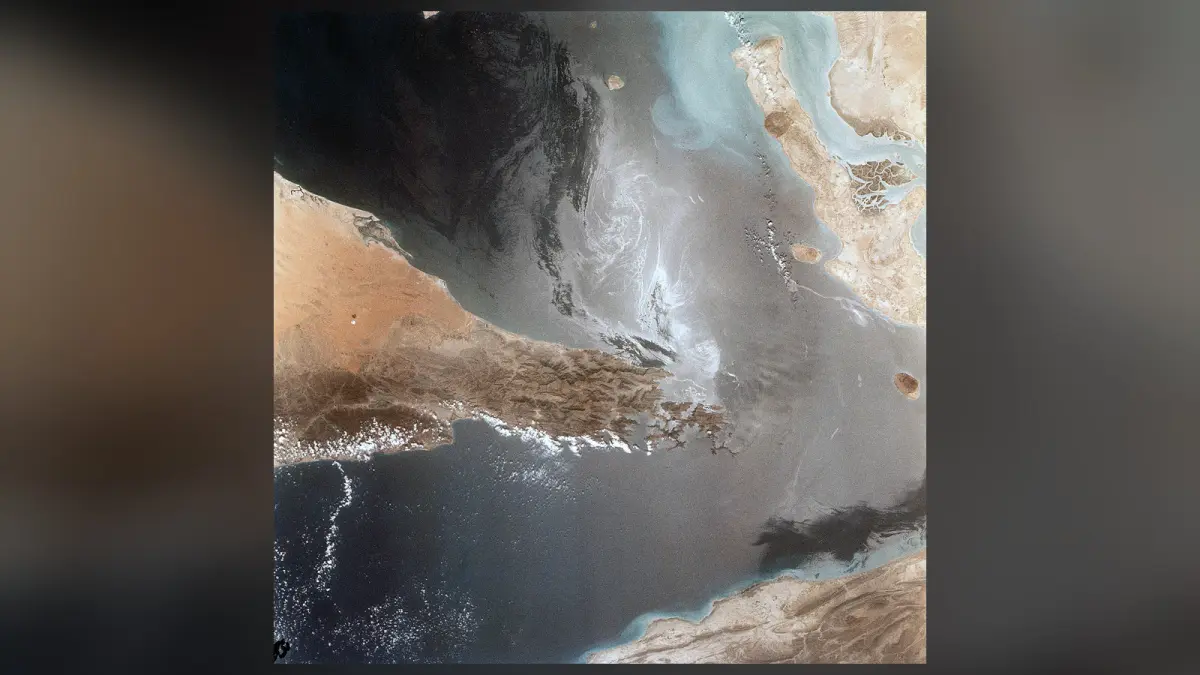
Near the Strait of Hormuz, through which a large share of the world’s oil and liquefied gas passes, Iran’s Islamic Revolutionary Guard Corps said a fourth tanker had hit a mine on Tuesday; the report was carried by RIA Novosti and Sputnik. These publications contain no independent confirmation. On 23 November the IRGC had reported two supertankers blown up. Shipping through the strait has been restricted since late February, when the United States and Israel began a military operation against Iran.
Oil falls despite the mines
For now the market is watching supply rather than mines. A barrel of Brent, according to 24KZ, is holding below $90, and US WTI is trading at about $80. The channel names the restart of Libya’s Sharara oil pipeline and larger purchases of Russian oil by China and India as the main reasons for the fall; attacks on ships, by contrast, are holding back a further decline. For Kazakhstan the price of a barrel is directly tied to the budget and export earnings, and on 29 November OPEC+ ministers will meet to discuss output for 2027.
Planes and deals
Boeing has won its biggest order from China in nine years: Xiamen Airlines will order 50 narrow-body 737 MAX 8 airliners for $7.4 billion, 24KZ writes, citing Bloomberg data. Deliveries are planned for 2031–2034, and the deal still needs approval from shareholders and Chinese regulators. It is the first major step in implementing the understandings between Trump and Xi Jinping: in May, after his visit to Beijing, the US president said China had committed to buying 200 Boeing aircraft.
Tashkent looks for friends in the Middle East
President Shavkat Mirziyoyev of Uzbekistan and King Abdullah II of Jordan agreed to raise relations to a strategic partnership, the Uzbek president’s press service said. By the end of the visit, the UzA agency reported, the partnership agreement and 19 other documents had been signed. The sides named trade, investment, transport, mining, agriculture, textiles and pharmaceuticals as priorities, and set the goals of bringing trade to $500 million and signing a preferential trade agreement. In August 2025 the King of Jordan made the first top-level visit to Uzbekistan in the history of bilateral relations.
What lies ahead
Today in Geneva Uzbekistan’s Javokhir Sindarov and India’s Gukesh Dommaraju play the second game of their world chess title match; the first ended in a draw. The National Bank of Kazakhstan will announce its base rate decision on 4 December, and the US Federal Reserve on 9 December. Little more than a month remains until January, the deadline by which Washington is hurrying a peace deal, and in the past day neither Moscow nor Kyiv signalled readiness for concessions.



