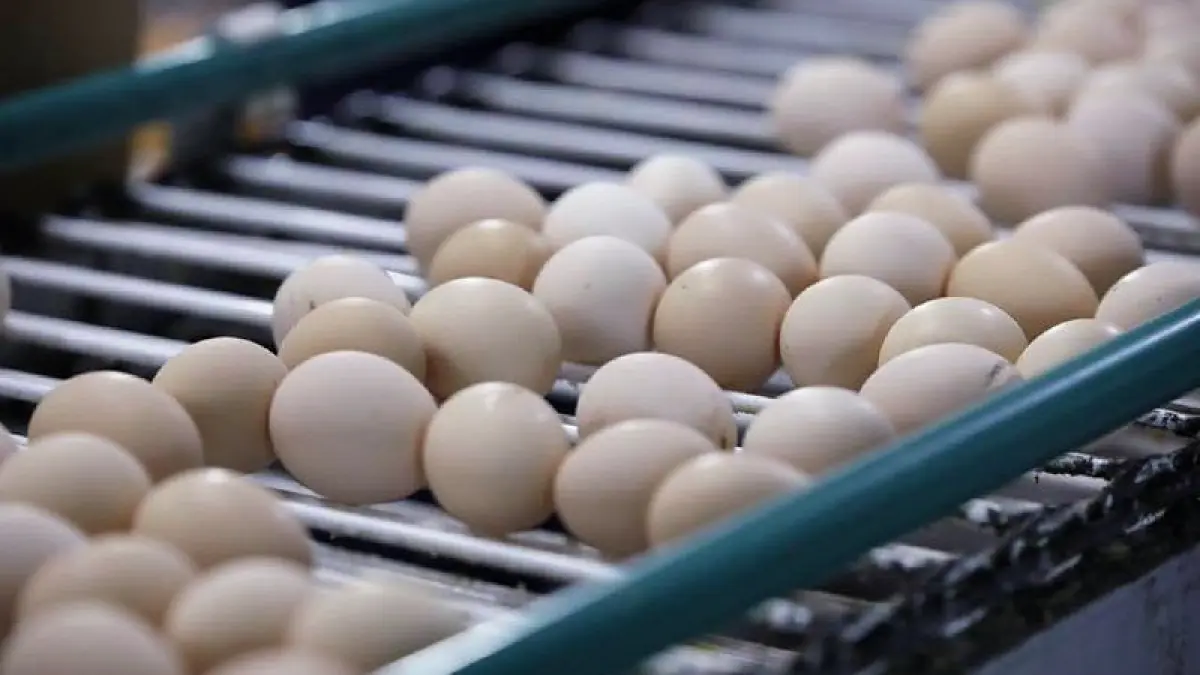
Astana, 26 November. Kazakhstan produced more than 4 billion chicken eggs in January–October 2026, 7.5% more than in the same period last year, the Ministry of Agriculture reported.
According to the ministry, production fully covers the population’s needs.
Four regions produce the most eggs: Akmola, Almaty, Karaganda and North Kazakhstan. That is where the large poultry farms supplying the domestic market are concentrated.
The most notable news in the statement concerned a new project in the east. Construction of the Altai Qus poultry farm, costing 5.5 billion tenge, has begun in East Kazakhstan region. Its design capacity is up to 150 million eggs a year. The farm will be fitted with automated lines, digital control systems and equipment meeting international quality standards, and will create up to 150 jobs.
For the region this is a notable change. According to the ministry, enterprises in East Kazakhstan region currently meet about 30% of local demand for chicken eggs, with the rest brought in from other regions. Once Altai Qus reaches design capacity, the region’s self-sufficiency should reach 109%, meaning it could sell the surplus to its neighbours.
On a national scale the new farm will add little. Annualising ten months of output gives roughly 4.8 billion eggs, and 150 million would be, by our estimate, about 3% of annual production. But for a region that now depends on outside supplies for more than two thirds of its eggs, it is the difference between buying in and producing its own.
The ministry attributes the growth in production to consistent support for poultry farming, expanding capacity and attracting investment into the agro-industrial complex. It names food security and supplying the domestic market with its own products as the main goal.
The statement does not say when Altai Qus will reach design capacity or who the investor is. Nor does the ministry give egg prices.
What it means: Kazakhstan is increasing egg production and, according to the ministry, is already fully self-sufficient. The new farm is needed above all in East Kazakhstan, where local eggs cover only a third of residents.
Who benefits: Residents of East Kazakhstan region, for whom local production could reduce dependence on supplies from elsewhere. Investors and staff of Altai Qus, where up to 150 jobs will appear. Producers in other regions that now sell eggs to the east may see their market shrink.
Background: Poultry farms supply most of the eggs sold in shops. East Kazakhstan region borders Russia and China; its centre is Oskemen (Ust-Kamenogorsk).



