While President Kassym-Jomart Tokayev of Kazakhstan spent the day in Moscow, the country lived an ordinary Thursday, with room for both a detective story and bookkeeping. Police in Atyrau unravelled a story of hundreds of fake IDs, ministries reported figures for nine months, and state services showed how digital tools are reaching vacancies, ambulances and trucks.
The day in figures
- 803
forged state agency IDs seized in Atyrau region - 6.4 billion dollars
agri-food exports in nine months - 9.1%
2026 inflation forecast in the National Bank survey - 1.1 billion cubic metres
water saved by water-saving irrigation - 3,900
video badges needed by ambulance crews - 1.74 million barrels
oil and condensate output on 24 November
According to the Ministry of Internal Affairs, the Ministry of Agriculture, the National Bank, the Ministry of Water Resources, Samruk-Kazyna and KAZENERGY
- 803
Atyrau: IDs wholesale
The morning began with a story that begs to be filmed. On Monday, 23 November, police in Atyrau region stopped a Lexus with four men and found in the car a replica pistol and an ID of a National Security Committee (NSC) officer. The ID turned out to be forged, and the trail led to a 39-year-old resident of the region whose home, as Shugyla Turlybek, press secretary of the Ministry of Internal Affairs (MIA), said, held 803 fake IDs. Of these, 606 were NSC IDs and 95 MIA IDs, and the rest were of the tax service, the prosecutor’s office and the anti-corruption service, plus 367 NSC emblems, a seal and a printer. Demand, judging by the proportions, was above all for the most formidable agency. Police are now looking for the buyers: a security officer’s ID opens doors, and the question is not the blanks but which doors they have already opened.
Figures for nine months
The Ministry of Agriculture reported on agro-industrial exports: in January–September they rose by 34.7% to 6.4 billion dollars. Wheat is still the main line at 1.42 billion dollars, but oil, flour and feed together brought in about 1.86 billion dollars, and it was they that provided more than a third of the growth. For a country known for decades as a seller of grain, this is a noticeable shift: the money for processing stays at Kazakh plants.
The National Bank published its regular survey of 15 organisations that forecast the economy. The experts lowered their 2026 inflation forecast from 9.5% to 9.1%, but see the base rate unchanged at 15.75% until the end of the year. They expect a rate cut later, to 10.8% by the end of 2028. The National Bank reminds readers that this is not its own forecast, and on 4 December the regulator will take its last rate decision of the year. The day before, banks in a National Bank survey said that loans to business are already becoming slightly cheaper, above all for large companies.
The Ministry of Water Resources and Irrigation calculated that water-saving irrigation has saved about 1.1 billion cubic metres of water. Modern irrigation systems already cover 702,300 hectares, and over the past three years they have been introduced five times faster than before: the state reimburses farmers 80% of the costs instead of 50%. Agriculture, according to Yerbol Salikhbayev, director of a department of the ministry, accounts for up to 60% of the country’s water, so every hectare of drip irrigation is water left in the rivers.
Oil and China
Minister of Energy Yerlan Akkenzhenov continued talks in Qingdao, the first of which we reported the day before. With the Energy China corporation the ministry discussed a research centre at Al-Farabi Kazakh National University, a 2 GW direct current line from Ekibastuz to Balkhash and energy storage. The Chinese side promised to connect the Sauran solar plant in Turkestan region ahead of schedule, by the end of the year. With the Shandong Kerui Group holding the minister talked about technologies for old fields and proposed starting with pilot tests: “The effectiveness of any technology must be confirmed in practice.”
Old fields need such technologies, and the latest summary from the KAZENERGY Association showed how vulnerable new production is too. On Tuesday, 24 November, Kazakhstan, according to its data, produced 1.74 million barrels of oil and condensate a day, 17% below the November average. At Tengiz output fell to 522,000 barrels a day, and among the reasons the association named a storm that disrupted shipments through the Caspian Pipeline Consortium (CPC). Oil exports still depend on the weather at the berths in Novorossiysk.
Digital at work
The Ministry of Labour and Social Protection is expanding its Digital Employment Service: if a jobseeker has applied for a vacancy and received no reply, the system will assign a task to a career centre specialist, and employer ratings will appear on the Enbek.kz exchange. In Pavlodar and Mangistau regions 8,400 people have already found jobs through the project, and it is promised to cover the whole country by the end of the year. These are the first steps after the President’s instruction to launch a digital employment regime and after the audit by the Supreme Audit Chamber, which reproached the ministry for poor accounting of results.
Kazakhtelecom is issuing body-worn video badges to ambulance crews: they already work in 10 regions, and about 3,900 devices are needed in total. Recordings will help examine disputed calls, which usually pit the word of the doctor against the word of the patient. The Ministry of Transport discussed with China TransInfo Group the AI JOL platform, which on 50 trucks monitors the route, speed and driver fatigue, and agreed to continue work on driverless freight. In Astana the WorldSkills Kazakhstan 2026 championship of working professions opened: 840 competitors, 44 skills and tasks with artificial intelligence.
Order and neighbours
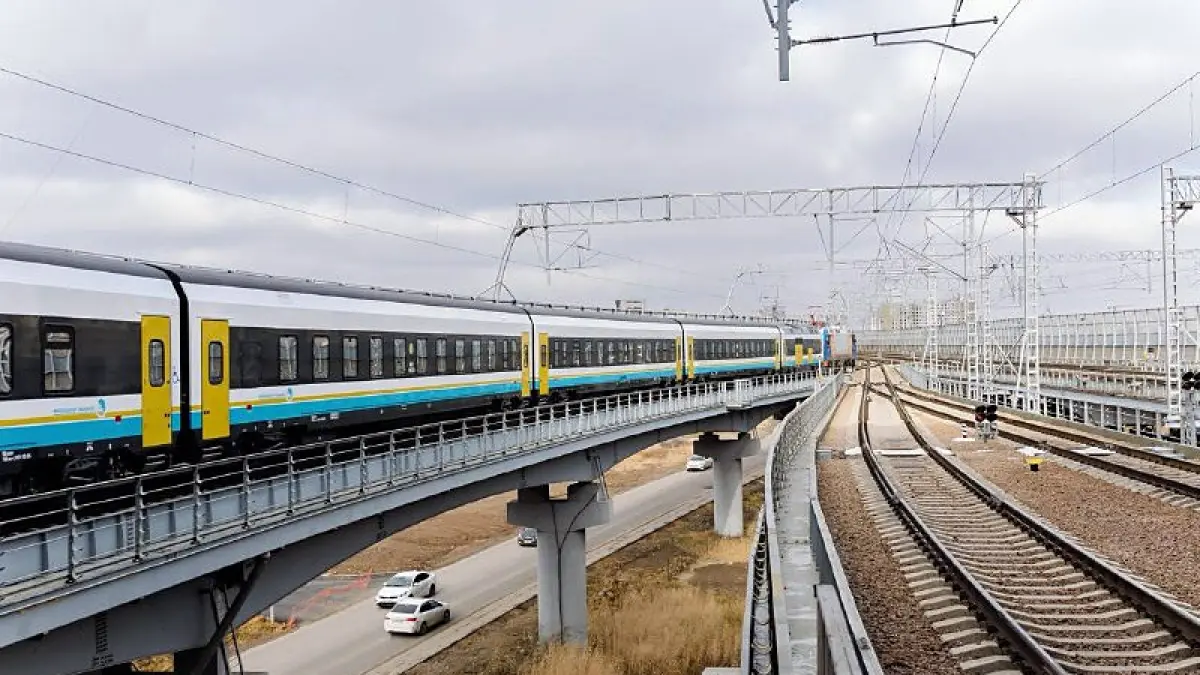
Prosecutors reminded everyone about money and land. The Karaganda transport prosecutor’s office secured payment for more than 700 railway security workers for the time of pre-shift medical checks, and the Ili district prosecutor’s office returned to the state through the courts 100 hectares allocated for forest without an auction and never planted. In North Kazakhstan region listeria was found in frozen meat, and 75 kg of the product were burned. The national carrier Kazakhstan Temir Zholy announced that from 13 December the Nurly Zhol–Kyzylorda train will run in new Stadler carriages.
Among the neighbours, the main economic news came from Washington. The World Bank’s Board of Directors approved 800 million dollars for Uzbekistan for reforms in seven areas, from social insurance to simpler border crossings, and expects them to yield the equivalent of 275,000 jobs in 2029–2031. Two days earlier S&P raised Uzbekistan’s rating, and money for reforms looks like a continuation of the same story of trust.
By evening attention will move to football: in Almaty Kairat hosts Sweden’s Mjällby in the league phase of the Conference League. And the evening news will tell how the President’s visit to Moscow ends, where he met Vladimir Putin before a conference on artificial intelligence.



