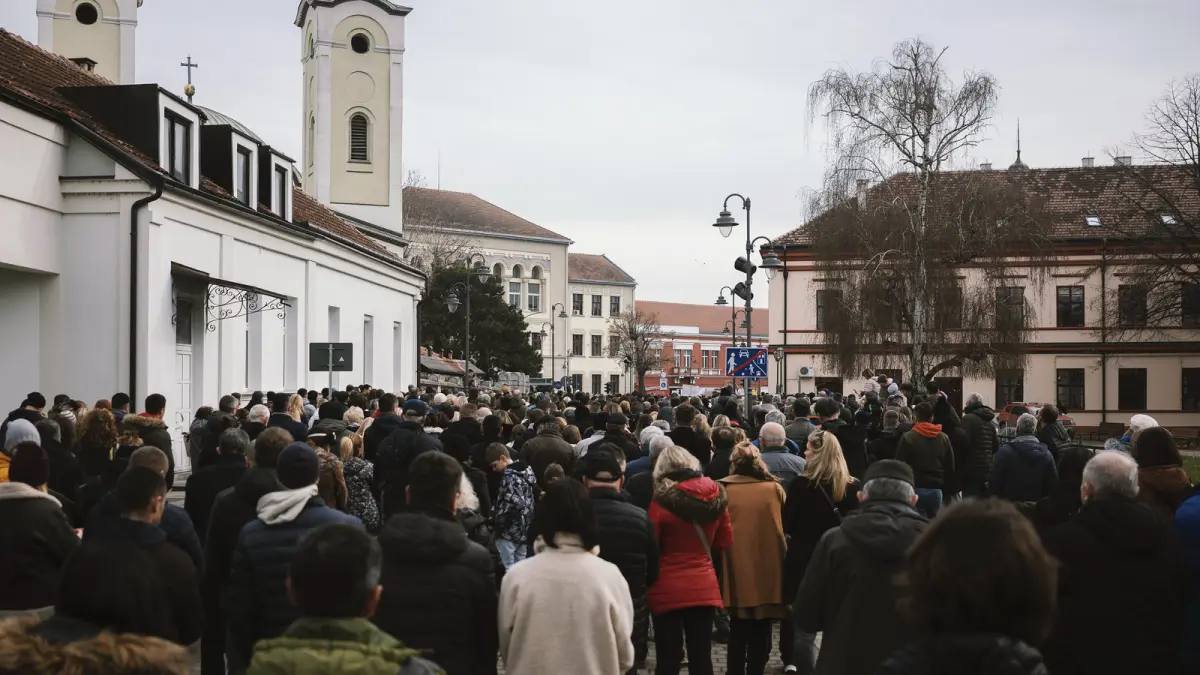
Belgrade, 26 October. The Student List, which won Serbia's snap parliamentary election, does not plan to join European Union sanctions against Russia, Reuters reported after speaking to the movement's representatives; the movement called its energy reliance on Russia not a geopolitical alignment but an acute economic dependency.
"Sanctions from a country as small as Serbia would change nothing for Russia, but symbolically it would be very bad," said Jovo Bakic, a professor at the University of Belgrade and one of the movement's representatives. He noted that Serbia had itself lived through UN sanctions and knows how severe their consequences can be. The dependency concerns above all gas and oil: Russia's Gazprom is Serbia's biggest gas supplier, delivering around 2.2 billion cubic metres a year at below-market prices, Reuters notes.
The first version of the Reuters report said the movement's leaders had pledged to halt arms exports to combat zones, including sales to Western intermediaries that pass weapons on to Ukraine. On 27 October the agency corrected that paragraph: the Student List's top candidates had not said whether a future government would halt such exports. The first version of this VRK News story also relied on the uncorrected report.
These statements contradict the forecast of the outgoing authorities. Former president Aleksandar Vucic, conceding his coalition's defeat, predicted that the new government would impose sanctions on Russia as early as March or April. According to preliminary results, the movement won more than 52% of the vote and can form a government on its own.
Overnight Serbia saw its first serious post-election incident: a crowd burst into the building of Informer TV, wrecked the premises and attacked the editor-in-chief, the channel itself reported. Who the attackers were and whether they are linked to any political force has not been reported.
Corrected on 27 October: the first version of this story, based on the original Reuters report, said the movement's leaders had pledged to halt arms exports to war zones; Reuters corrected that passage and the story has been rewritten.
What it means: A movement that grew out of anti-corruption protests set out the core of its foreign policy the day after its victory: no sanctions on Moscow; the question of Serbian ammunition supplies, contrary to the first reports, remains open.
Who benefits: Moscow, which keeps its relations with Belgrade free of sanctions; the Serbian economy, according to the movement itself, which keeps access to Russian energy. How the new government will treat arms exports, on which Kyiv also depends, is not yet known.
Background: The protests from which the movement grew began after a concrete canopy collapsed at Novi Sad railway station on 1 November 2024, killing 16 people. The students did not stand for parliament themselves, since candidates were chosen by student assemblies, and the movement has not yet said who will lead the government; Anadolu names cardiologist Ilija Srdanovic, former central bank governor Dejan Soskic and basketball player Dejan Bodiroga among the possible candidates.
We have also reported that Vucic conceded defeat as the Student List won Serbia's election.



