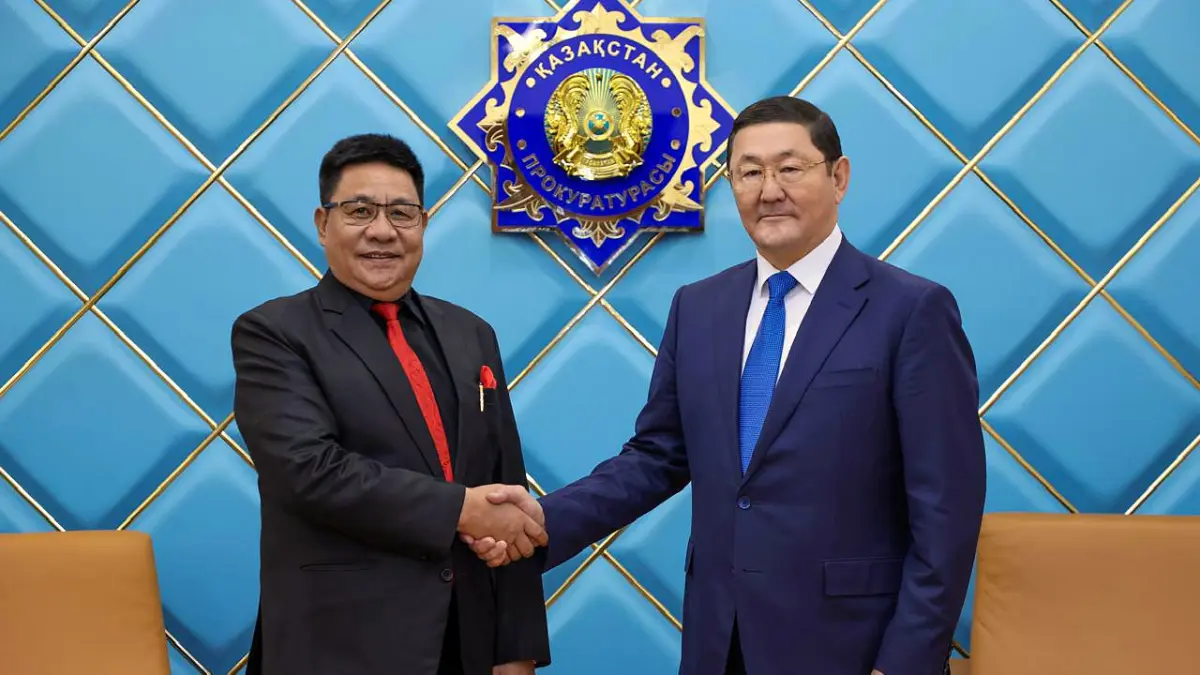
Astana, 3 November. Prosecutor General of Kazakhstan Berik Asylov and Indian Ambassador to Kazakhstan Sailas Thangal signed a treaty on extradition between the two countries, the Prosecutor General’s Office reported.
The treaty provides a legal basis for handing over people wanted by the law enforcement bodies of one side, either to be prosecuted or to serve a court sentence. The prosecutors stressed the principle that punishment is inevitable. The document, the statement says, completes the treaty and legal framework between the countries in criminal proceedings: agreements on mutual legal assistance in criminal matters and on the transfer of convicted persons are already in force.
The Prosecutor General linked the importance of the treaty to the growth of trade, economic, cultural and humanitarian ties. More than 600 Indian companies operate in Kazakhstan in pharmaceuticals, mining, medicine and food. India ranks first among distant-abroad countries by the number of foreign students in Kazakhstan: almost 10,000 Indian citizens studied here in the 2025–2026 academic year. The number of trips in both directions, including tourist trips, is also growing.
What it means: A third treaty, on extradition, has been added to the two agreements already in force, on legal assistance and on transfer of convicted persons: all three levels of criminal-law cooperation with India are now formalised. When the treaty enters into force and whether it requires ratification is not stated.
Who benefits: Law enforcement bodies of both countries, and business, students and tourists whose flow is growing: according to Asylov, widening ties also requires joint efforts against crime. The statement does not name any people or cases the treaty might apply to.
Background: The Prosecutor General’s Office calls international cooperation a priority of the prosecution service’s work.



