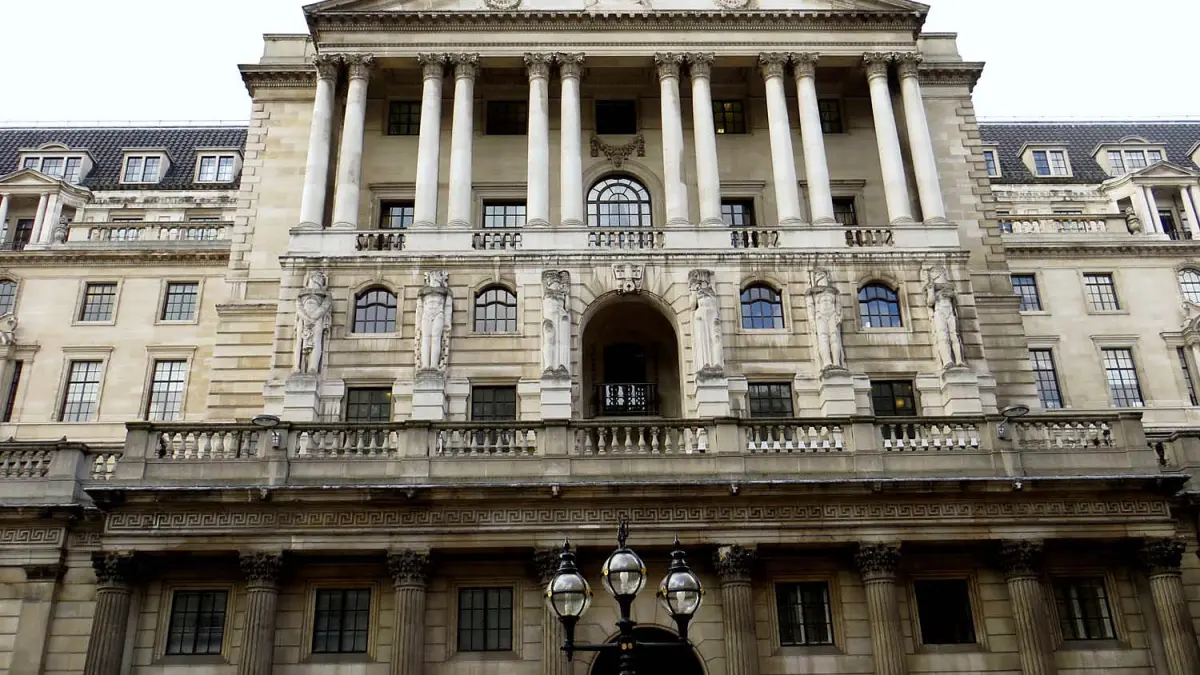
Thursday, November 5, turned out to be a day of awkward bills around the world. In Paraguay the president resigned over a bank’s collapse, and parliament did not wait and voted for impeachment. In France more people took to the streets than on any earlier day of protest. The Bank of England raised its rate and warned that inflation would rise because of energy prices. Meanwhile a string of bomb threats hung over flights in Europe.
The world on November 5
- 78
Paraguayan deputies voted for impeachment - about 600 thousand
protesters in France by the Interior Ministry’s estimate - 1.6 million
by the estimate of the General Confederation of Labour (CGT) - 4%
Bank of England rate after the rise - 22
flights that received bomb threats in four days
Based on the review’s materials
- 78
A bank that stopped
Paraguayan President Santiago Peña announced his resignation in a video on X, and less than an hour later the lower house unanimously approved impeachment proceedings: all 78 deputies present voted in favour. The Senate must now decide whether to accept the resignation or continue the procedure. The cause is Ueno Bank: the central bank intervened when the bank’s capital fell below the legal minimum, and millions of customers were left without access to their accounts. According to ABC Color, eight of the bank’s executives were detained and 27 bank employees and business associates face charges. Peña held shares in the parent company Ueno Holding until 2025, and the opposition speaks of a conflict of interest.
The political detail matters no less than the financial one: according to ABC Color, the impeachment was also backed by Peña’s political mentor, former President Horacio Cartes.
Wages that lag behind prices
In France that same day, by the Interior Ministry’s preliminary estimate, almost 600 thousand people took part in demonstrations, which is more than on October 17 (550 thousand), October 24 (410 thousand) and October 31 (320 thousand). The CGT union counted 1.6 million. The Interior Ministry’s and the union’s estimates differ almost threefold, but by the Interior Ministry’s count each action was larger than the last. About 16% of teachers went on strike, and 70 thousand police kept order. According to the newspaper Le Figaro, as TASS cites, 448 people were detained. Prime Minister Sébastien Lecornu promised to convene a “social conference” with unions and employers on Monday, November 9. The union demands wage rises and a 10% increase in the minimum wage.
Energy that gets dearer
The Bank of England raised its rate by a quarter point to 4%, in an 8–1 vote: Monetary Policy Committee member Catherine Mann favoured an immediate half-point rise. The cause was named directly: the conflict in the Middle East, now in its ninth month, has pushed up world energy prices. Brent crude averaged 108 dollars a barrel over the 15 working days to October 27, which is 38% above the July level. Inflation in Britain was 3.5% in September and, by the bank’s forecast, will approach 5% by mid-2027. The bank itself ties its rate to the price of energy.
Alarm in the sky
Over four days, November 2 to 5, at least 22 passenger flights in several European countries received bomb threats, by Anadolu’s count, at least fifteen of them on November 5. Aircraft diverted to alternate airfields, and some were escorted by fighter jets. Italian agencies ANSA and Adnkronos, as RBC writes, report that the threatening emails were signed in the name of the group “Male State”. RBC cites no official confirmation of authorship.
The negotiating table
Meanwhile in Washington, First Lady Melania Trump met Russian and Ukrainian delegations on the humanitarian operation in Aleshki. The First Lady, as RBC relays, said she took part in every stage of preparation, from demining plans to evacuation routes and access to hospitals. Kirill Dmitriev, head of the Russian Direct Investment Fund (RDIF), thanked her and handed over a drawing by an 11-year-old girl from Aleshki, and she gave him a personal message for Russian President Vladimir Putin. Later US President Donald Trump said that the United States and Russia are close to agreements not only on Ukraine but on European security as a whole. These are Trump’s own words; the position of Kyiv and the European capitals on this statement is absent from the publications cited.
What links these stories
A bank that does not return money, wages that lag behind prices and energy that gets dearer are three different bills, and they are answered differently: in Paraguay with a resignation and an impeachment, in France with a social conference, in Britain with a rate rise. The nearest deadline is named: on Monday, November 9, unions, employers and the government will meet in Paris.



