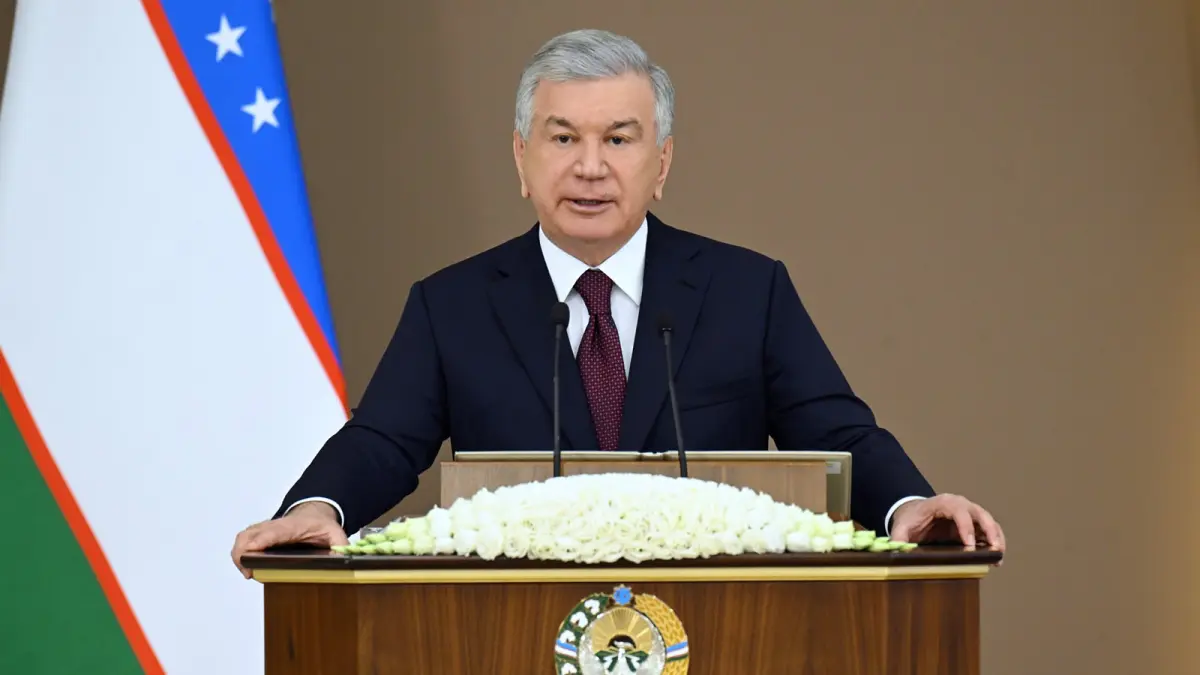
Tashkent, 27 November, . President of Uzbekistan Shavkat Mirziyoyev held a meeting with investors and entrepreneurs in the transport and logistics sector, the website of the country’s president reported.
Uzbekistan’s transport in figures
- 593 km and $5.6 billion
five toll road projects - 15–16 million tonnes
expected volume of freight after the launch of the China–Kyrgyzstan–Uzbekistan railway - $8 billion
cost of the railway projects - 17 million passengers
expected in aviation this year, the goal for the coming years is 25 million passengers - 250 aircraft
minimum fleet by 2030
Based on data from the website of the President of Uzbekistan
- 593 km and $5.6 billion
Mirziyoyev stressed the need to develop the transport system together with economic growth, to attract investment and modern technology to the sector and to involve the private sector more widely; participants discussed roads, railways, aviation, urban transport and integration into international corridors.
Roads, according to the report, received 80 trillion sums over ten years, 7,000 kilometres were reconstructed and 125,000 kilometres repaired. At present, as the report says, $20 billion of investment could be attracted to this sector. Five toll road projects with a total length of 593 kilometres and a cost of $5.6 billion are being implemented. In the regions, 131 projects worth $4 billion have been prepared to be offered to investors: they will be given the right to build, maintain and operate the roads and to place retail and services along them. Projects worth $6.5 billion are being implemented with international financial institutions. Mirziyoyev demanded quality: “We need not roads that are cheap today and tomorrow again require budget spending, but quality roads that can serve for many years.” Polymer-bitumen materials and geotextiles are planned to be included in standards and, from next year, made mandatory in the construction and reconstruction of roads of international significance.
The railway part rests on the China–Kyrgyzstan–Uzbekistan line: after its launch the volume of freight traffic is expected to grow tenfold and reach 15–16 million tonnes a year. By 2030 Uzbekistan plans to build 545 kilometres of new railways and bring the share of electrified track to 65%, modernise lines, including Angren–Pap, and build a separate high-speed Tashkent–Samarkand line. The total cost of these projects is $8 billion; Mirziyoyev called on international organisations and investors to cooperate. The freight wagon fleet is to be increased every year by 5,000–6,000 units, entrepreneurs have been promised tax breaks and discounts on the use of infrastructure, and from next year a new tariff policy with transparent formation of transportation costs will be introduced in stages. Those responsible were instructed to use the Middle Corridor, to complete agreement with foreign partners on mutual recognition of electronic freight documents and to set up block trains to the world’s major seaports. Over ten years the aim is to bring logistics capacity to 80 million tonnes: for this, nine logistics centres worth $1.6 billion will be built with investors.
In aviation, the country has in recent years increased the number of airports to 18; this year it expects 17 million passengers, and the goal for the coming years is 25 million. Next to the new international airport being built with foreign partners, an “Aerocity” complex worth $5 billion will be created, with logistics, e-commerce, hotels and housing. To support airlines, the price of aviation fuel will be tied to world average prices, tax and customs breaks will be added for the import of fuel and spare parts and for aircraft leasing; separate preferences will go to companies that train and hire domestic pilots. By 2030 the aircraft fleet is to grow to at least 250 aircraft, and international airports will be exempted from property and land taxes until 2030. Mirziyoyev also put forward an initiative to open an International Civil Aviation University in New Tashkent with a modern campus.
Urban transport received separate attention: over three years entrepreneurs brought in more than 3,500 buses, 330 routes were moved to the new system, and daily passenger traffic doubled in the capital and grew 2.5-fold in the regions. Bus routes up to 20 kilometres long from the capital to the agglomeration will be fully moved to gross contracts, and tax breaks will be introduced for those who build bus depots. For the Tashkent metro, 28 five-car trains will be purchased over two years and cars will be added to 40 existing trains, bringing them to five.
What it means: Uzbekistan is offering private capital a stake in the entire transport system at once: in highways, rails, airports, buses and the metro. The terms are these: the right to place retail along roads, tax breaks on wagons and aircraft, and tying the price of aviation fuel to world prices. For Kazakhstan the transit part matters: the report says that Uzbekistan has every possibility of becoming a major land port between East and West, North and South. Those responsible were instructed to use the Middle Corridor and to complete the agreement on mutual recognition of electronic freight documents.
Who benefits: According to the report, the winners are private investors and entrepreneurs: they are promised concession rights to roads, tax breaks, discounts on the use of railway infrastructure and preferences for airlines. For Kazakhstan it matters that the China–Kyrgyzstan–Uzbekistan railway does not pass through its territory, while the Middle Corridor, which Tashkent also wants to use, runs through Kazakhstan.
Background: The Middle Corridor is the Trans-Caspian route from China through Kazakhstan, the Caspian, Azerbaijan and Georgia to Europe. On 21 September Mirziyoyev had already reviewed a presentation on the progress of major projects in the transport and logistics sector. The goals for 2030: to double the volume of transport services, attract $9.1 billion of investment to the sector and raise exports of services to $5.7 billion.
We have also reported on how there are 2.7 times as many lorries at the border with Uzbekistan and on how the Zhibek Zholy checkpoint is operating again.



