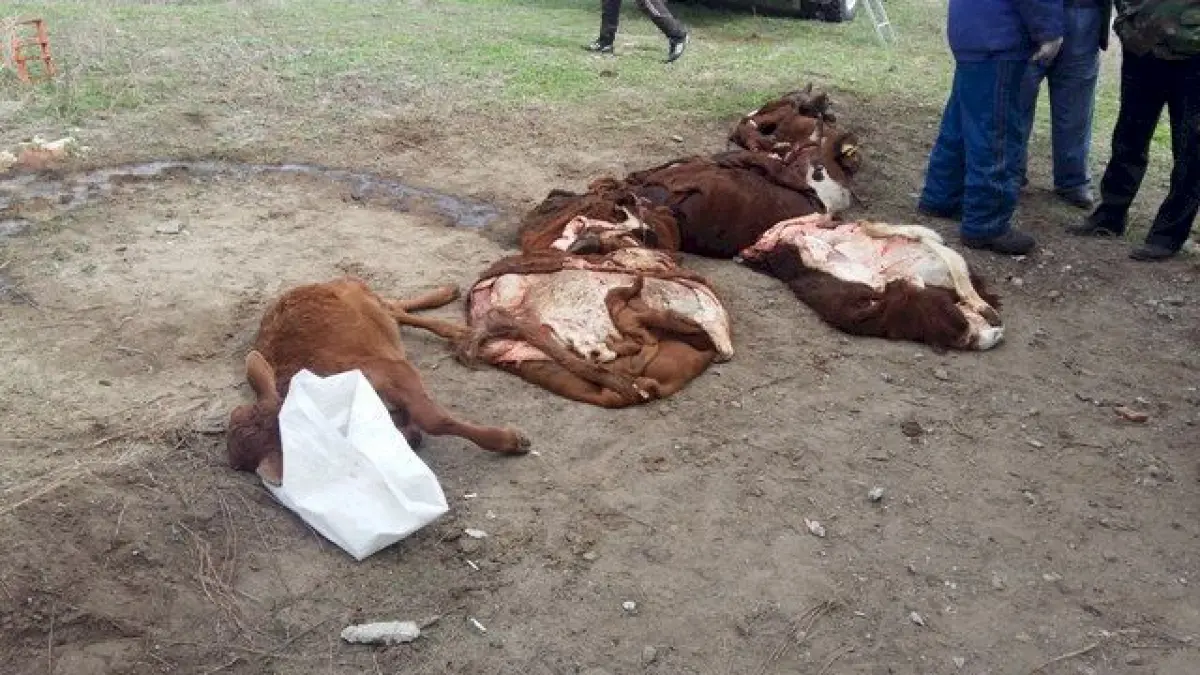
A mass disease of livestock has been detected in the village of Aliya, Kobda (Khobda) district, Aktobe region. In 10 days about 160 head of cattle were infected with an unknown infection. As VRK News reports, citing aktobenews.kz, according to deputy district akim Bolat Kulov, the first data arrived on 21 April. At first 3–4 animals were reported ill, but later the number of infected cattle reached 157.
Bolat Kulov:
“There are three herds in the village. They all graze separately. The disease was detected in one of them. The unknown infection spreads very quickly. In 10 days about 160 animals have been infected. Specialists from the regional centre and the republic have arrived at the scene. Driving livestock out to pasture is temporarily banned. At a specially designated place on the edge of the village the infected livestock is being slaughtered and processed. According to veterinarians, the meat of the domestic animals is fit for consumption. The heads, shins and hides are burned on the spot. Our task is to prevent the spread of the infection.”
The infected livestock show a rise in temperature and profuse foaming. According to specialists, the high body temperature causes deformation of horns and hooves. On some farms several infected animals have been found. For example, of local resident Sailybai Uderbai's 14 head of cattle, 10 have caught the unknown disease.
Sailybai Uderbai:
The signs are seen in all 10 cows. Calves are dying. We looked on the internet; the signs of the disease are similar to foot-and-mouth disease. We are afraid of this epidemic spreading further, so we are slaughtering the livestock. We sell the meat to dealers at 900 tenge per kilogram.
Two cows have died on the farm of 65-year-old Kalima Zhakupova. Now the sickness has spread to suckling calves.
— There are a great many affected households on our street. At some, the number of sick animals reaches 8–12. I have lived here for many years, but I am seeing this for the first time. Our livestock graze on the other side of the Kobda; the cause of the disease should be sought there.
The district's top officials, who are keeping the situation under control, are in the village. All the district's veterinarians were summoned to the village as an emergency. Four teams are vaccinating the livestock. — In my practice I am seeing this for the first time, says veterinarian Galym Zhupzhanov.
Soil, grass and water samples have been taken from the grazing area. They have been sent for study to the national reference veterinary centre in Astana.
— There are no versions of what happened yet. The samples are being examined in laboratories. To prevent further spread of the infection we are vaccinating against foot-and-mouth disease and pasteurellosis. The meat of the infected livestock is being processed. It poses no danger to people. Such a case occurs in our region for the first time, says Temirbek Nurtazin, the region's chief veterinary and sanitary inspector.
In other nearby settlements no signs of the disease have been found in livestock. The district leadership intends to allocate material aid of 5,000 tenge for each calf infected with the unknown disease. The results of the samples taken will be known within the next few days. Until then a ban on buying livestock from outside has been introduced. In the near future the places where livestock is kept will be disinfected.


