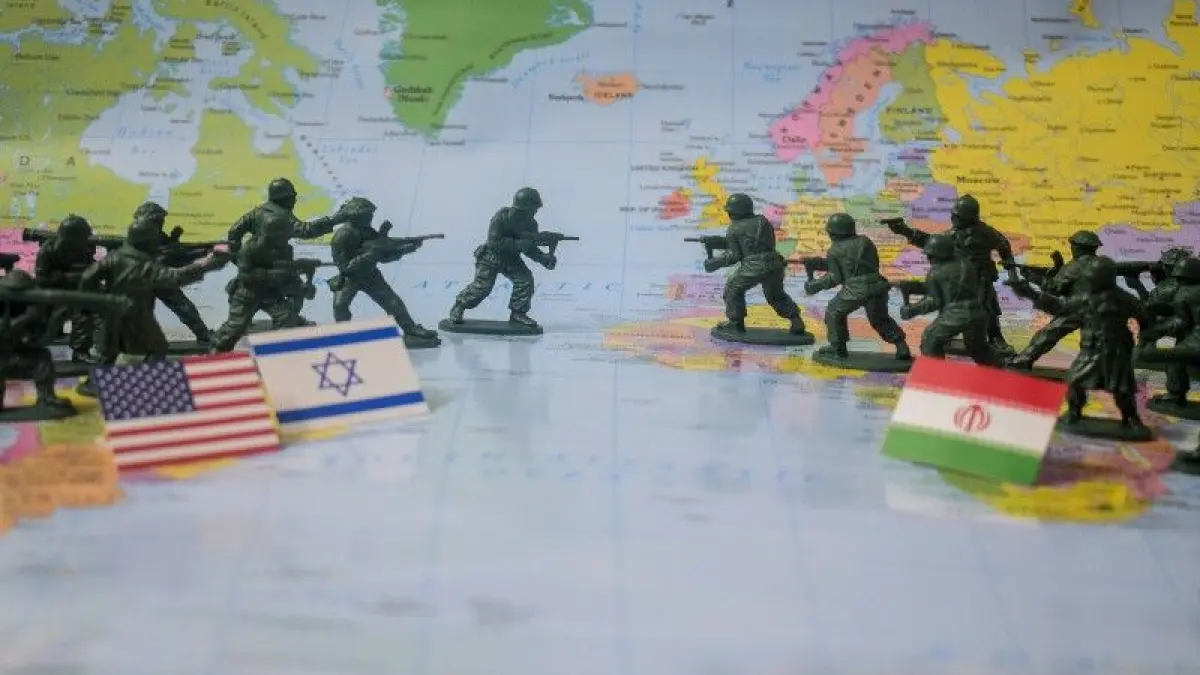
The escalation of armed conflict in the Middle East in late February and early March 2026 led to an unprecedented destabilisation of the regional security architecture. The trigger for the full-scale confrontation was a joint American-Israeli operation (known by the code names “Epic Fury” and “Rising Lion”), which began on 28 February 2026 and included massive pre-emptive strikes on the territory of the Islamic Republic of Iran. The central event of the campaign's first hours was the targeted killing of Iran's Supreme Leader Ayatollah Ali Khamenei and of a number of senior military commanders of the Islamic Revolutionary Guard Corps (IRGC), confirmed both by Iranian state media and by statements from the top officials of the United States and Israel.
In response to the decapitation strike, Iran's military-political leadership, relying on the Interim Leadership Council that was formed (which included President Masoud Pezeshkian and head of the judiciary Gholam-Hossein Mohseni-Ejei), activated protocols of strategic retaliation. The IRGC launched a multi-echelon offensive campaign under the code name “True Promise 4”, deploying arsenals of ballistic and cruise missiles and strike unmanned aerial vehicles.
A feature of the current crisis is an intense information war. Official IRGC bulletins (in particular Announcement No. 20) claim the catastrophic destruction of American and Israeli strategic facilities, the blinding of radar systems and the successful breakthrough of advanced missile defence (ABM) complexes. On the other hand, Washington and Jerusalem stress the successful interception of the overwhelming majority of targets and the infliction of critical damage on Iranian infrastructure. This report is an in-depth analytical cross-section of the current situation, based on independent verification of data through commercial satellite monitoring (Vantor, Planet Labs, Maxar), reports by open-source investigative groups (OSINT) and diplomatic protocols.
Operation “True Promise 4” and the technological collapse of layered missile defence
The seventeenth wave of Operation “True Promise 4”, launched under the sacred code “O Messenger of Allah”, marked the IRGC's transition to tactics of high-intensity combined strikes. According to statements by the Iranian side, hypersonic missiles and swarms of offensive drones managed to overcome the American THAAD system, hitting key targets on Israeli territory and facilities of US Central Command (CENTCOM) in the Persian Gulf.
The doctrine of “salvo warfare” and the asymmetry of interception
Analysis of the tactical pattern of the Iranian offensive points to the use of a saturation strategy (saturation attack). This concept involves launching cheap loitering munitions (primarily Shahed-136/238) as the first echelon of the attack. Their task is to force the enemy's missile defence systems to expend expensive interceptor missiles and to reveal the coordinates of radar stations. The drone swarms are followed by waves of medium-range ballistic missiles (such as Emad, Ghadr-H and Fateh-110) and of hypersonic glide vehicles (Fattah-1/2), which, thanks to high cruise speed and manoeuvrability in the terminal phase of the trajectory, bypass the remaining missile defence nodes.
This method produces a critical imbalance known as the “interceptor trap”. Even at a claimed successful interception rate of 86–90%, providing such protection leads to the economic exhaustion of the defending side.
| Attacking platform (Iran) | Estimated unit cost | Intercepting platform (USA/Israel) | Estimated unit cost | Economic attrition ratio |
|---|---|---|---|---|
| Shahed-136 (UAV) | $30,000 - $50,000 | Patriot PAC-3 missiles | ~$4,000,000 | 1:80 |
| MRBM (Ghadr/Emad) | ~$1,000,000 | Arrow-3 / THAAD interceptor missile | ~$3,000,000 - $11,000,000 | 1:3 - 1:11 |
The Iranian side asserts that operational weakness, technical gaps and a reduction in the computing capabilities of multi-level defence systems opened air corridors for the penetration of projectiles. Given the finite missile stocks of the Iron Dome, David's Sling and THAAD systems, this claim has weighty operational grounds.
Blinding early warning: strikes on 7 radars
The IRGC press service's statement about the “blinding of the eyes of America and the Zionist regime” through the successful destruction of more than 7 ultra-modern radars found confirmation in independent satellite monitoring data. Analysis of imagery and verified video recordings carried out by researchers of The New York Times showed that structures at no fewer than seven American military bases in the Middle East were damaged. These facilities were identified as parts of radar systems or early-warning communication nodes.
It is known that the architecture of advanced US missile defence in the region relies on the integration of mobile AN/TPY-2 X-band radars linked with THAAD batteries in the UAE and Qatar, and on SPY-7 radar stations. The destruction of even some of these radars critically reduces the ability of the joint air defence command to detect Iranian missile launches at early stages, which directly increases the share of ballistic missiles breaking through to targets on Israeli territory and bases in the Gulf.
Satellite monitoring and verification of damage to Israel's infrastructure
In Communiqué No. 20 the IRGC particularly stresses the successful striking of strategic targets inside Israel, namely the Ministry of Defence building (the HaKirya complex in Tel Aviv) and Ben Gurion airport. Assessing these claims requires comparing official rhetoric with objective monitoring data.
Ben Gurion airport
Data from commercial satellites (including Vantor) as of early March 2026 do not show catastrophic structural damage to the runways or passenger terminals at Ben Gurion airport that would have made its physical operation impossible. However, the facility's operational status confirms the seriousness of the threat. The airport was completely closed to commercial air traffic in the first days of the conflict because of continuous missile fire. Subsequently Israel's Ministry of Transport announced a plan for gradual reopening of airspace, but in an extremely limited regime — only one repatriation flight an hour was allowed, to evacuate citizens. Thus, although the physical destruction of the airport is not confirmed by independent sources, Iran achieved its main strategic goal — the functional paralysis of Israel's main air gateway and the country's isolation from international commercial routes.
The Ministry of Defence complex (HaKirya)
A similar situation surrounds the IDF General Staff and Ministry of Defence complex in the HaKirya area. High-resolution satellite images did not reveal the collapse of the complex's central buildings. Nevertheless, sources confirm that missile defence launchers were deployed in the HaKirya area (in particular, at Camp Rabin). During the repelling of the 16th and 17th waves of attack, multiple interceptions took place over Tel Aviv. The fall of missile debris and of unexploded submunitions of cluster warheads was recorded in central districts of the city, leading to injuries to dozens of people and significant collateral damage to infrastructure. Israel's Home Front Command confirmed the lengthy stay of the civilian population in shelters because of unceasing sirens, which lasted up to 40 minutes continuously.
Although direct hits by heavy warheads on the Ministry of Defence building have not been verified, the psychological and economic effect of the air defence breach in the sky over Tel Aviv proved colossal. The IRGC's claims of 680 killed and wounded Israeli servicemen cannot be independently verified under the strict military censorship that Israel has imposed on publication of data on casualties among armed forces personnel.
Degradation of radar coverage and incidents involving US forces in the Gulf
Iran's response was not limited to strikes on Israel. The IRGC's strategy provides for inflicting unacceptable damage on the American military contingent in the Persian Gulf states. According to the IRGC, more than 230 attack drones were launched in the first days of the conflict at targets in the occupied territories and US bases in the region.
A direct hit on the US Fifth Fleet base in Bahrain
One of the most resonant events was the direct hit on American military facilities in the Kingdom of Bahrain. Video recordings circulated by news sources and verified by the OSINT community clearly show a kamikaze drone with the characteristic delta aerodynamics (Shahed-136) flying unimpeded over the capital Manama in the dark. The characteristic engine sound can be heard, after which the aircraft dives into the very centre of the naval base of Sheikh Isa, where the headquarters of the US Fifth Fleet is located.
As a result of the strike a radar dome was destroyed and the main command building was damaged. This incident has far-reaching consequences: it demonstrates that even strategic nodes of the American presence, protected by multi-layered air defence, remain vulnerable to cheap strike platforms capable of flying at extremely low altitudes, hugging the terrain.
“Serious incidents” and Washington's growing losses
Iranian media resources circulated information about an “unusual and serious event for the USA” that is allegedly not connected with the downing of a fighter. Objective analysis makes it possible to match these statements with a series of serious losses suffered by American forces in several theatres of operations:
- Strike on positions in Kuwait: The Pentagon was forced to officially confirm the deaths of six American servicemen as a result of a precise strike by an Iranian drone on a tactical operations centre on Kuwaiti territory. These losses put significant pressure on the US administration, provoking sharp criticism at home.
- Attacks on naval forces: The IRGC naval wing (Statement No. 19) reported striking a strategic American destroyer with “Talaeiyeh” cruise missiles and “Qadr-380” ballistic anti-ship missiles. The incident occurred in the Indian Ocean 650 km from Iran's coast while the destroyer was refuelling from a logistics vessel, causing an extensive fire on both ships. For their part, US officials announced the successful torpedoing of an Iranian frigate by an American submarine off the coast of Sri Lanka.
- Chaos in the airspace: Iran's air defence systems successfully destroyed an American-Israeli fighter in the airspace of northern Tehran. Moreover, the unprecedented level of tension led to a “friendly fire” incident in which a Kuwaiti Air Force pilot mistakenly shot down three American F-15 fighters.
These data confirm that the USA has faced not the suppression of isolated points of resistance but a high-technology, decentralised adversary capable of waging a full-scale combined-arms war across the vast spaces of the Middle East.
Violations of international humanitarian law: analysis of strikes on civilian objects in Iran
Within the declared aim of carrying out “regime change” and destroying Iranian infrastructure, American-Israeli forces carried out massive air strikes on Iran's cities. Justifying their actions by the fight against military targets hiding in “civilian and public strata”, coalition aviation committed a number of incidents that independent observers classify as flagrant violations of international humanitarian law (IHL).
The tragedy at the primary school in Minab
The most monstrous episode of the start of the campaign (28 February 2026) was the bombing of the girls' primary school “Shajarah Tayyebeh” in the southern city of Minab (Hormozgan province). The missile strike destroyed the building at a time when children were in it. According to confirmed data from Iran's Ministry of Health and independent human rights organisations (such as Hengaw), the attack killed between 165 and 175 people, the overwhelming majority of them schoolgirls aged 7 to 12, as well as their teachers. About 95 people were seriously wounded.
Official representatives of the US Department of Defense and the IDF initially stated that they had no information about a strike on the school, and in later comments asserted that the target was the nearby IRGC military camp “Sayyid al-Shuhada”. Presenters of pro-government American media such as Fox News broadcast the narrative that the school might have been hit by debris from an Iranian interceptor missile that had gone off by mistake, or that militants had used the school as a human shield.
These justifications were completely deconstructed by an investigation by the Digital Investigations Unit of the Qatari TV channel Al Jazeera and by independent analysts on the basis of Planet Labs satellite imagery:
- Civilian status and separateness: Archive satellite images prove that as early as September 2016 the school was enclosed by a wall physically separating it from the military complex. Images from 2018 and later periods clearly show elements of civilian infrastructure: sports grounds, children's play areas, parents' cars at the outer gates and bright murals on the walls. The facility functioned as a purely civilian educational institution for more than a decade.
- Evidence of a deliberate strike: Experts who analysed visual materials from the scene recorded two separate columns of dense black smoke: one over the IRGC base, the second directly over the school. The distance between the epicentres of the explosions fully matches the distance in the satellite images, which refutes the version of an accidental hit by flying fragments.
- Discrimination of targets: The decisive proof of precision control on the part of the attackers is the fate of the specialised Martyr Absalan clinic. This medical centre was located in the same block between the military base and the school. American and Israeli missiles skilfully bypassed the clinic, striking the base and the school directly. This points to a deliberate choice of coordinate points and rules out the factor of technical error. Satellite imagery expert Jeffrey Lewis confirmed that the images show “clean detonation centroids” characteristic of a precision strike.
UN institutions, including UNESCO, classified the killing of schoolgirls in a place intended for learning as a gross violation of the protection afforded to schools under the Geneva Conventions, in particular a violation of the principles of distinction (between combatants and non-combatants) and proportionality.
The destruction of Gandhi hospital in Tehran
The second target, which provoked a humanitarian crisis, was Gandhi hospital in a prestigious district of northern Tehran, a 17-storey clinical complex integrated with a 21-storey hotel. On the night of 2 March a powerful missile strike was inflicted on the facility. Satellite images from the company Vantor record significant damage to the facades of the hospital buildings and the surrounding residential infrastructure.
The USA and Israel justified the strike by the fact that a state television telecommunications tower was located in the immediate vicinity. However, the consequences of the strike were catastrophic: the hospital's life-support infrastructure was put out of action, and intensive-care patients, including babies in incubators, had to be evacuated. The destruction of an embryo bank in the infertility treatment department is reported. The WHO expressed extreme concern at the lack of protection for medical institutions in the conflict zone.
A symbol of national resistance and humanitarian catastrophe became the act of Akram Khodabandeh — former captain of Iran's national taekwondo team, who joined Red Crescent rescue teams to clear rubble and help those injured in the American-Israeli bombing.
A strategic split inside NATO: the case of the diplomatic conflict between the USA and Spain
Besides the military dimension, the conflict of 2026 exposed deep political contradictions inside the North Atlantic Alliance. The attempt by Donald Trump's administration to drag European allies into a military adventure against Iran met with tough resistance from the Kingdom of Spain.
The White House's false narrative
The conflict moved into the public arena after White House press secretary Karoline Leavitt held a briefing at which she tried to create the illusion of an international coalition. Answering journalists' questions about the position of European allies, she stated that Madrid had “understood the president's message perfectly clearly” and that the Spanish government had agreed to military cooperation, and that the US armed forces were already coordinating their actions with Spanish colleagues. According to her, Trump expects the whole of Europe to take part in this “long-standing mission”.
Madrid's categorical denial
Washington's statements provoked an immediate and sharp reaction from the Spanish authorities, who publicly accused the White House of lying. Foreign Minister José Manuel Albares stated on the national radio station Cadena SER: “I categorically deny the White House press secretary. The position of the Spanish government on the war in the Middle East, the bombing of Iran and the use of our bases has not changed one iota.”
The crux of the problem lies in the status of the naval base at Rota and the air base at Morón. Although these facilities are jointly operated with the USA, they are under Spanish sovereignty. Madrid has imposed a strict ban on the use of these bridgeheads for strikes or logistical support of operations against Iran, citing the fact that the US and Israeli military campaign has no UN mandate and violates norms of international law. This ban forced the Pentagon to relocate KC-135 tanker aircraft squadrons urgently from the Iberian Peninsula to alternative airfields, which seriously complicated the air logistics of the bombers.
Blackmail and Pedro Sánchez's position
Irritated by Madrid's sovereign stance, Donald Trump resorted to methods of economic blackmail. During a meeting with German Chancellor Friedrich Merz, Trump called Spain a “terrible ally” and threatened to break off trade relations with that country entirely.
Spanish Prime Minister Pedro Sánchez made a televised address to the nation in which he showed unbending resolve. He crisply formulated the country's doctrine: “No to the war”. Sánchez sharply criticised the military aggression of the USA and Israel, calling it “unjustified” and “dangerous”. He rejected Washington's propaganda clichés about defending democracy or “women's freedom” as a pretext for bombing. Sánchez drew historical parallels with the US invasion of Iraq in 2003, pointing out that such adventures, based on lies, only sow global instability and extremism. Spain's deputy prime minister María Jesús Montero added that Spain “will not be anyone's vassal”.
Political reaction and geostrategic consequences
The global reaction to the American-Israeli aggression and the killing of Ali Khamenei revealed a practically complete absence of support for Washington's actions beyond a narrow circle of allies.
Statements by Alexander Lukashenko
One of the most articulate positions in the post-Soviet space was the reaction of the president of the Republic of Belarus, Alexander Lukashenko. During an official meeting in Minsk with Iran's ambassador Alireza Sanei, Lukashenko expressed deep condolences on the martyrdom of the spiritual leader and of numerous civilians.
The president of Belarus characterised the attack as “treacherous” and categorically unacceptable. In his speech he put the emphasis on the personality of the murdered ayatollah: “Sayyid Ali Khamenei was a humanist, a civilian, a man not connected with the army, oriented exclusively towards defending his people and his country.” The Belarusian leader was especially indignant at the fact of the deliberate destruction of members of the Supreme Leader's family, including his wife, who died of the severe wounds received in the bombing of the residence. Lukashenko expressed alarm that the USA and Israel are drawing the Persian Gulf states into this “wild conflict”, warning of unpredictable consequences for the whole world.
The view from the Gulf countries: Turki al-Faisal's revelations
Although the monarchies of the Persian Gulf found themselves in the line of fire of Iranian drones flying towards American bases, the political establishment of the Arab countries places the blame for the escalation on Israel. Former Saudi intelligence chief Prince Turki al-Faisal stated outright in his interview that “this war is Netanyahu's war”.
According to al-Faisal's assessment, Israel's prime minister deliberately provoked the regional conflict and manipulated D. Trump's administration (recalling the metaphor of “the tail wagging the dog”). Netanyahu's main goals, according to the prince's analysis, are to distract the international community's attention from war crimes in Gaza and the West Bank of the Jordan, and also to obtain a pretext for changing the constitution inside Israel, securing for himself unlimited power without judicial oversight.
This position correlates with statements by Iran's Foreign Ministry. The ministry's official spokesman Esmaeil Baghaei stressed that Washington turned any peace negotiations into a “deceptive spectacle”. Iran's attempts to act through diplomatic channels were systematically sabotaged by the American side, which was seeking a pretext for a pre-emptive strike that, by Netanyahu's own admission, had been planned as far back as Trump's first presidential term.
The domestic political crisis in the USA
The White House's decision to start a war without Congressional authorisation caused a political storm inside the United States. The split ran not along party lines but between supporters of constitutional order and the executive branch.
- Republican representative Thomas Massie criticised the very essence of the operation: “Iran is not Venezuela. The ayatollah was not a president, he was a religious leader. The USA and Israel have made a martyr of him with their own hands.” He pointed to the senselessness of the colossal financial costs and loss of life (recalling the dead American soldiers) for vague goals.
- Democratic congressman Lloyd Doggett drew a direct analogy with the war in Iraq. According to him, just as the invasion under George Bush was based on lies about weapons of mass destruction and cost 2 trillion dollars and 4,400 soldiers' lives, so Trump's present attack rests on fabrications. Doggett directly accused the president of the fact that “the choice of war is a way of diverting attention” from domestic scandals, such as the concealment of secret documents, accusations of sexual violence and undisclosed links to the Epstein case. He called on Congress to adopt urgently a War Powers Resolution to limit the White House's dictate.
- House member Alexandria Ocasio-Cortez put the emphasis on the catastrophic humanitarian consequences, reminding the public of the deaths of more than 100 Iranian schoolgirls in Minab, declaring that a world war does not serve the interests of the American people.
- Protests against the conflict penetrate even official government hearings — thus, Senate candidate Brian McGinnis was forcibly removed by police from an armed services committee hearing for anti-war statements.
Asymmetric geo-economic war and naval blockade
Having lost its central leadership, the Iranian military apparatus switched to a strategy of total economic externalisation (Total Economic Externalization), aimed at destroying global logistics and energy. Economic blackmail became Tehran's main trump card in the confrontation with the superior conventional forces of the West.
The collapse of the Strait of Hormuz and attacks in Kuwaiti waters
The Strait of Hormuz, through which up to 138 vessels a day historically passed, ensuring exports of millions of barrels of oil, turned out to be completely blocked. Iran's military announced a transition to a new “geometry of power”, under which Tehran alone decides who may cross the narrow neck of the strait. The threats of IRGC commanders to set oil tankers on fire led to an immediate effect: according to the Joint Maritime Information Center (JMIC), the transit of commercial vessels fell to a critical mark — on 3 March not a single tanker crossed the strait. This provoked an instant jump in Brent crude futures above $84 a barrel.
However, Iran proved that the risk zone extends far beyond the Strait of Hormuz. News agencies and the UK Maritime Trade Operations (UKMTO) confirmed an emergency incident in the northern part of the Gulf. On the evening of 4 March the captain of a British oil tanker at anchor reported a powerful explosion on the vessel's port side about 30 miles south-east of the port of Mubarak Al-Kabeer (Kuwait). Soon after the explosion the crew noticed a small craft (presumably an IRGC unmanned fire ship) quickly leaving the area. As a result of the attack the cargo tanks lost their integrity and crude oil began leaking into the water, creating a threat of a large-scale environmental disaster. This strike serves as an unambiguous signal to the Arab monarchies that provide their territories for American bases: Iran is able to destroy oil infrastructure and export routes at any point in the Gulf.
Aviation paralysis of the region
Simultaneously with the naval blockade, the tactic of launching hundreds of kamikaze drones towards the UAE, Qatar and Bahrain led to the paralysis of civilian airspace. The world's largest aviation hubs — the international airports of Dubai, Doha and Abu Dhabi — halted operations. More than 21,000 flights were cancelled, and hundreds of thousands of passengers were stranded in transit zones. The closure of airspace in the emirate of Dubai alone inflicts colossal financial damage, estimated by experts at about 1 million dollars for every minute of downtime. This clearly demonstrates the asymmetry of the current conflict: Shahed drones, which cost pennies by military-budget standards, inflict indirect damage of billions of dollars on the adversary, destroying the region's investment attractiveness.
Strategic conclusions
Analysis of the course of the American-Israeli operation and of Iran's “True Promise 4” response makes it possible to draw a number of key conclusions that define the contours of the new geopolitical reality:
- The failure of the “clean regime change” concept: The killing of Ayatollah Ali Khamenei, contrary to the strategic expectations of Washington and Jerusalem, did not lead to an immediate paralysis of the state apparatus or to Iran's capitulation. The IRGC's institutional structure demonstrated a high degree of autonomy: decentralised missile units continued to carry out combat tasks, and the death of the top leadership (including family members and civilians) produced an effect of consolidation (the creation of the image of a martyr) in anti-Western countries, as even the president of Belarus, A. Lukashenko, noted in his speech.
- The economic deconstruction of missile defence systems: Iran's response empirically proved the vulnerability of advanced multi-layered air defence systems (THAAD, Patriot, Arrow) to saturation tactics. The combination of cheap swarming drones and hypersonic ballistic vehicles allows Iran to methodically destroy early-warning infrastructure (the destruction of 7 radars and of the Fifth Fleet base in Bahrain). The economic imbalance arising here makes a prolonged missile duel financially unprofitable for the USA and Israel.
- The loss of diplomatic legitimacy and the NATO crisis: The blatant falsification of facts by the White House regarding Spain's participation in the conflict and Prime Minister Pedro Sánchez's tough response revealed a critical level of mistrust within the Euro-Atlantic alliance. European partners, fearing escalation and a terrorist threat, refuse to provide their infrastructure (the bases at Rota and Morón) for wars not sanctioned by the UN, preferring an isolationist stance.
- Humanitarian catastrophe as a factor of political pressure: Objective satellite data (Planet Labs, Al Jazeera) unconditionally confirm the facts of direct strikes on isolated civilian objects, first of all the destruction of the school in Minab, which claimed the lives of 175 children, and the strikes on Gandhi hospital in Tehran. These incidents, bearing the hallmarks of war crimes, deprived the Trump-Netanyahu military campaign of any moral support in the world and caused a deep political split inside the US Congress itself.
- Dominance in the geo-economic plane: Iran compensates for conventional weakness with the ability to stop the circulation of the world economy. The blockade of the Strait of Hormuz, the attacks on British tankers off the coast of Kuwait and the paralysis of the Persian Gulf's aviation hubs prove that Tehran is ready to inflict crushing damage on the infrastructure and financial markets of the USA's allied countries.
The events taking place show that superiority in aviation and guidance technologies cannot ensure a quick victory in a conflict with an adversary that possesses a colossal arsenal of asymmetric deterrence and is ready to wage a war of economic attrition on the scale of the whole Middle East.
Sources
- Satellite images show Iranian sites before and after airstrikes, date last accessed: 5 March 2026, https://www.cbsnews.com/news/satellite-images-iran-strikes-before-after/
- Satellite Images Reveal Before & After Damage At Iran's Nuclear Site After Israel Strikes, date last accessed: 5 March 2026, https://www.ndtv.com/video/satellite-images-reveal-before-after-damage-at-iran-s-nuclear-site-after-israel-strikes-952972
- Assassination of Ali Khamenei - Wikipedia, date last accessed: 5 March 2026, https://en.wikipedia.org/wiki/Assassination_of_Ali_Khamenei
- Iran Confirms Khamenei's Death in US-Israeli Strike - Caspian News, date last accessed: 5 March 2026, https://caspiannews.com/news-detail/iran-confirms-khameneis-death-in-us-israeli-strike-2026-3-1-43/
- 'He was in central leadership compound in heart of Tehran': IDF issues statement on Khamenei's death, date last accessed: 5 March 2026, https://timesofindia.indiatimes.com/world/middle-east/he-was-in-central-leadership-compound-in-heart-of-tehran-idf-issues-statement-on-khameneis-death-iran-us-israel/articleshow/128910848.cms
- Iran Faces Leadership Crisis Amid Unverified Reports, date last accessed: 5 March 2026, https://evrimagaci.org/gpt/iran-faces-leadership-crisis-amid-unverified-reports-532249
- Iran’s Revolutionary Guards claim over 680 Israeli casualties, date last accessed: 5 March 2026, https://www.middleeastmonitor.com/20260304-irans-revolutionary-guards-claim-over-680-israeli-casualties/
- Iran's IRGC says 16th wave of Operation True Promise launched, say they «remain committed to allegiance», date last accessed: 5 March 2026, https://www.aninews.in/news/world/middle-east/irans-irgc-says-16th-wave-of-operation-true-promise-launched-say-they-remain-committed-to-allegiance20260304093744
- 17th Wave of Operation True Promise 4 Begins with the Firing of More Than 40 Missiles, date last accessed: 5 March 2026, https://defapress.ir/en/news/87476/17th-wave-of-operation-true-promise-4-begins-with-the-firing-of-more-than-40-missiles
- Live Coverage of the Iran–U.S.–Israel Conflict / March 04 - WANA, date last accessed: 5 March 2026, https://wanaen.com/live-coverage-of-the-iran-u-s-israel-conflict-march-04/
- Two Indias too many! - National Herald, date last accessed: 5 March 2026, https://www.nationalheraldindia.com/opinion/two-indias-too-many
- The US and Israel Strike on Iran: Day 2 - Leadership Vacuum and the Regionalization of Conflict - SETA, date last accessed: 5 March 2026, https://www.setav.org/en/the-us-and-israel-strike-on-iran-day-2
- Operation Epic Fury is the United States’ Cheap Drone Moment, date last accessed: 5 March 2026, https://dsm.forecastinternational.com/2026/03/04/operation-epic-fury-is-the-united-states-cheap-drone-moment/
- Israel-Hamas War - Council for a Secure America, date last accessed: 5 March 2026, https://councilforsecureamerica.org/wp-content/uploads/2025/10/Israel-Hamas-War-750-Day-Report-FINAL-compressed.pdf
- Iran's Shahed drones have brought terror to Ukrainian skies – now they are being deployed in the Middle East - The Guardian, date last accessed: 5 March 2026, https://www.theguardian.com/world/2026/mar/02/iran-unleashes-hundreds-of-drones-aimed-at-targets-across-middle-east
- Tatsu's Newsletter Podcast — Podcast — Apple Podcasts, date last accessed: 5 March 2026, https://podcasts.apple.com/br/podcast/tatsus-newsletter-podcast/id1855341747
- Early Edition: March 4, 2026 - Just Security, date last accessed: 5 March 2026, https://www.justsecurity.org/133079/early-edition-march-4-2026/
- Security & Defence European, date last accessed: 5 March 2026, https://euro-sd.com/wp-content/uploads/2023/04/ESD_4_2023.pdf
- LIVE BLOG: CIA Station in Riyadh Targeted by Drones, Explosions ..., date last accessed: 5 March 2026, https://www.palestinechronicle.com/live-blog-tehran-bombed-strait-of-hormuz-closed-us-embassy-attacked-day-4/
- Operations Epic Fury and Roaring Lion: 3/3/26 Update - JINSA, date last accessed: 5 March 2026, https://jinsa.org/wp-content/uploads/2026/03/Operations-Epic-Fury-and-Roaring-Lion-03-03-26.pdf
- March 3: Trump claims Iran running out of ammo but predicts it will ‘keep lobbing missiles for a while’, date last accessed: 5 March 2026, https://www.timesofisrael.com/liveblog-march-3-2026/
- Iran launches wave of missiles towards Israel as US announces charter flights for Americans, date last accessed: 5 March 2026, https://www.thejournal.ie/iran-us-israel-assaults-war-trump-6972478-Mar2026/
- Israel Paralyzed as Iran Launches Successive Missile Waves, Strikes US Bases, date last accessed: 5 March 2026, https://www.palestinechronicle.com/israel-paralyzed-as-iran-launches-successive-missile-waves-strikes-us-bases/
- HIGHLIGHTS | Israel steps up attack on Tehran as Iran widens its response across West Asia, date last accessed: 5 March 2026, https://www.newindianexpress.com/live/2026/Mar/03/live-iran-conflict-drone-attack-on-us-embassy-in-riyadh-trump-warns-retaliation-soon
- Twelve Days of Inferno: The Cost of Opening Pandora's Box | Al Jazeera Centre for Studies, date last accessed: 5 March 2026, https://studies.aljazeera.net/en/analyses/twelve-days-inferno-cost-opening-pandora%E2%80%99s-box
- Podsumowanie wojny na Bliskim Wschodzie (04.03.2026). Kolejne fale nalotów, starcia w Iraku, pierwsze takie zestrzelenie | BitHub.pl, date last accessed: 5 March 2026, https://bithub.pl/spoleczenstwo/podsumowanie-wojny-na-bliskim-wschodzie-04-03-2026-kolejne-fale-nalotow-starcia-w-iraku-pierwsze-takie-zestrzelenie/
- LIVE: Israel attacks Tehran and Beirut, Hezbollah claims to have attacked three Israeli military positions - Vijesti, date last accessed: 5 March 2026, https://en.vijesti.me/amp/798323/Live-Israel-attacks-Tehran-and-Beirut-Hezbollah-claims-to-have-attacked-three-Israeli-military-positions
- Belarusian president conveys condolences over deaths of Iranian civilians, Ali Khamenei, date last accessed: 5 March 2026, https://www.aa.com.tr/en/asia-pacific/belarusian-president-conveys-condolences-over-deaths-of-iranian-civilians-ali-khamenei/3849650
- Trump says Iran war could last weeks, US citizens in more than a dozen countries urged to leave - AP News, date last accessed: 5 March 2026, https://apnews.com/live/iran-us-israel-hezbollah-strikes-03-02-2026
- LIVE! US vows to dismantle Iran's navy after submarine strike - Rediff.com news, date last accessed: 5 March 2026, https://m.rediff.com/news/commentary/2026/mar/04/liveupdates.htm
- 2026 Iran war - Wikipedia, date last accessed: 5 March 2026, https://en.wikipedia.org/wiki/2026_Iran_conflict
- The Legal Implications of Targeting a Girls' Elementary School in ..., date last accessed: 5 March 2026, https://newlinesinstitute.org/intl-law-peace/the-legal-implications-of-targeting-a-girls-elementary-school-in-iran/?utm_source=rss&utm_medium=rss&utm_campaign=the-legal-implications-of-targeting-a-girls-elementary-school-in-iran
- Iranians mourn children, teachers killed in school strike, date last accessed: 5 March 2026, https://www.washingtonpost.com/world/interactive/2026/iran-school-attack-funeral/
- Dozens of schoolgirls killed in missile strike near IRGC base in Minab, date last accessed: 5 March 2026, https://hengaw.net/en/reports-and-statistics-1/2026/03/article-1
- Questions over Minab girls’ school strike as Israel, US deny involvement, date last accessed: 5 March 2026, https://www.aljazeera.com/amp/news/2026/3/3/questions-over-minab-girls-school-strike-as-israel-us-deny-involvement
- Al Jazeera investigation: Iran girls' school targeting likely 'deliberate', date last accessed: 5 March 2026, https://www.aljazeera.com/news/2026/3/3/questions-over-minab-girls-school-strike-as-israel-us-deny-involvement
- 2026 Minab school airstrike - Wikipedia, date last accessed: 5 March 2026, https://en.wikipedia.org/wiki/2026_Minab_school_airstrike
- Satellite imagery shows strike that destroyed Iranian school was more extensive than first reported, date last accessed: 5 March 2026, https://www.opb.org/article/2026/03/04/satellite-images-suggests-airstrike-destroyed-iranian-school/
- In photos: Aftermath of air attack on Gandhi hospital in Tehran, date last accessed: 5 March 2026, https://www.middleeasteye.net/live-blog/live-blog-update/photos-aftermath-air-strike-gandhi-hospital-tehran
- 2412 Maxar Stock Photos, High-Res Pictures, and Images - Getty Images, date last accessed: 5 March 2026, https://www.gettyimages.com/photos/maxar
- Trump defends widening Iran war as Tehran says conflict with US, not neighbours - as it happened - Region - World, date last accessed: 5 March 2026, https://english.ahram.org.eg/News/563237.aspx
- Trump defends war with Iran as conflict widens, military names first service members who were killed, date last accessed: 5 March 2026, https://www.cbsnews.com/live-updates/iran-war-us-israel-day-4-trump-gives-no-timeline-as-gulf-states-attacked/
- Spain denies cooperating with U.S. military operations in Middle East, contradicting White House, date last accessed: 5 March 2026, https://www.pbs.org/newshour/world/spain-denies-cooperating-with-u-s-military-operations-in-middle-east-contradicting-white-house
- Spain Denies White House Assertion That It’s Assisting Trump With War in Iran, date last accessed: 5 March 2026, https://www.notus.org/foreign-policy/spain-denies-white-house-assisting-trump-war-iran-air-bases
- US says Spain ‘agreed to cooperate with US military’; foreign minister denies White House claim, date last accessed: 5 March 2026, https://timesofindia.indiatimes.com/world/us/us-says-spain-agreed-to-cooperate-with-us-military-foreign-minister-denies-white-house-claim/articleshow/129047436.cms
- Spain draws red line, rejects US use of bases in Iran campaign, date last accessed: 5 March 2026, https://timesofindia.indiatimes.com/world/europe/spain-draws-red-line-rejects-us-use-of-bases-in-iran-campaign/articleshow/128954743.cms
- Europe voices dissent over US military actions, date last accessed: 5 March 2026, https://www.chinadaily.com.cn/a/202603/05/WS69a8e610a310d6866eb3bd50.html
- Spain refuses to provide military support for US attack on Iran and distances itself from France, Germany and the UK, date last accessed: 5 March 2026, https://english.elpais.com/international/2026-03-02/spain-refuses-to-provide-military-support-for-us-attack-on-iran-and-distances-itself-from-france-germany-and-the-uk.html
- An outlier for condemning Israel’s Gaza genocide, Spain says no to Iran war, date last accessed: 5 March 2026, https://www.aljazeera.com/news/2026/3/4/spain-no-to-israel-us-war-iran
- Spain denies US claim of military cooperation on Iran as rift deepens, date last accessed: 5 March 2026, https://www.timesofisrael.com/spain-denies-us-claim-of-military-cooperation-on-iran-as-rift-deepens/
- Spain's Sánchez to Trump: No to Iran war | The Manila Times, date last accessed: 5 March 2026, https://www.manilatimes.net/2026/03/05/world/americas-emea/spains-snchez-to-trump-no-to-iran-war/2293012
- Spain's Sanchez stands firm on opposition to war in Iran despite Trump's trade threat, date last accessed: 5 March 2026, https://www.thehindu.com/news/international/spains-sanchez-stands-firm-on-opposition-to-war-in-iran-despite-trumps-trade-threat/article70702934.ece
- ‘No to War’: Spain Rebukes Trump’s Trade Threats, Refuses to Aid Iran Conflict, date last accessed: 5 March 2026, https://time.com/7382467/spain-rebukes-trump-trade-threat-over-iran-war/
- Washington says Spain has agreed to cooperate with US military on Iran; Madrid denies, date last accessed: 5 March 2026, https://english.alarabiya.net/News/world/2026/03/05/washington-says-spain-has-agreed-to-cooperate-with-us-military-on-iran-madrid-denies
- Lukashenko offers condolences over Ali Khamenei's death in Iran due to treacherous attack | Belarus political events, date last accessed: 5 March 2026, https://www.belarus.by/en/government/events/lukashenko-offers-condolences-over-ali-khameneis-death-in-iran-due-to-treacherous-attack_i_0000208991.html
- Lukashenka Calls Israel's Attack on Iran Unacceptable And Treacherous, date last accessed: 5 March 2026, https://reform.news/en/lukashenka-calls-israel-s-attack-on-iran-unacceptable-and-treacherous
- Killing of Ali Khamenei and Kinetic Escalation in the Persian Gulf, date last accessed: 5 March 2026, https://www.specialeurasia.com/2026/03/01/khamenei-killing-middle-east/
- Ship targeted off Kuwait as vessel attacks widen | Latest Market News - Argus Media, date last accessed: 5 March 2026, https://www.argusmedia.com/en/news-and-insights/latest-market-news/2796628-ship-targeted-off-kuwait-as-vessel-attacks-widen
- US-Israeli bombing of Iran intensifies, as Tehran vows to destroy Mideast infrastructure, date last accessed: 5 March 2026, https://sentinelcolorado.com/nation-world/nation/us-israeli-bombing-of-iran-intensifies-as-tehran-vows-to-destroy-mideast-infrastructure/
- 'Large explosion' on tanker as oil gushes into sea off Kuwait coast, date last accessed: 5 March 2026, https://www.manchestereveningnews.co.uk/news/world-news/large-explosion-tanker-oil-gushes-33533338
- Tanker reports 'large explosion', oil spill off Kuwait amid US-Iran war - Hindustan Times, date last accessed: 5 March 2026, https://www.hindustantimes.com/world-news/large-explosion-strikes-tanker-off-kuwait-triggers-oil-spill-amid-us-iran-war-ukmto-uae-news-sri-lanka-iranian-ship-101772676773049.html
- Tuesday briefing: ‘An historic rupture’ as the Middle East crisis spreads, date last accessed: 5 March 2026, https://www.theguardian.com/world/2026/mar/03/tuesday-briefing-an-historic-rupture-as-the-middle-east-crisis-spreads
- Iran experts fear the regime could become even more authoritarian, date last accessed: 5 March 2026, https://www.sciencenorway.no/iran-usa-ntb-english/iran-experts-fear-the-regime-could-become-even-more-authoritarian/2628317
- Trump: we've begun combat strikes, regime change operations in Iran, date last accessed: 5 March 2026, https://responsiblestatecraft.org/trump-strikes-iran/


