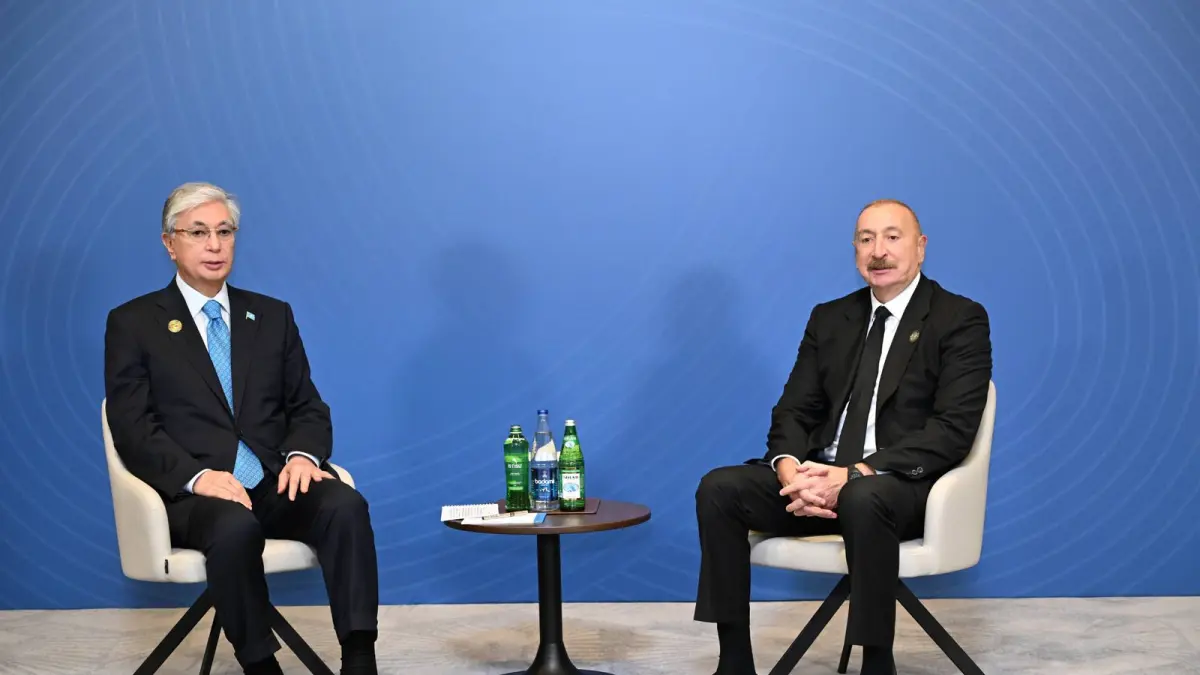
Baku, 15 October. The presidents of Kazakhstan and Azerbaijan, Kassym-Jomart Tokayev and Ilham Aliyev, took part in the launch of the Trans-Caspian fibre-optic communication line (FOCL) between Aktau and Sumgait. The line is 380 km long and was built by Kazakhtelecom and Azerbaijan's AzerTelecom.
The line will become part of a new communication route that will connect Kazakhstan, the rest of Central Asia and China with Europe. It can be linked to submarine systems in the Mediterranean and Black seas.
According to Tokayev, the line will give a powerful synergy to the two countries' joint efforts to develop the Middle Corridor. Aliyev called the launch another step towards stronger interaction between Central Asia and Azerbaijan and said a global project had been started that day.
The Kazakh presidential office stressed the project's strategic importance for Kazakhstan's digital economy: it will give the country additional international connectivity and create conditions for attracting global technology companies and developing cloud services and artificial intelligence infrastructure.
In the presence of the presidents, the parties exchanged a signed intergovernmental agreement on cooperation in developing the Trans-Caspian International Transport Route. The document provides for the simultaneous expansion of infrastructure, removal of bottlenecks on the rail, road and port sections, joint development of a dredging fleet and shipping in the Caspian, and simpler administrative, border and customs procedures: advance information, minimal inspections and mutual recognition of the status of authorised economic operators.
Background
As early as 2023, Kazakhtelecom told Kursiv that the Trans-Caspian line would be the country's third major gateway to the global network after the Russian and Chinese directions.


