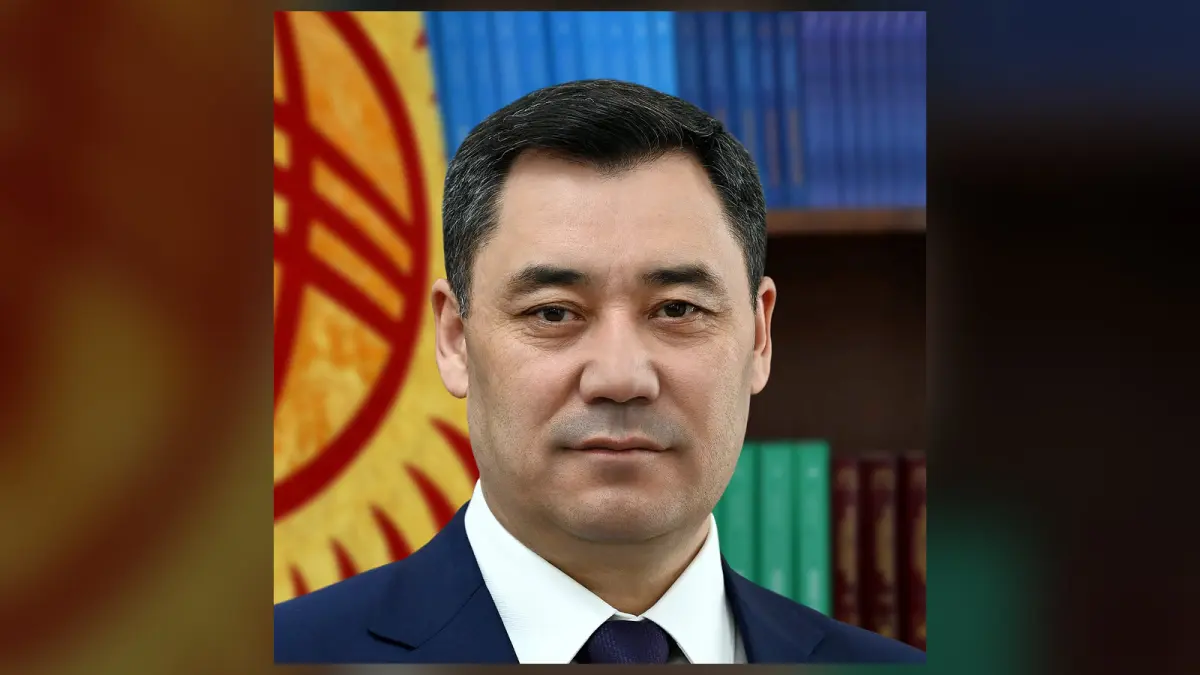
Bishkek, 4 November, . Kyrgyzstan’s President Sadyr Japarov said he may return the country’s gas system to state control, “like Kumtor”, if Russia’s Gazprom fails to fulfil its obligations on gasification.
Japarov said this at a meeting with residents of the Aitmatov and Manas districts of Talas region. The gas system, he recalled, was sold to the Russian company in 2013 for a symbolic one dollar, and the agreement is in force, presumably until 2039. “We are not now the owners of our own gas system, Gazprom is the owner,” the president said: therefore the authorities cannot run gasification themselves or give residents deadlines, and every question has to be agreed with the company. Under the terms of the sale Gazprom was to finance gasification of the whole republic; the president said he has been raising this with the company for two or three years. He did not specify how the gas system would be returned, and there is no Gazprom comment in the published materials.
The comparison with Kumtor is clear in Kyrgyzstan: external management was introduced at the gold mine in 2021, and in 2022 the parties signed an agreement under which the mine passed to the state company Kyrgyzaltyn.
This is what is known about the 2013 deal. Gazprom was to, as was reported, invest 20 billion roubles in the republic’s gas networks; the company bought gas in Kazakhstan and Uzbekistan: for the first quarter of 2014 it agreed on 100 million cubic metres from KazTransGas at 224 dollars per thousand cubic metres and on 25 million cubic metres from Uztransgas at 290 dollars. Gazprom Kyrgyzstan’s deputy director general Arzymat Aldayarov cited the company’s results for 2020: more than 28 billion soms of investment, Kyrgyzgaz’s 42-million-dollar debt to Kazakhstan repaid, gasification up from 22% in 2014 to 35% in 2020 and consumption from 210 million cubic metres in 2013 to 280 million cubic metres in 2020. These are the company’s own data, and there is no independent verification in the publications.
The story has a Kazakh angle. According to Aldayarov, in 2014–2020 Gazprom Kyrgyzstan reconstructed and built 112 km of main gas pipeline carrying gas to Kazakhstan’s Almaty region. As early as 2013 businessman Aidan Karibzhanov wrote in Forbes Kazakhstan that Almaty’s gas supply depends on the Kyrgyz section of the Bukhara – Tashkent – Bishkek – Almaty pipeline. And in June 2024 QazaqGaz and Gazprom signed agreements on the transit of Russian gas to Uzbekistan and Kyrgyzstan through Kazakhstan until the end of 2040. How a change of owner of the Kyrgyz gas system would affect these flows is not stated in the reports.
What it means: The president publicly tied the fate of Kyrgyzstan’s gas system to Gazprom’s fulfilment of its gasification obligations and cited the Kumtor precedent, but gave no deadline, conditions or method for taking it back.
Who benefits: Residents of districts waiting for gas received the president’s promise to take up gasification himself if Gazprom fails. The company’s position is not given in the published materials, so who gains from the dispute cannot be judged from the sources.
Background: Russia and Kyrgyzstan signed the intergovernmental agreement on the gas sector in July 2013, and the deal transferring Kyrgyzgaz to Gazprom was formalised in 2014; the company was later renamed Gazprom Kyrgyzstan.
We have also reported on plans for liquefied gas in Kazakhstan.



