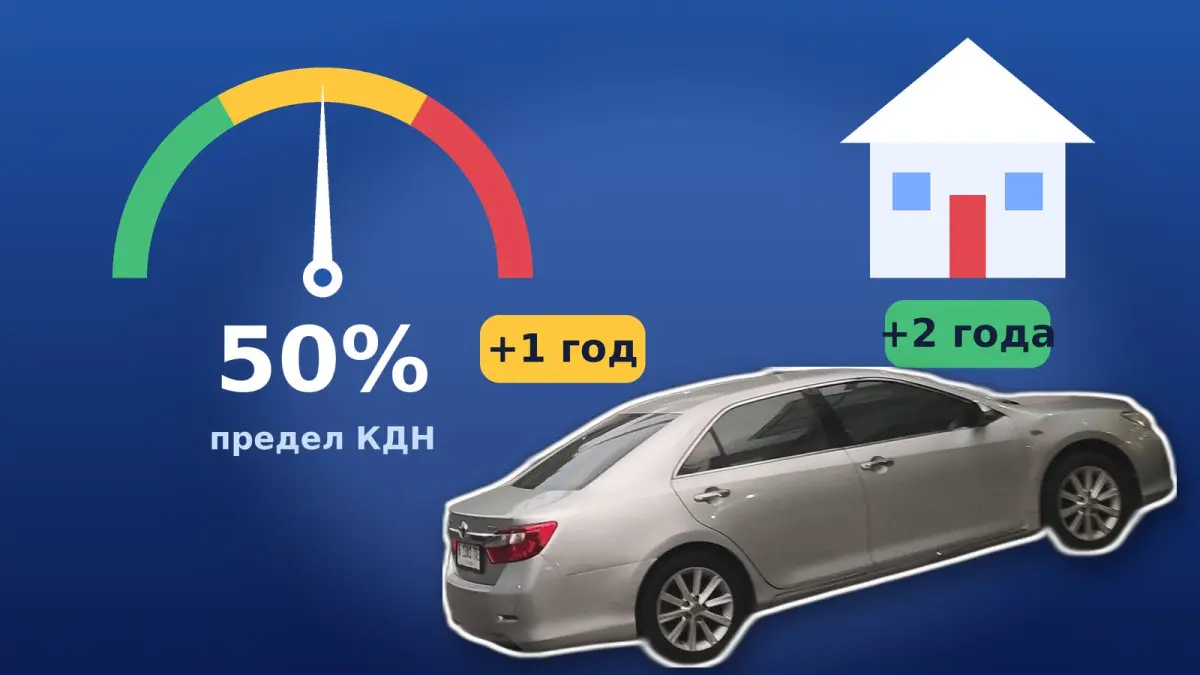
Astana, 5 November, . The National Bank has postponed introducing the debt-burden ratio, DBR: by one year for car loans and by two years for mortgages under the housing construction savings system, the regulator said.
The debt-burden ratio is the ratio of a person’s payments on all loans, including the new one, to average monthly income. Under current rules the limit is 50%. The DBR has been applied in Kazakhstan since 2014, and for car loans it was temporarily not required from February 2025 to the end of 2026, BES.media wrote. The National Bank planned to bring it back from 1 January 2027: National Bank chairman Timur Suleimenov said so on 24 July, noting that the DBR for car loans would come in a softer or a stricter form.
He then explained the regulator’s caution. In three years the car loan portfolio grew by about 60%, and the share of stage-three loans, that is problem loans, was 5.7%. Banks had already started writing off part of such loans. The Ministry of Industry and Construction proposed scrapping the DBR for car loans altogether to make cars more affordable.
The National Bank announced the new postponement in a short message, with no reasons and no new dates. If a year is counted from the old deadline, car loans will stay without the DBR until the end of 2027 (the editors’ calculation).
What it means: The restriction that was due to return on 1 January 2027 is postponed. The regulator is putting off the DBR’s return although it has itself spoken of worsening quality of car loans.
Who benefits: Borrowers whose loan payments would exceed half their income, and car sellers: the Ministry of Industry and Construction pressed for exactly this. The risk remains for banks and borrowers themselves, since the regulator has already noticed problem loans.
Background: Stage-three loans are those on which the borrower, as a rule, is more than 90 days overdue and the bank recognises losses. The housing construction savings system is a savings scheme in which a person saves for a home and gets a loan on preferential terms.