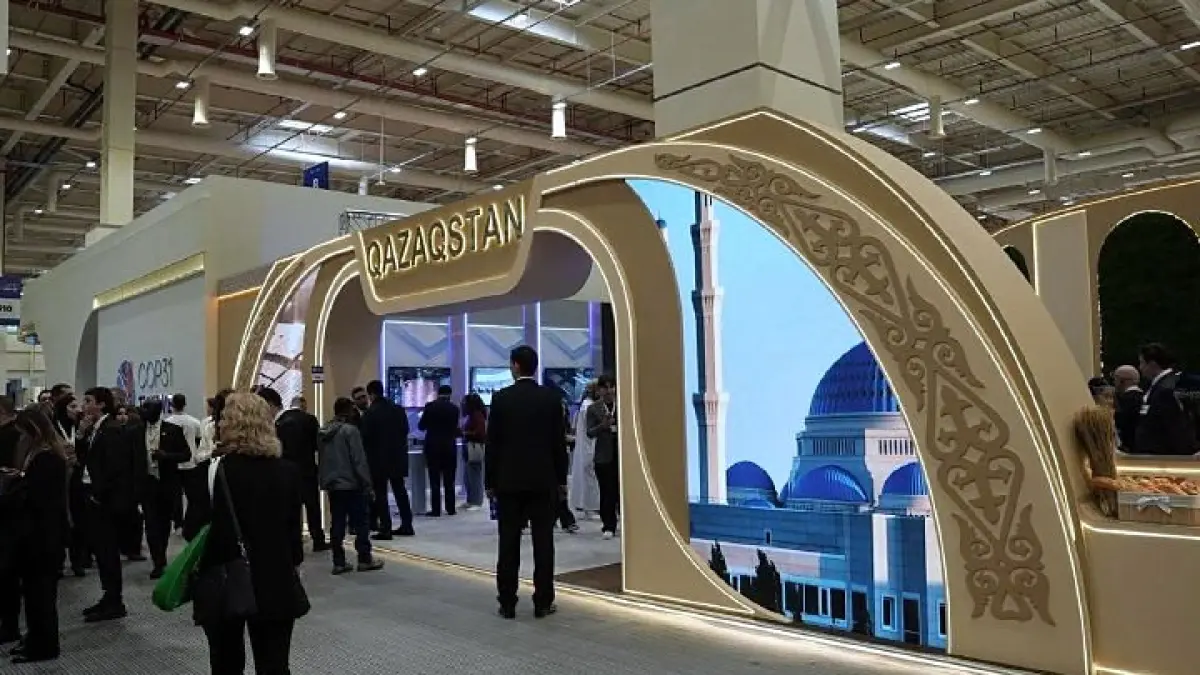
Antalya, 13 November. The Action Plan of the Caspian littoral states in connection with fluctuations in the level of the Caspian Sea for 2026–2036 was presented on 13 November at Kazakhstan’s national pavilion at the UN climate conference (COP31) in Antalya, Kazakhstan’s Ministry of Ecology and Natural Resources said.
The document is being drawn up with the assistance of the Interim Secretariat of the Tehran Convention. That is the name of the Framework Convention for the Protection of the Marine Environment of the Caspian Sea; participants in the meeting called it the main legal basis for environmental cooperation in the region. The plan was shown at the event “Friends of the Caspian Sea: from regional initiatives to joint action”, organised by the ministry. The discussion was attended by representatives of the five Caspian states — Kazakhstan, Russia, Azerbaijan, Iran and Turkmenistan — as well as the UN Development Programme, the convention’s secretariat, the Green Climate Fund and the World Bank. The statement does not disclose what exactly the plan prescribes.
On the same day the pavilion hosted the session “Kazakhstan’s carbon market: from national mechanisms to international cooperation”. It was opened by Minister of Ecology and Natural Resources Alibek Kuantyrov, with welcoming remarks from Ozan Diren, President of the Turkish Industry and Business Association, and Kanat Sharlapaev, Chairman of the Presidium of the Atameken National Chamber of Entrepreneurs. Participants discussed the national greenhouse gas emissions trading system, under which enterprises receive emission quotas and can sell and buy them, and carbon offsets — the crediting of emissions reduced in individual projects. Following the session, the joint-stock company Zhasyl Damu signed a memorandum of understanding with the Asian Disaster Preparedness Center.
A third event was held by the Ministry of Trade and Integration and the company QazTrade: it dealt with how to prepare Kazakh exports for the new carbon requirements of international trade. The discussion covered reliable measurement of emissions, the quality of monitoring, reporting and verification of data, the transparency of national carbon accounting and trade links along the Trans-Caspian International Transport Route.
The ministry also held a meeting with representatives of the company ICA-Finance: the sides discussed cooperation under Article 6 of the Paris Agreement, projects to reduce methane emissions in the oil and gas sector and the attraction of carbon finance. Kuantyrov, in addition, met the new Secretary General of the Organisation of Turkic States, Mirvokhid Azimov.
Two investment projects in the Almaty Region were also presented at the conference, a correspondent of the Kazinform agency reports: a lithium-ion battery recycling plant worth 11.95 billion tenge and a 70 MW solar power plant with investment of 20.47 billion tenge.
What it means: The five Caspian countries now have a draft of a common ten-year plan in case of fluctuations in the sea level; it is being finalised at the secretariat of the Tehran Convention. At the same time Kazakhstan is preparing exporters for the growing requirements for emissions accounting in international trade.
Who benefits: The ministry links accurate emissions accounting to the competitiveness of Kazakh exports, including along the Trans-Caspian route. Investors at the conference were shown two projects in the Almaty Region with a total value of 32.42 billion tenge.
Background: The Conference of the Parties to the UN Framework Convention on Climate Change is being held in Antalya from 9 to 20 November. In the preceding days five agreements on climate projects in Kazakhstan were signed there, and Prime Minister Olzhas Bektenov invited partners to create a water organisation under the auspices of the UN.
We have also reported on how five agreements on climate projects in Kazakhstan were signed at COP31 and how Bektenov at COP31 invited partners to create a water organisation under the auspices of the UN.



