Astana, November 17. The International Monetary Fund (IMF) mission has built oil output of 96 million tonnes into its 2027 forecast for Kazakhstan, even though the country could reach 100 million tonnes.
Ding Heng, senior economist in the IMF’s Middle East and Central Asia Department, said so on November 17 at a press conference in Astana. He attributed the 4-million-tonne gap to maintenance at oil fields: it could not be carried out in 2026 and has been pushed into the following year.
“Kazakhstan could reach 100 million tonnes in 2027, but we are building only 96 million tonnes into the scenario,” Ulysmedia quoted the economist as saying. The head of the IMF mission, Amina Lahreche, added that the disruptions to the Caspian Pipeline Consortium (CPC) that have already occurred are factored into the baseline scenario. “We know that they have consequences for 2027,” she said. New interruptions, according to her, remain a risk that is not built into the forecast: “But we do not forecast such disruptions.”
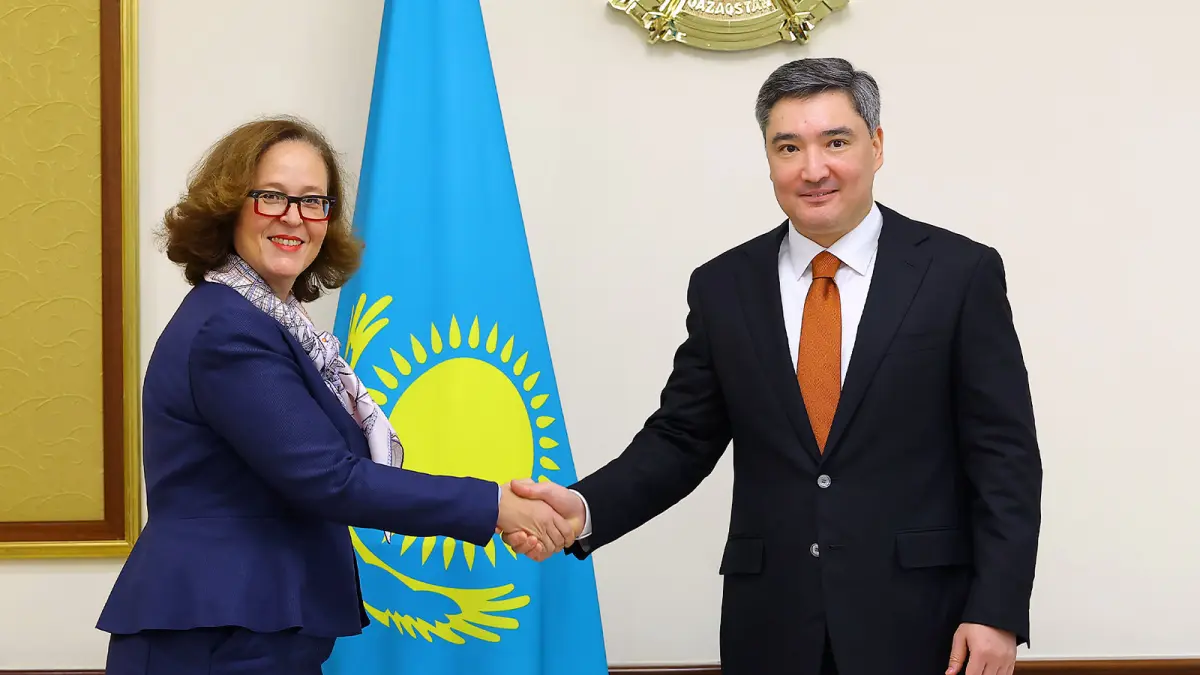
The press conference concluded the mission’s work in Kazakhstan. The day before, on November 16, Amina Lahreche was received by Prime Minister Olzhas Bektenov. According to the Government, he cited GDP growth of 4.5% over ten months of 2026 and growth in fixed capital investment of 4.9%, to 18.3 trillion tenge. “We note Kazakhstan’s significant economic potential,” the head of the mission said at the meeting with the Prime Minister.
The IMF expects economic growth of 4.6% in 2026 and 4.8% in 2027, The Astana Times writes. Inflation, by the mission’s estimate, will be 9.6% at the end of 2026, against 9.2% in October, and will slow to 8.4% by the end of 2027. The Fund will publish its final figures in a report at the end of January 2027.
Separately, the mission assessed the first year of the new Tax Code, which has been in force since January 1, 2026 and raised the standard VAT rate from 12% to 16%. “We have revised our forecasts for budget revenues,” Amina Lahreche said, adding that tax receipts were “quite good, they have grown”. In her words, they are “slightly below the expectations of the authorities, but in line with our forecasts”, Kazinform reports.
What it means: The Fund’s forecast reflects postponed maintenance, not a worst-case scenario: 4 million tonnes drop out of the 2027 balance because of work deferred from 2026. The risk of new interruptions at the CPC, which carries the bulk of CPC Blend exports, is not included in the figures, and if interruptions recur, output could come in below 96 million tonnes.
Who benefits: The IMF forecast is a reference point for Kazakhstan’s investors and creditors: it shows that the Fund expects the economy to grow even with lower oil output. For the budget, which depends on oil revenues, it means less income than at 100 million tonnes; the mission did not say how much less.
Background: The CPC, a pipeline from Tengiz to a terminal near Novorossiysk, carries the CPC Blend grade — oil from Tengiz, Kashagan and Karachaganak. In its October World Economic Outlook the IMF projected growth for Kazakhstan of 4.4% in 2026 and 4.9% in 2027. Fund staff had already visited Kazakhstan in June 2026.
We have also reported on oil output in 2026 that would have reached 101 million tonnes without the attacks on the CPC, and on Kazakhstan producing 77.9 million tonnes of oil in ten months, down 6.8%.



