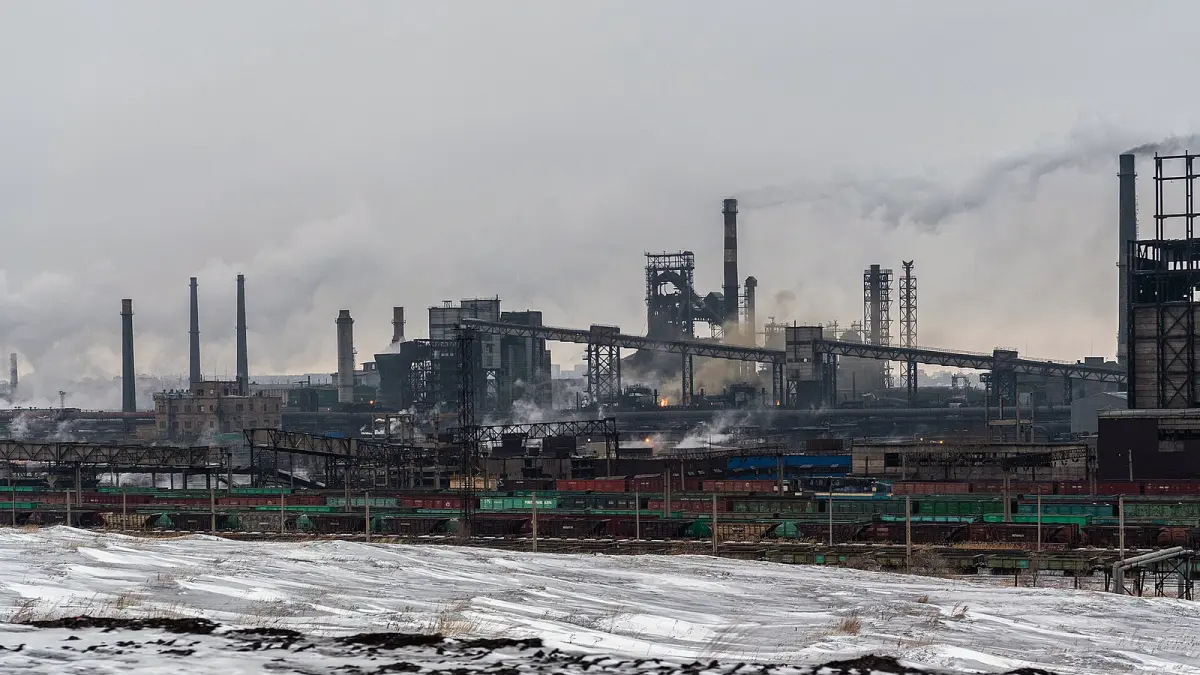
Astana, 20 November. The Ministry of Industry and Construction has banned the export of steel billets from Kazakhstan for six months.
The Minister’s Order No. 584 of 17 November 2026 “On certain issues of regulating the export of steel billets” has been in force since 18 November and prohibits export by all modes of transport.
The ban covers four commodity headings of the EAEU Commodity Nomenclature of Foreign Economic Activity. These are iron and non-alloy steel in ingots and other primary forms (7206) and semi-finished products of them (7207). Stainless steel in ingots, primary forms and semi-finished products (7218) and other alloy steels in the same forms (7224) are also covered. The legal basis cited is the Law “On the National Security of the Republic of Kazakhstan” and Article 29 of the Treaty on the Eurasian Economic Union, which allows member states to restrict exports temporarily to prevent a critical shortage of goods on the domestic market.
There is an exception: the ban does not apply to billets produced by the blast-furnace and converter method if an exclusive licence is held. The exclusive right to such exports under the same four codes was granted by Government Resolution No. 194 of 27 March 2026 to a single company, Qarmet JSC, formerly ArcelorMittal Temirtau. The licensing authority is the ministry’s Industry Committee. The document does not say how much Qarmet may export under the licence.
The new order extends earlier restrictions rather than introducing them for the first time. The previous ban, on the same codes and with the same exception, was set by Order No. 221 of 30 April 2026 and applied from 17 May to 17 November. Before that, by Order No. 263 of 17 July 2025, the ministry banned billet exports under only two headings, 7206 and 7207. Restrictions on steel billet exports have thus been in place almost without a break since late 2024.
The six-month term has been written into an order more than once now, so the “temporary” measure is gradually becoming a permanent routine. The ministry has not publicly set out its reasons for the new ban.
What it means: Steel billets, a semi-finished product for rolling mills, will continue to stay in Kazakhstan, and only Qarmet will be able to export them under an exclusive licence. The country prefers to process metal at home rather than sell billets.
Who benefits: The ban supports Kazakh producers of rolled steel and building materials who need billets on the domestic market, and keeps the export niche for Qarmet as the sole holder of the exclusive licence. Traders and small producers who could sell billets abroad lose out.
Background: Construction is supporting domestic demand for metal: according to the Bureau of National Statistics, construction work in Kazakhstan grew by 13.1% in ten months of 2026.
We have also reported that construction work grew by 13.1% in ten months.



