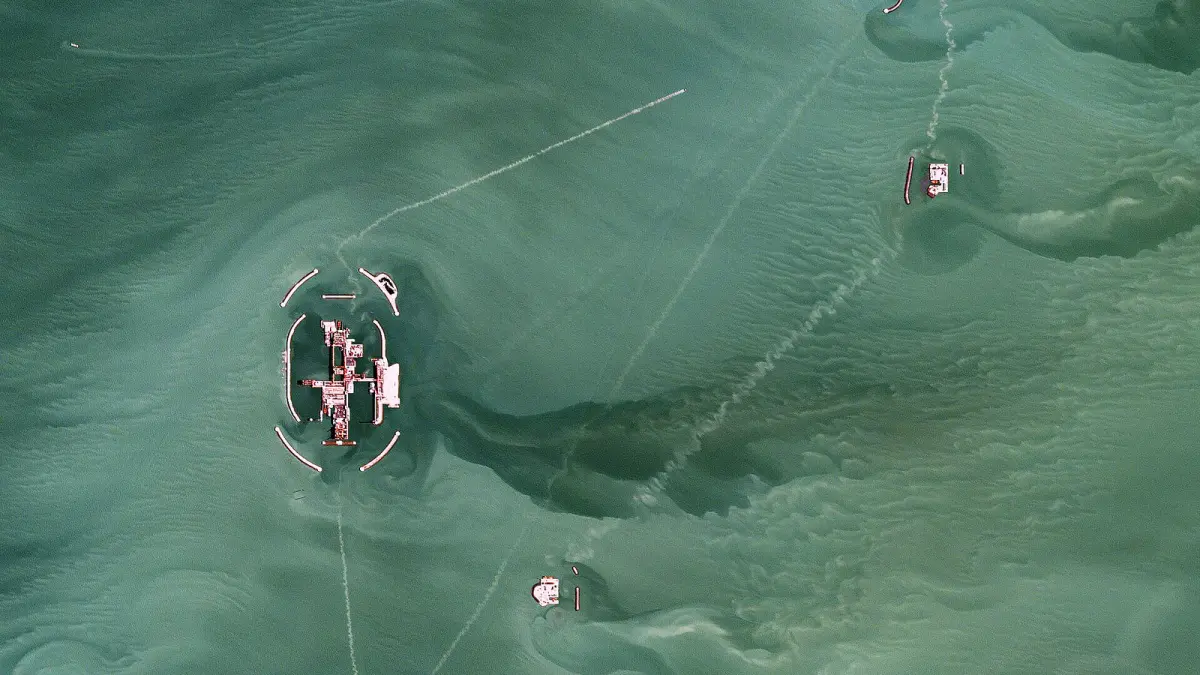
Astana, 26 November, . The Ministry of Ecology and Natural Resources proposes to oblige oil and gas companies to monitor methane emissions, check their equipment for leaks regularly and report on them every year, according to ministry documents reviewed by Kursiv.kz.
By the ministry’s preliminary estimate, this will cost the industry KZT 14.19 billion over five years.
Methane is the main component of natural gas. It escapes into the air at every stage of oil and gas operations, from production and treatment to processing and transport, through loose joints, valves and flares. As a greenhouse gas it is more potent than carbon dioxide, so many countries and energy buyers require its emissions to be measured accurately rather than estimated with standard factors.
Under the draft, companies will draw up emission monitoring plans, record the leaks they find and the repairs made, and have their reports checked by independent accredited verifiers. Data for the previous year will have to be submitted to the state carbon registry by 15 April. On that basis, Zhasyl Damu JSC will keep a national methane emissions database. The transition will come in stages: direct measurements at source level after 24–36 months, and reports with measurements at the level of production facilities 36–60 months after the rules are adopted, depending on the company’s group. Some of the amendments, on inventories and leak repair, may take effect on 1 January 2027.
Up to 402 companies could fall under the new requirements: 351 small, 21 medium and 30 large. Drawing up monitoring plans over five years will cost a small company KZT 8.36 million, a medium one KZT 11.72 million and a large one KZT 18.42 million. Annual reporting with independent verification is more expensive: KZT 24.91 million for a small company, KZT 28.92 million for a medium one and KZT 36.93 million for a large one. Under a cautious estimate, if 174 companies are covered, costs would come to KZT 6.61 billion.
The ministry gives two reasons for strict accounting. First, estimates of Kazakhstan’s methane emissions vary widely: the International Energy Agency (IEA) puts them at 896,000 tonnes a year, satellite measurements at 658,000 tonnes and other studies at 778,000 to 850,000 tonnes. According to a study by OGCI and Carbon Limits published in September 2026, emissions exceeded 560,000 tonnes in 2023, with about 252,000 tonnes, or 45%, coming from leaks. Second, the European Union is tightening methane requirements for importers of oil and gas. According to an estimate by the research organisation Clean Air Task Force cited by the ministry, failing to meet them could cost exporters about EUR 3.04, or roughly KZT 1,550, for every barrel delivered to the EU.
What it means: Kazakhstan intends to count methane by measurement and verified reporting rather than by estimates that currently differ by almost a third. For oil companies this means new costs, but also protection against possible charges when selling oil to Europe.
Who benefits: Large exporters selling CPC Blend crude to the European Union through the Caspian Pipeline Consortium (CPC): they need verified reporting to meet European requirements. Accredited verifiers, who will gain a steady stream of work. Small companies, by the ministry’s own estimate, will find the new requirements relatively more expensive than large ones.
Background: In 2023 Kazakhstan joined the Global Methane Pledge, an international initiative to cut emissions of this gas. In 2024 the European Union adopted a regulation on reducing methane emissions in the energy sector, which extends monitoring and reporting requirements to oil and gas imports.



