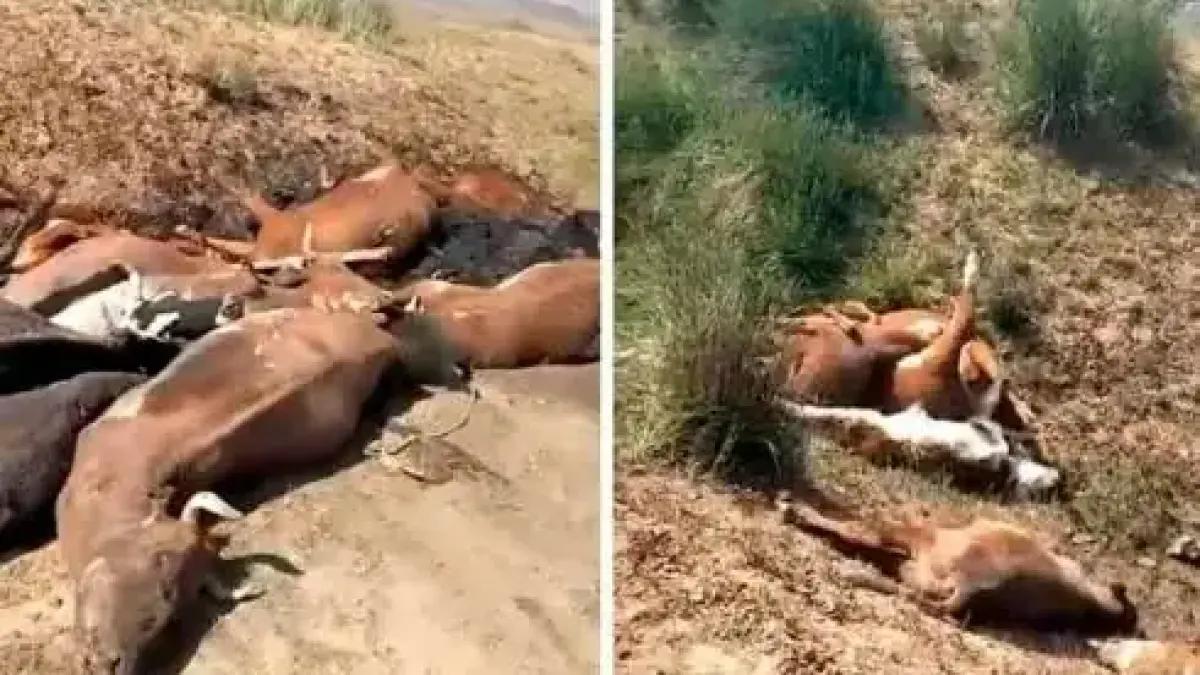
About 80 cows and calves have died of an anaerobic infection in Karaganda region, VRKNews.kz reports.
The vaccination plan against the deadly disease fell through because supplies became impossible after 24 February.
Instead of 3,000 cows, residents managed to vaccinate 750, and more than 150 animals are under observation.
The preparations for vaccinating cows were supplied to Kazakhstan by Russia and Ukraine.
Specialists say the livestock die-off began swiftly: within days the animals were struck down by an infection with the same symptoms in all of them — lethargy, unsteady gait, high body temperature and refusal to eat.
Veterinarians suspect an outbreak of anaerobic infection. The herd had not been vaccinated because the vaccination plan was disrupted by the events in Ukraine.
“We vaccinated only 25% of the livestock. Because we had no vaccine. Ukraine supplies us with vaccine, Russia supplies us with vaccine. Diagnostics come from Ukraine,” explained Kairbek Tursynbekov, head of the regional veterinary department.
The spread of the disease may have been aided by dry, hot weather in the steppe, specialists say. Villagers are promised compensation for their losses. At the same time veterinarians ask for the procurement of preparations to be speeded up. The region is short of more than 350,000 doses of vaccine against viral diarrhoea and infectious diseases, officials said.
To keep infected meat from reaching Kazakhstani shop counters, veterinary checkpoints have been set up in settlements.
Anaerobic enterotoxaemia of cattle (Latin: Enterotoxaemia bovum) is an acute toxic-infectious disease characterised by haemorrhagic enteritis, general toxaemia and high mortality. Historical background, distribution, degree of danger and damage. Enterotoxaemia of cattle — “enterotoxaemic jaundice” — was first described in Australia (Rose, Edgar, 1936). The disease was then identified in France and the USA. It occurs periodically in many countries, causing damage to cattle farms through the death of young stock.
Newborn calves are the most susceptible. The disease is encouraged by violations of housing and feeding conditions. It develops when a toxigenic strain of the pathogen enters the body, or as an endogenous infection.
Once in the gastrointestinal tract, the pathogen multiplies intensively and produces toxins that act on the mucous membrane of the small and large intestine, causing inflammation, ulcers and necrotic changes and disrupting the secretory and motor functions of the digestive tract.
The toxins penetrate the blood, act on the vascular endothelium, mucous and serous membranes and internal organs, cause multiple haemorrhages and destroy the parenchyma of the kidneys, liver and other organs. The animals die of intoxication.
In calves under three weeks of age the disease is acute, and death sometimes occurs 3–4 hours after the first symptoms appear: raised body temperature, faster pulse and breathing, refusal of feed, lethargy, acute colic and disorders of the nervous system. In some calves bleeding from natural openings and diarrhoea mixed with blood are recorded.


