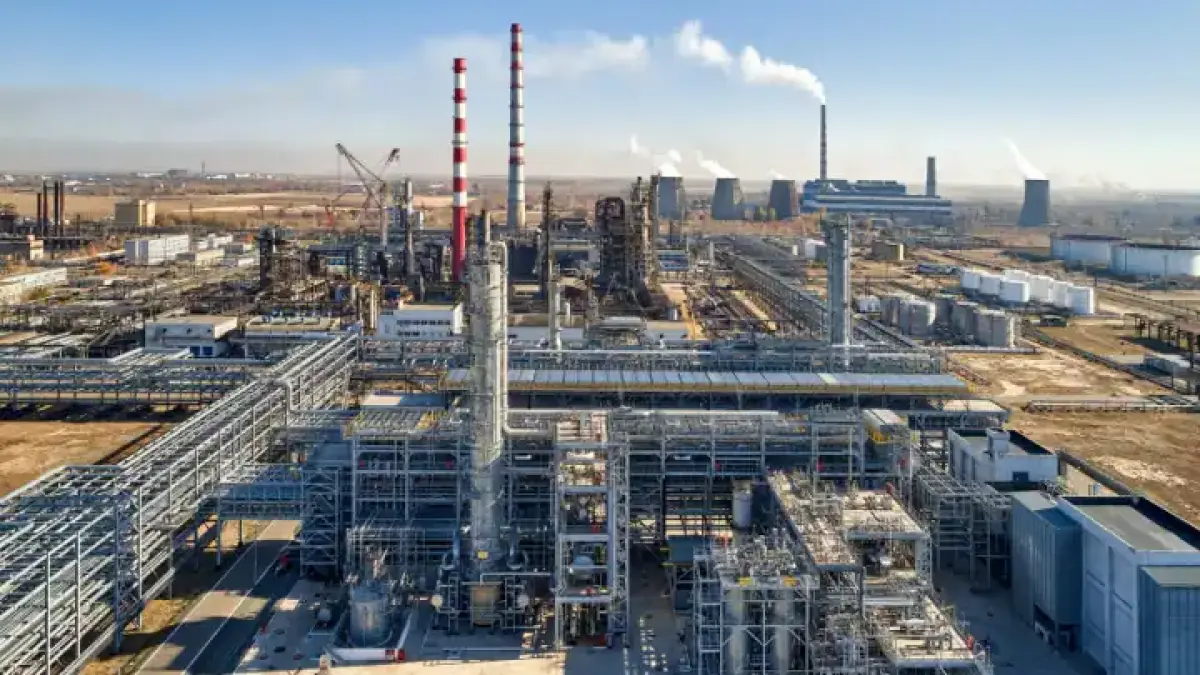
Magzum Mirzagaliyev, chairman of the board of the national company KazMunayGas, visited the Pavlodar oil refinery and instructed that stable sales and shipments of diesel fuel to Kazakhstan's domestic market be ensured. VRKNews.kz reports this, citing the national company's press service.
The head of KMG visited the Pavlodar Petrochemical Plant (PPCP) on 27 August. It was the first visit to the plant by KMG's management since Kuanysh Bishimov was appointed the enterprise's new director general.
Recall that in August–September, during the autumn field work, demand for diesel fuel traditionally rises. To solve the problem of its shortage, the government of Kazakhstan introduced differentiated diesel prices for citizens of Kazakhstan and foreigners. The corresponding order was signed on 22 August 2022 at the Ministry of Energy of Kazakhstan.
The head of KMG held a meeting on supplying the domestic market with diesel fuel and on shipments from the oil refineries, attended by the management of KazMunayGas and the PPCP, Pavlodar region akim Abylkair Skakov and representatives of petrol station retail chains.
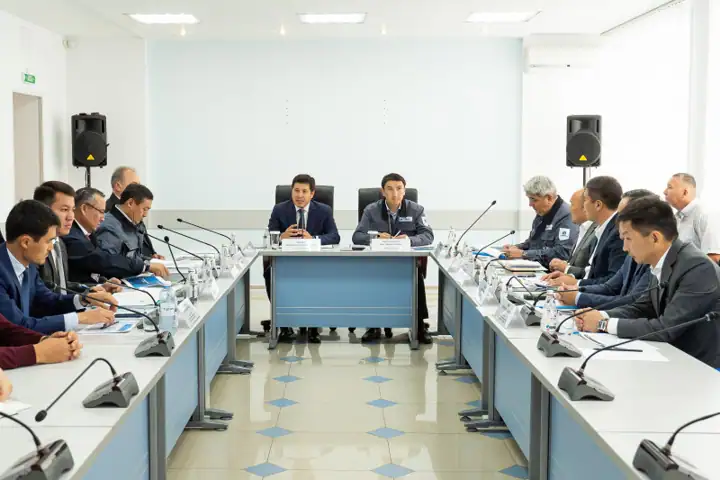
During the meeting Arman Kairdenov, deputy chairman of the KMG board for oil refining and petrochemicals, reported steady annual growth in oil refining and oil product output.
However, he said, abnormally high demand for diesel offsets the positive effect of increased output. Meanwhile the three main oil refineries (PPCP in Pavlodar, PKOP in Shymkent, the Atyrau refinery) produce fuel in quantities sufficient for the country's domestic consumption. Kairdenov stressed that thanks to the modernisation of the three refineries carried out in 2011–2018, the planned annual volume of diesel production in 2022 has been increased by 1 million tonnes compared with 2020. This year it is planned to be 5.2 million tonnes a year, and consumption is planned at 5.47 million tonnes. In the eight months of 2022, according to the plan, 3.45 million tonnes of diesel have already been produced.
It was especially noted that the country's refineries pass all data on oil product balances from control metering devices to the state information system for accounting of certain types of oil products (SUNP “e-Sapa”). The data go online to the State Revenue Committee of the Ministry of Finance of Kazakhstan. In other words, all information on the activities of the three refineries is completely transparent to the state supervisory bodies. In all, 26 oil refineries (three large and 23 small) and more than three thousand petrol stations across the country are connected to the system.

Kairdenov drew attention to the fact that over 2018–2021 diesel consumption in Kazakhstan grew by 8%, while the country's GDP over the same period rose by only 5.8%, which points to the export nature of the growth in demand for diesel (consultants of Boston Consulting Group wrote about this in their forecast as early as 2018). And according to the latest data up to 80% (up to 250 thousand tonnes a year) of the whole increase in diesel consumption comes from the country's border regions, where both legal transit and smuggled refuelling of lorries from Russia, Uzbekistan and China takes place on a mass scale.
For their part, representatives of domestic petrol stations noted that the sharp demand for diesel causes external price pressure. Thus, while in Kazakhstan the average retail price of one litre is 238 tenge, in neighbouring Uzbekistan one can fill up with diesel (converted into tenge) for 438 tenge (the cost of a litre is 1.84 times higher), in Russia for 429 tenge (1.8 times higher), and in Kyrgyzstan for 401 tenge (1.6 times higher) per litre of diesel.
The meeting participants noted that the main factor in the growth of diesel consumption is the sharp imbalance between diesel prices in Kazakhstan and in the border countries.
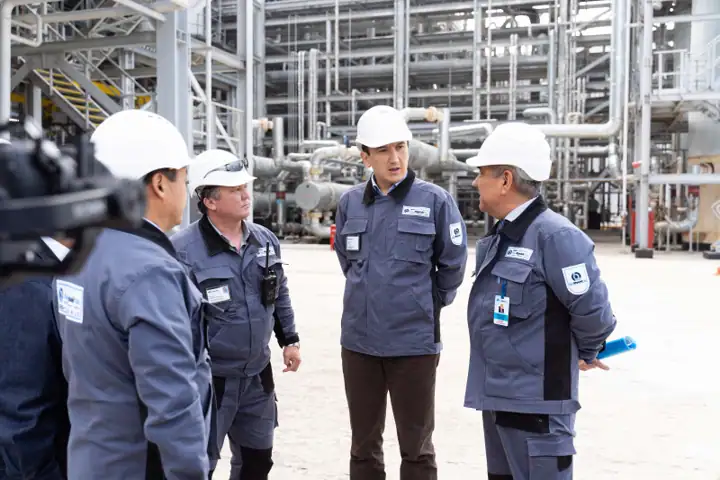
It was also said that the need of JSC NC Kazakhstan Temir Zholy for diesel (50 thousand tonnes a month) is planned to be met by imports at KTZ's expense. At the same time, according to the plant's director general K. Bishimov, work is under way together with the railway workers to prevent further delays in the supply of empty tank cars, as happened the other day. The head of the plant assured that at present the situation is under control and shipments are being made according to plan.
Concluding the meeting, Magzum Mirzagaliyev stressed the importance not only of steady fulfilment of the plan but also of ensuring uninterrupted shipment of diesel during the harvest season. He also recalled that, to stabilise the diesel market, the major overhaul of the Shymkent refinery is being postponed from 2022 to 2023.
For our part we note that the situation could have been saved by carrying out the republican programme of gasification of public transport (the “Action Plan to expand the use of natural gas as a motor fuel for 2019–2022”), which would save almost up to 400 thousand tonnes of diesel consumption a year. Under the programme, 12 thousand gas-powered buses were supposed to go on city routes across Kazakhstan by the end of 2022. However, in the first half of the year no more than 20% of Kazakhstan's public transport was converted to gas. It is obvious that the programme will not be carried out this year, since the akimats continue to buy diesel-powered buses. A special government resolution on this was adopted back in 2018. But this was not done; the resolution is not being enforced. That, too, is a systemic problem.
Plus, this long-standing problem of the fuel price imbalance has to be solved somehow. After all, it is this systemic factor that also holds back oil refining: investors are in no hurry to put money into opening new refineries in a country where the price of petrol is below the market, since in that case the investment project has no particular prospects. That is why foreign oil companies prefer to pump oil out and send it beyond Kazakhstan's borders, with much greater profit from its simple sale. Although, in theory, oil refining could be much more profitable. Such is the systemic imbalance, which year after year is (decoratively) levelled out by command methods, although it is long past time to start applying market ones. Plus to connect the possibilities of the same digital economy: after all a social wallet (and in September the information system “Digital Family Card” is promised to be launched) has appeared for the citizens of Kazakhstan, thanks to which it would be possible, for example, to let fuel and lubricant prices float freely on the market. And for needy car owners (socially vulnerable families of car owners, farmers and other categories of citizens) to apply precisely differentiated selling prices, by social ID. Perhaps it is just the time.


