Parliamentary elections will be held in sovereign Kazakhstan on 19 March 2023. That is wonderful. But I propose to look at this process more broadly, and to think about how matters might turn out in the case of an electronic parliament that would function within a model of direct digital democracy. For in that case the e-parliament model presupposes that there is no longer any need for the services of a civic representative-intermediary in the form of a deputy.
Instead of parties — political brokerage offices
A citizen who has, for example, an account in the e-parliament becomes, by means of an electronic digital signature (EDS) or by means of biometric identification, an active user of the information system “E-Parliament”. Entering such a system, the e-parliamentarian will be able to view the bills of interest to him, discuss them in thematic communities of the e-parliament, submit an e-application to take part in a working e-group within the e-parliament, and then vote on a bill electronically by means of the EDS. All this is already feasible, all this is already made possible by modern information technologies. And if, for example, a citizen with his electronic digital signature does not want to take part in the lawmaking process, he could hand over, on a contractual basis, the right of the lawmaker to an institution of political brokers, whose role could precisely be played by parties and other expert associations.
Do you sense the difference? Either you simply hand over a “vote”, or you conclude a specific individual contract while keeping the right to terminate it at any moment! And political parties in this situation cease to be carriers of political fascism; they are cleansed of the absolutism of “their truth” and become organisations of political culture in the full sense of the word.
The present political archaism of modernity (with the party system) has outlived itself utterly. I simply do not understand how one can belong to some modern party on the basis of “bird's rights” (rights on sufferance), that is, a membership card? The time has long since come for a full-fledged contract between the “individual” and the “collective”, stipulating the rights and duties of both sides. But this can be embodied in the best way, I repeat, precisely under direct digital democracy. Which is exactly what must come about as a counterweight to the threat of turning into an absolutely uncontrolled digital concentration camp. All of the above in effect turns society face to face again with the ideals of Athenian democracy, when the citizen-residents of the polis could gather in the square and vote for this or that fateful decision. It will be a modern political reincarnation of Athenian standards at a new qualitative level.
Open voting and its obligatory nature
In other words, such a system will combine both the best that liberalism nurtured (respect for the individual) and the best of the collective principle of socialist ideas (without lapsing into collective fascism). In addition, the time lag of 4–5 years disappears, which slows the development of the state and prevents the timely adoption of needed laws and the disposal of unneeded ones.
“Beautiful,” I will be told in objection. “But one could write a little programme to drag a vote into somebody's desired array of votes. And how is one to check how exactly your electronic vote has been counted? In Russia's Moscow, look, they introduced remote electronic voting (REV) in the last elections, and its results proved extremely doubtful as to their correspondence with the real aspirations of the electorate.”
My answer. REV will cease to be doubtful if non-secret voting is introduced — that at once removes many far-fetched problems that trail along like a locomotive from a blinkered view of the very essence of how to run a state honestly, quickly (almost lightning-fast) and efficiently, in a modern way. It is easy to digitise “secret voting”, but trust in “secret e-voting” is hard to achieve, if it is possible at all. And is it needed? One simply has to move away from such an archaic practice as “secret voting”.
Everything must be honest, open and transparent, and in addition participation in state affairs must be obligatory.
For example, compulsory voting is applied in Australia, Belgium, Luxembourg and one Swiss canton. And “non-secret” electronic voting already exists in the same Switzerland (in some cantons) and, moreover, to take part in such voting, instead of a passport it is enough to show a bayonet. The Swiss are true to their traditions indeed!
Time, freedom and efficiency
The very system of “representative parliamentarism” needs to be broken. There is already an e-government. Now an e-parliament must be made on the principle of the stock exchange. That is, one must vote on bills as on shares. With or without brokers as intermediaries.
Parties must be turned into brokers so that if a citizen does not want to take personal part in voting on each bill, he could conclude a contract with a broker (a political party in its former embodiment). And such a contract frees him from “party membership” as a phenomenon of “party slavery”. Why slavery? Because only with a contract that individually stipulates the rights and duties of each side is civilised equality between citizen and party-broker achieved, when one can break the contract and calmly leave at any time for another broker while keeping the actual right to influence the lawmaking process.
For why does the efficiency of governance rise here? Because there is no time lag whatsoever, no “electoral periods”. That is, feedback with the people works instantly, by the standards of state administration. There is no need to wait four years to vote for another deputy — that is locomotive-age, absolutely inert and sleepy thinking in an age of cosmic speeds. And the bills are prepared by ministries, agencies, public organisations and expert communities.
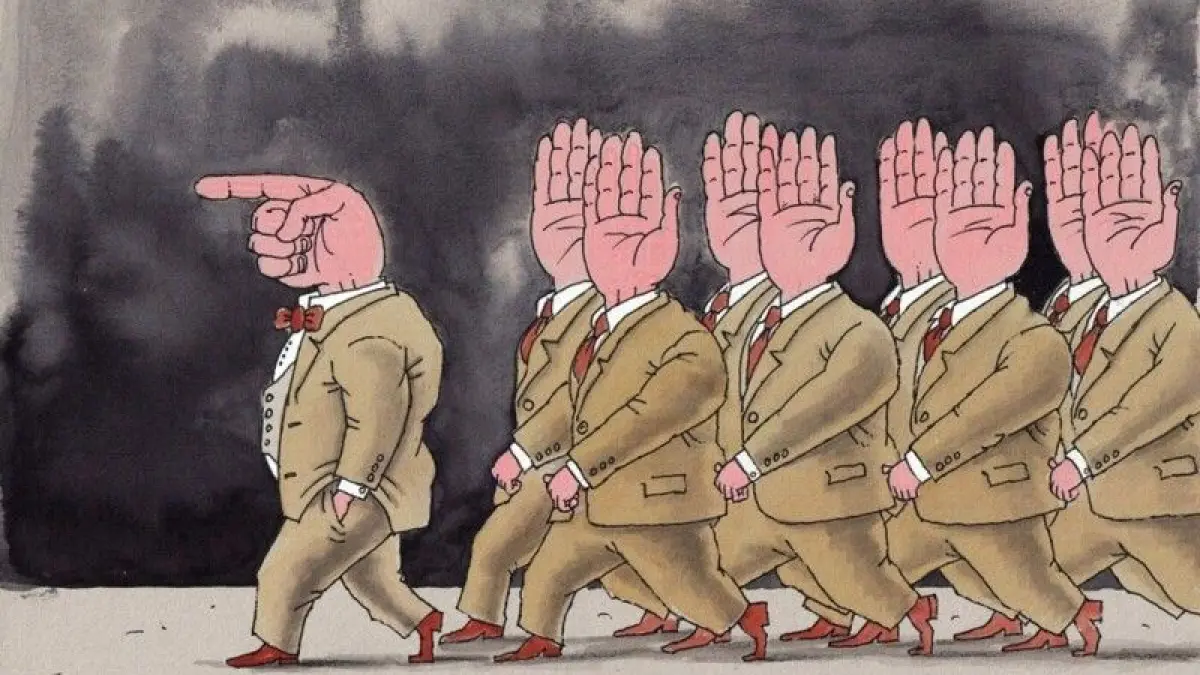
This is what the lawmaking process should ideally be. This is what should exist and is begging to come out of the pregnant “democracies”. Not that whole archaic set we now observe all over the world. Parties today are an institution if not of political slave-owning of “cogs-votes”, then certainly of feudal slave-owning. They must be brought into the civilised framework of political brokerage. Incidentally, one can envisage “handing over the right to approve bills” not only to party-brokers but also to expert associations. Then a true political market will exist.
And for now there is no market at all in politics but the most genuine stale feudalism with serfdom. From America one should take only the developed forms where they have succeeded first of all by their very nature — in the financial sphere. And from there adopt the format of stock and other exchanges with their mechanisms and convert them into political schemes and realities of direct digital democracy, fit for today and the future.
When people vote for managerial decisions, not for a candidate
Direct digital democracy is needed as a form of government. The essence of the proposal is that one will have to vote not for some candidates but for managerial decisions. And candidates-deputies, if they are needed at all, will be needed exclusively in the role of trusted experts to whom one can partly entrust (given their professional profile) the task of dealing with complex questions in one's place. What remains is simply a choice of reason: if you have personal competence in some branch area — you take part in lawmaking personally, and in other areas — let the brokerage political office work.
The degree of freedom rises many times over under such a system! Your vote becomes real currency! And you can always leave one office for another, with no need to wait four years. There is no electoral hostage-taking, in essence serfdom. The phase of any elections in the profane and manipulative format of a political show, in the format of games, dancing on bones and so on and so forth, drops out entirely.
The insinuating voice again raises doubts: “And who will vouch for the broker, that he is not a swindler?”
Well, you cannot do without swindlers. But the stock exchange lives and prospers. Shares are traded. It is a nationwide pastime in the same West. And with us direct digital democracy can become such a pastime, creating a real market in the political sphere. And a civilised market at that.
The insinuating little voice continues: “I will be able to change the broker, but what he has voted in for me and what laws he has passed cannot be changed in six months!”
My answer: so stipulate in the contract a trial period when you will “test” him under strict “manual control”.
The darkness of secret voting
Perhaps this new model should be introduced with an allowance for different weights of e-citizens' votes. For example, perhaps serving officials should be given the lowest qualification and ex-officials and pensioners the highest? Pensioners have strategic thinking and think about the country's future. Not for nothing in Germany itself pensioners are specially given huge pensions — they do not waste these sums on all sorts of trifles but invest them in projects the country needs.
They will object again: “And are you sure of pensioners? Years lived are not always evidence of reason!”
My answer: pensioners will be precisely the guarantor of the stability of society with their conservatism and distrust.
A progressive age qualification could be introduced so that it grows with age. By inverse analogy with progressive taxation of the rich. In general the whole system of governance, all these “democratic schemes”, must be reassembled and reconfigured. But not abruptly, gradually. And start with open, not secret, electronic voting.
It also makes sense to introduce a more transparent and proper institution of the right of “veto” over the adoption of laws: to give this right to the heads of expert associations within the corridor of their confirmed thematic competence. That is, if in the experts' opinion a law is populist, even if supported by the majority, such a law still cannot pass. As for the institution of the right of “veto” that is shown now, for example, by the president's right to say “no” — it is completely opaque and is, in essence, a monarchical rather than democratic mechanism of protection from the fool. And so it is with everything in these “electoral technologies”: opacity is their pressing and primordial matter.
In fact the phenomenon of “secret voting” is “important” precisely because it is flesh of the flesh of the present status quo of the citizen-voter, who is rigidly fixed as a “cog” of opaque electoral algorithms. And that is why civilisation is forced to devise a “system of checks and balances” to withstand the chaos of electoral games. That is why “observers” and electoral commissions are needed, since in the dark kingdom of representative democracy they are, though technically unreliable, at least some attempt to light a ray of conscience.
The same attempts, using the so-called “blind signature” (or “anonymisation of the vote”, now applied in existing e-voting systems), to automate all this chaos and darkness of the electoral mechanisms of representative democracy come from a complete failure to understand that it is precisely this chaos, all these gadgets with dependent-independent “observers” and “electoral commissions”, that must disappear first of all, as a relic of a past epoch. They are absolutely unneeded and superfluous, and even harmful in direct digital democracy. At most there should be, so to speak, sysadmins from the project's development and technical support team, no more.
In direct digital democracy everything must be transparent from the start. This is the alpha and omega of healthy public life (not to be confused with private life). The same blockchain points to this, storing the chain of all transactions and showing all actions undertaken by a subject with an object. That is, the very concept of democracy must be revised to its foundations. All of it must be shaken up.
To stop being a cog
The democracy that now exists in the countries of the world is the legitimisation of complete chaos, a play at certain political “mechanisms” as a consequence of the industrial perception of the epoch, of the objectification of the machine metaphor. Direct digital democracy is called upon to become a metaphor of political organics, and not of wildly manipulative electoral “machines and mechanisms”.
In other words, here there is also an opposition of life itself to the world of machines and the mass technologies of dehumanisation, although, it would seem, how can automation of the legislative form of government contribute to a genuine revival of political space. It can. And not only can — direct digital democracy simply puts “machines and mechanisms” in their place, puts them in a subordinate position.
Just as in the human organism the process of cardiovascular activity or of the gastrointestinal tract is automated and needs no ceaseless “master's supervision”. The birth of the model of direct digital democracy is helped by artificial intelligence and big-data technologies with supercomputers, which must be put at the service of a permanent search for ever more perfect models of this democracy. They must become a technical support service, that is, the servicing apparatus of the new democracy; this is one of the greatest roles they will play in the history of humankind, and this is, in fact, their foremost historical purpose: when a situation ripens, tools for working with it appear.
In other words, an epoch of the expropriation of robots has, as it were, arrived — of using them directly and precisely for their purpose. The expropriation not of the rich, not of the proletariat, not of the “middle class” and other strata of society, but of the machine metaphor itself, of the machine perception of the world. For what is the injustice of today's world? That people, in the age of artificial intelligence, more and more involuntarily perceive or feel themselves, all those around them and public life itself as “robots”.
The consciousness of the average citizen itself is steeped in a forced identification of himself as a “cog” of society. Hence the heavy ignoring and even boycott of elections by the young generation of citizens, who simply feel in their gut that “something is not right here”. Hence also the attempts to “change the system” as an undercurrent of protest against the “mechanisms of power”, which on inspection turns into the process of cutting off the hydra's head, when instead of one several new, equally vexing mechanistic problems grow at once.
The creation, as a first step, of the legislative branch of direct digital democracy will become a step towards the exteriorisation of machine consciousness, towards liberation from the slavery of being society's robot.
Man is originally a free being. He is freedom itself, the essence of freedom. The time has come to free him from social slavery precisely with the help of the mechanisms for automating public life that have become available to humankind. So that in society a person becomes a living, thinking, articulate little cell, and not a cog assigned to a polling station and flashing sleepwalker-like with barely distinguishable life once every four years. It is time for humankind to emerge from the lethargic sleep of representative democracy.
Legislative exchange, laws as companies
There is one more point. Continuing the theme of converting the stock metaphor, laws can be adopted and released into the legislative space like a company that holds its IPO. That is, laws can be quoted on a legislative exchange with their own ticker, having a certain number of votes from the country's citizens. And after the initial placement, that is, the adoption of a law by a majority of votes, the law is launched on its market voyage: citizens may, for example, a year after the law's release, withdraw their vote. Then the weight (value) of the law falls, and if its value falls to a critical mark (the votes of citizens in its kitty turn out to be below the minimum), the law automatically ceases to operate and is disavowed. Or, conversely, add one's vote to a law. It at once becomes clear in real time which laws are important and popular and which must either be refined or have ceased to be relevant.
One may leave a special status for the Constitution and some other laws, not bringing them out into the public field, as if not holding their IPO. Since an invariant legislative core must also exist, and that must be stipulated separately.
In other words, real life, organics, is breathed into legislation. Each law will have its developers, and if they want their law to live and not perish ignored by the majority, they will be forced to work regularly on improving the law, honing its spirit and its letter.
If one considers that the whole history of the life of a public law will be recorded in a blockchain accessible for analysis and reading by every citizen, and that the whole lawmaking portfolio of brokerage offices and of the citizens themselves will be recorded automatically, this will have a direct and powerful influence on their public “market” reputation. Hence the degree of responsibility of political and public expert groups and of the citizens themselves rises at once. This, I repeat once more, will be a full-fledged political market.
These are, of course, proposed variants. They are not the ultimate truth. All of them must pass through a creative collective brainstorm.
Political resilience to outside influences
Another aspect. For any state the priority is protection of the national information space. The events of the last decade show how, with the development of communication tools such as social networks and transnational messengers, the conduct of genuine information wars is intensifying, with the aim of shaking and destabilising the political situation in one country or another. It is clear that the greatest number of opportunities for this belong to countries in which the headquarters of the transnational companies that created these means of direct communication between people are based.
What do governments do to resist these sometimes openly aggressive influences? Right, they tighten legislation on network interactions and force global companies to open representative offices in their countries.
But how effective is that? To fight the consequence and not the cause? To keep rapping the knuckles of journalists and bloggers with unpopular legislative acts for raising unpleasant subjects?
The cause here is obvious: a lack of involvement of the country's citizens in governing the state. Now is the time when social networks seethe with arguments and discussions, people do not leave Facebook and Telegram for hours. People usually say: “That is good, this is how people let off steam, speaking about what troubles them, but there will be no revolutions.” But this is simply an elementary failure to understand the historical need for wider involvement of the popular masses in the business of governing the state.
Earlier, when the people had at most five or six opinions, representative democracy somehow worked and showed a more or less acceptable level of technical efficiency. Now, when the palette of popular opinions has become unimaginably, avalanche-like motley, the model of representative schemes of parliamentarism (using feudal clamps in the form of party farms) no longer withstands any criticism; it has long since been in no way relevant to the contemporary state situation.
Conversely, it is precisely the model of direct e-parliamentarism that in effect removes entirely, liquidates at the root, the possibility of various kinds of critically serious manipulation of the people's opinion through information campaigns whipped up through social networks.
Since the whole expert people will be sitting in e-parliamentary networks, discussing the pressing problems of state-building, they will have no time left for social networks. That is what the matter is about too, gentlemen!
In other words, the new type of legislative power automatically ensures a high degree of the state's information and political security, leaving social networks only for communication with friends abroad and on other occasions unrelated to the state's internal politics. Since everything that hurts the citizen he will be able to say to his native society himself, as a full-fledged parliamentarian, lawmaker, true source of power. Partly for this reason, various domestic start-ups aimed at repeating the success of Zuckerberg or Durov do not “take off”. To outbid the attractiveness of foreign social networks one simply has to draw people into one's own e-parliamentary network with values essentially more important than mere friendly communication. That is the whole marketing story. And it will be the safest and most error-proof option: to outplay the competitor on their own field of democracy, raising the stakes to a height at which the competitor is afraid even to look.
All these points together raise the state's political resilience by several orders of magnitude, making it in fact, from within — institutionally — independent of any outside political influence.
If the people do not saddle the digital...
Direct digital parliamentary democracy is advantageous to the head of state too. Why?
Because direct digital democracy removes an enormous burden of responsibility, when one constantly had to delve into processes and follow the lawmaking process almost minute by minute, in effect engaged in petty and distracting operational activity instead of strategic leadership on the scale and in the interests of the whole country. And it is precisely under it that the head of state becomes the true leader of the people. And the people, in turn, gain a “tsar in the head”, as the Russian saying has it (sound judgement of their own).
Will this ever be embodied in some state? I do not know. I know only that ideas materialise. Sometimes with stunning speed.
Some parallels arise too. For example, the idea of an electronic tenge arose back at the dawn of Kazakhstan's independence, before the introduction of the paper tenge. From a technical point of view it was both cheaper and possible even then, but the country's leadership preferred conservatism. Then, at the end of the noughties, Grigory Marchenko began promoting the idea of a digital tenge, but the National Bank's bill was blocked by a powerful banking lobby. But for the last few years the National Bank has again raised the topic of a national digital currency, and Kazakhstan is now at the second stage of introducing the digital tenge.
I believe the procedure for conceptualising, developing a prototype and discussing it can be copied from the case of introducing the digital tenge.
The time is such that it is time to develop democracy creatively, not by copy-pasting existing sociotechnologies and a light (or even deep) rewrite of the crutches of democratic technologies that humankind has in stock. It is time to revise from scratch all the mechanisms of people's power, and with the help of the same AI (artificial intelligence) to try to simulate new models within the framework of a new paradigm of direct democracy. To load the capacities of the universities' supercomputers to analyse different plot-algorithmic branches. It is a pity, of course, that our state still has no national supercomputer built specially for tasks of state importance, and it would be extremely in demand for just such a project.
It is a hard matter, even the hardest (for no state in the world has done such a thing yet), but inevitable, since no one has repealed the historical laws of the development of society. Direct digital democracy is the next stage of earthly civilisation, knocking loudly at our door.
And here is another point: if the people do not saddle the digital, then with the help of the digital the people will be saddled. Think, gentlemen.
Yours sincerely, B.S.
06.2022–01.2023, Astana


