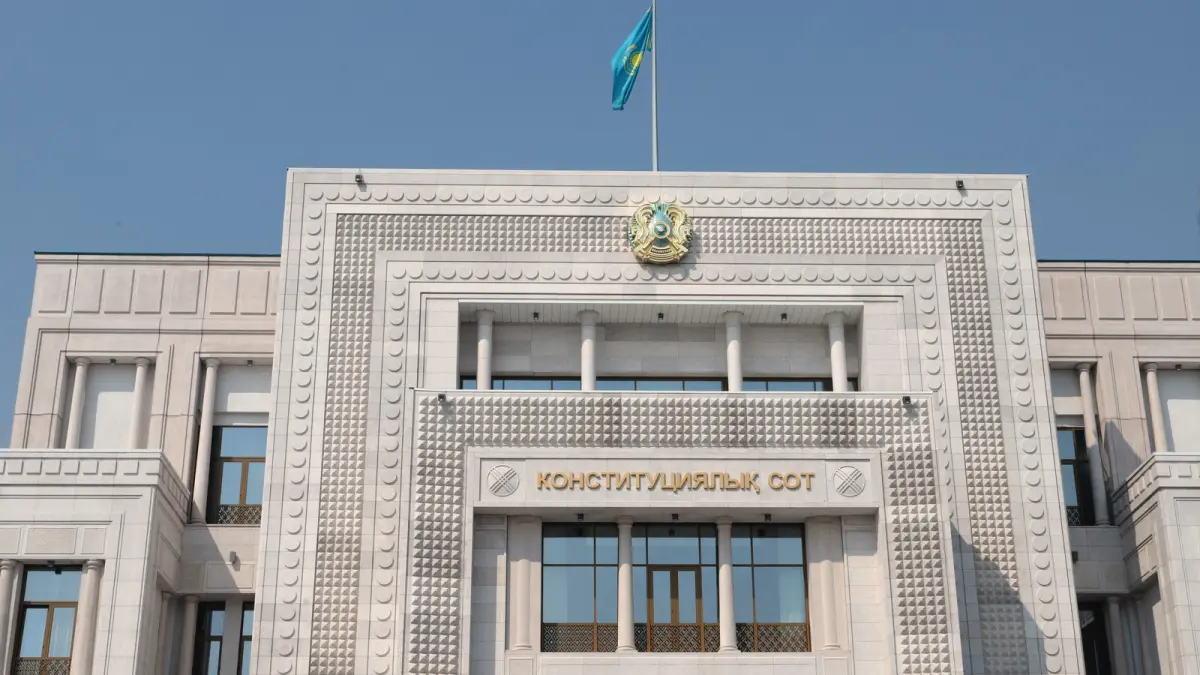
Astana, 5 November, . The Constitutional Court recalled that the concept of “irremovable doubts” in part three of article 19 of the Criminal Procedure Code does not contradict the constitutional guarantee of the presumption of innocence, the court’s press service said.
The occasion was an appeal from a person convicted of misappropriation or embezzlement of entrusted property and of fraud. The applicant believed the concept of “irremovable doubts” narrows the constitutional guarantee that any doubts about guilt are interpreted in the accused’s favour and thus limits the presumption of innocence.
The court noted that this question had already been considered: it formulated its legal position in the normative resolution of 26 June 2003 No. 9. Under it, doubts are interpreted in favour of the accused if they could not be removed after the body conducting the criminal process took all measures provided by law. The provisions of the current Code essentially keep the regulation reviewed earlier, so the court’s normative resolutions retain legal force to the extent that they do not contradict the Constitution. What procedural decision the court took on the appeal is not stated in the report.
What it means: The court did not change the rule but confirmed the earlier one: not any doubt works for the accused, only the one that remained after the authorities exhausted the measures provided by law to remove it.
What we know now: The court confirmed its earlier position, under which irremovable doubts about guilt are interpreted in the accused’s favour. What exactly the court decided on the appeal of the applicant, convicted of misappropriation or embezzlement and fraud, is not stated in the report.
Background: The presumption of innocence is the rule that a person is considered innocent until guilt is proven in the manner established by law. A “normative resolution” is a Constitutional Court decision that interprets norms and is binding on all; it stays in force until the court replaces it with a new one. “Irremovable” means a doubt that remained after the investigator, prosecutor and court took all due measures of verification.



