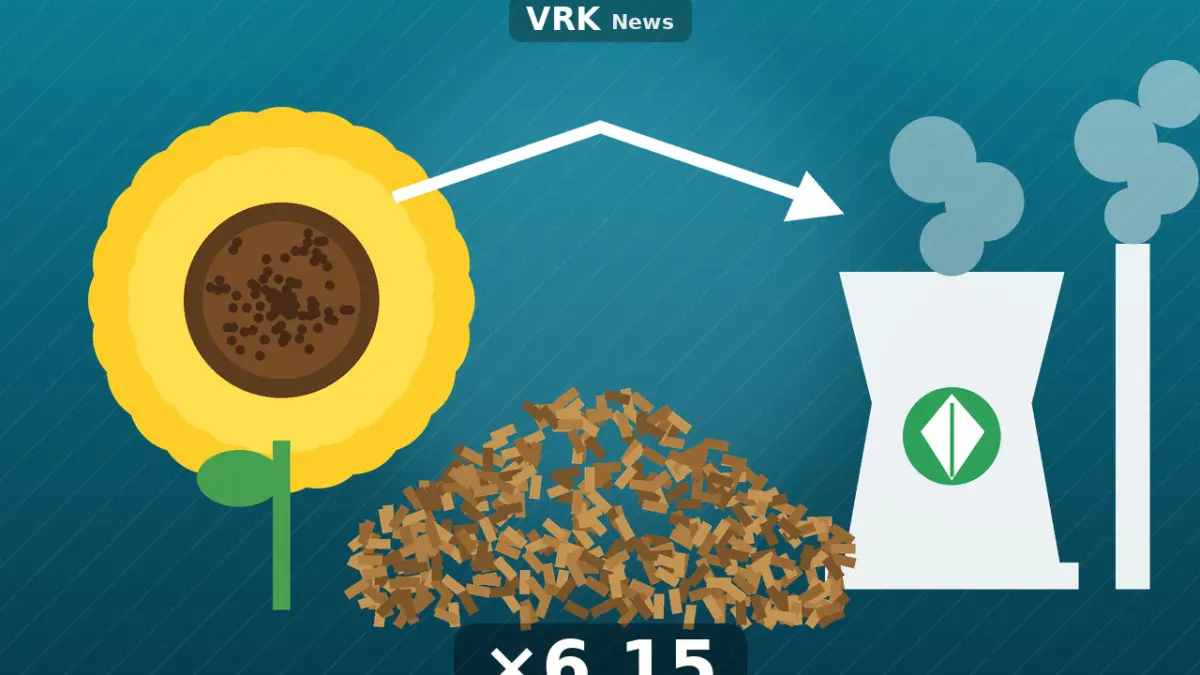
Astana, 5 November, . In nine months of 2026 Kazakhstan sold abroad granulated sunflower husk worth 3.4 million dollars, 6.15 times more than a year earlier, the Ministry of Agriculture said.
The main market is Europe, where Kazakh pellets are used as biofuel at power plants. According to the National Association of Oilseed Processors, 63.2 thousand tonnes were shipped in January — September, 3.56 times more than a year earlier; in all of 2025 deliveries were 33.4 thousand tonnes worth 1.035 million dollars. The biggest buyer is Poland: it accounted for about 98% of exports in 2025, and the demand of a single large Polish power plant can reach 30 thousand tonnes of pellets a month.
Revenue grew markedly faster than volume, so a tonne also became more expensive: by the editors’ calculation, the average export price rose from about 31 dollars a tonne in 2025 to 54 dollars a tonne in January — September 2026. Husk makes up 14–18% of the mass of sunflower processed; up to ten plants now make pellets from it, with combined output of up to 10 thousand tonnes a month, and almost all of it is exported. One large enterprise has installed a boiler that generates electricity for its workshops and grounds. The association believes that in the medium term exports could rise to 250 thousand tonnes a year, almost 7.5 times the 2025 level; this needs more sunflower acreage, deeper processing and steady demand for biofuel in Europe.
What it means: A by-product of oil production has become a commodity: revenue in nine months grew 6.15 times while physical volume grew 3.56 times, so the price per tonne also went up. But the market is narrow: almost all 2025 exports went to a single country.
Who benefits: In the association’s view, oil plants: they cover their own energy needs and earn extra export revenue. European power plants get fuel made from plant waste; Poland accounted for about 98% of Kazakh exports in 2025.
Background: Husk is the shell of the sunflower seed that remains when it is pressed for oil. Pellets are pressed granules: compaction makes the fuel convenient to store and ship over long distances. Biofuel is fuel made from plant raw material, including processing waste.



