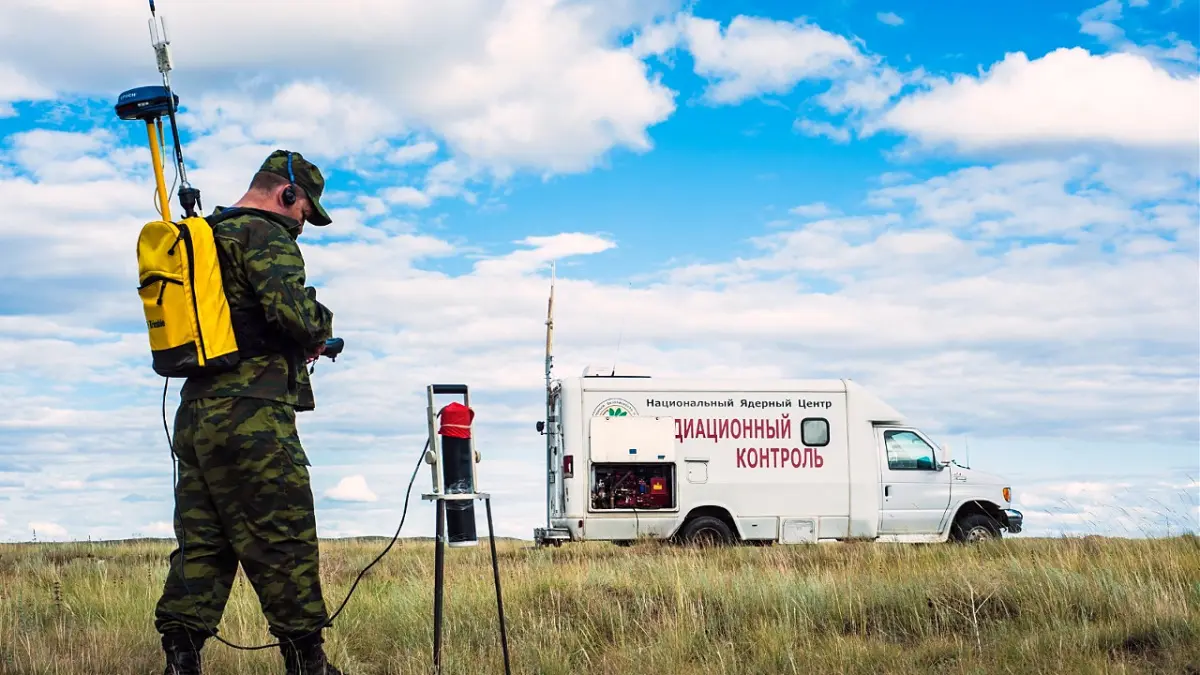
Astana, 5 November, . The National Nuclear Center of Kazakhstan has been designated the national operator for radioactive waste management: the order was signed on 30 October by the chairman of the Atomic Energy Agency, the agency said.
The decision implements the law “On Radioactive Waste Management” of 7 July 2026. Order No. 129-n/k also approves the regulations on the operator’s activity. The National Nuclear Center was created in 1992 and, according to the agency’s note, has considerable scientific and technical potential and many years of experience in the nuclear industry: it works on nuclear and radiation safety, studies the consequences of nuclear tests and solves scientific and technical tasks on radioactive waste.
The operator will handle waste safely. The key direction will be building and running infrastructure for its disposal, plus closing such facilities and subsequent monitoring. It will also be entrusted with eliminating and mothballing nuclear legacy facilities that are state property or are to be transferred to the state, and with work to eliminate the consequences of uranium mining and processing. Waste in the country has accumulated from past nuclear tests and uranium mining and processing, and today it arises at nuclear installations, uranium mining and processing enterprises, and in industry, medicine and science; it will also arise at future nuclear power plants.
What it means: Waste accumulated over decades now has a single responsible performer, but so far its tasks have been defined, not dates and sites: where the disposal facility will be, what it will cost and when it will open, the agency did not say.
Who benefits: In the agency’s view, the population and the environment: reliable isolation of waste for a long time will reduce radiation risks, and the problem of accumulated waste will not fall on future generations. Developing nuclear power also requires ready disposal infrastructure.
Background: Radioactive waste is material and substances with radionuclides above permitted levels that will no longer be used; it cannot be thrown away in the ordinary way, so it is isolated for a long time in special repositories, which is called disposal. “Nuclear legacy” means facilities left over from past activity in the nuclear sphere that require elimination or mothballing. Closing a disposal facility and subsequent monitoring mean that it is watched even after it stops accepting waste.



