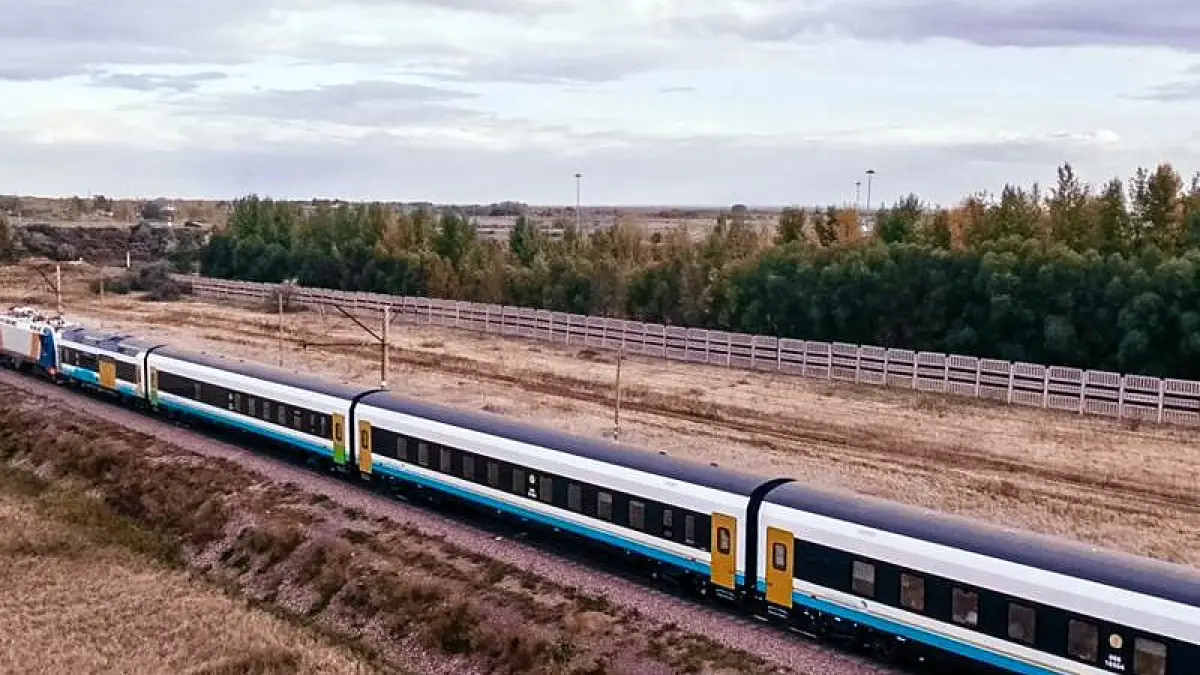
Astana, 20 November. Passenger train No. 47/48 Nurly Zhol — Atyrau will run with new Kazakh-made Stadler carriages from 23 November, the Kazinform agency reported.
The first service leaves Astana on 23 November and Atyrau on 25 November, after which the train will run every other day.
The train has nine carriages. They have climate control, individual lighting, sockets, CCTV, luggage space, a buffet and facilities for passengers with reduced mobility. According to the national carrier’s data cited by azh.kz, a compartment carriage seats 40 and an open-plan carriage 56. The carriages operate in temperatures from −50 to +45 °C and have a service life of 40 years. Carriage No. 4 remains women-only: tickets for it are sold only to women, and boys under seven travel with them. Tickets can be bought at bilet.railways.kz and at ticket offices.
The Atyrau route is the third for the new carriages. Train No. 3/4 Astana — Almaty received them on 11 November and No. 153/154 Astana — Semey on 13 November. Next, according to Informburo, should be the Nurly Zhol — Kyzylorda route via Zhezkazgan, which is to be switched to Stadler carriages by mid-December, when a new timetable takes effect.
The carriages are made by Stadler Kazakhstan LLP under a contract with Passenger Transportation JSC. Journey times and ticket prices for the new train to Atyrau were not given.
What it means: The new carriages are going onto the longest of the three routes, from the capital to oil-rich Atyrau, and the western region gets the same rolling stock as services to Almaty and Semey.
Who benefits: Passengers on train No. 47/48, who get air conditioning, sockets and facilities for people with reduced mobility. For the carrier it is a continuation of replacing a worn-out fleet.
Background: According to KTZ data cited by Airpress, Passenger Transportation JSC already has more than 100 Stadler carriages; Stadler Kazakhstan is to produce 142 carriages by the end of 2026 and 557 by 2030 under the contract.
We have also reported that Stadler carriages first entered service on the Astana — Almaty route.



