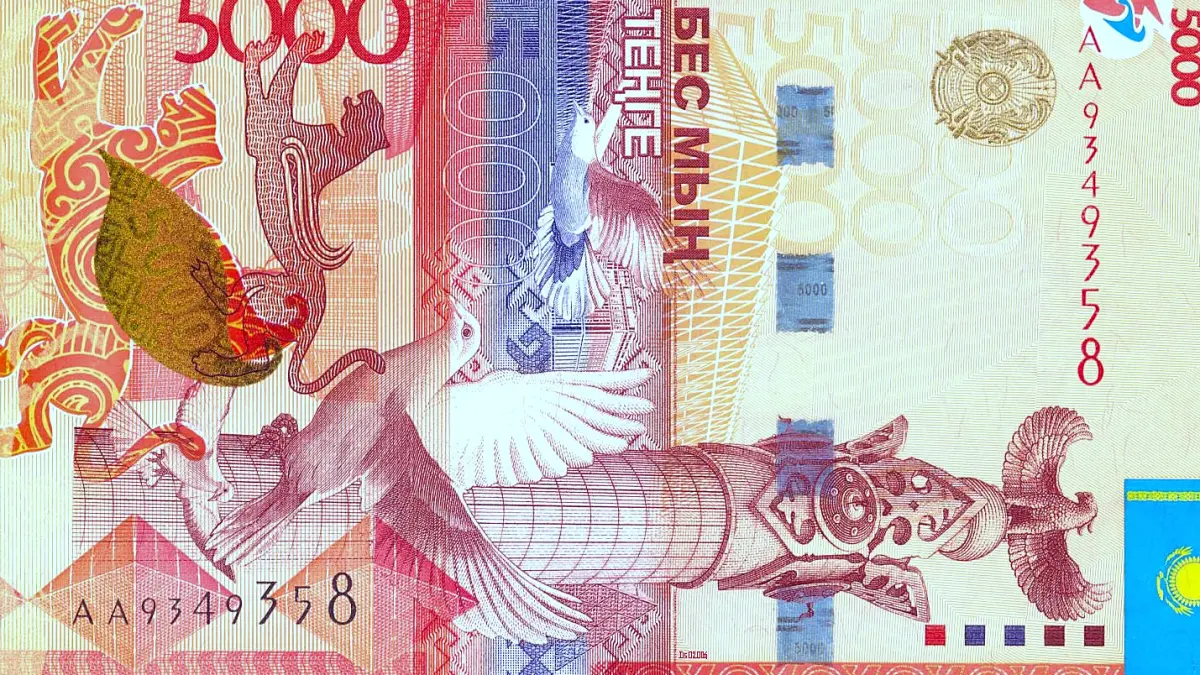
Almaty, 20 November. The National Bank set the official dollar rate for 21 November at 455 tenge, 6.28 tenge higher than a day earlier, when it stood at 448.72 tenge.
Weekend transactions will also be calculated at this rate. Over the week since 16 November, when the official rate was 444.3 tenge, the dollar has risen by 10.70 tenge, or about 2.4%.
On the Kazakhstan Stock Exchange (KASE) the weighted average dollar rate for next-day settlement at the close of trading on 20 November was 455.32 tenge, the tenge losing 6.19 over the day. Turnover reached $825.627 million in 1,689 trades. During the day the dollar traded between 451.24 and 457.40 tenge, and the last trade went through at 456.50.
Other currencies also rose for 21 November. The official euro rate is 498.77 tenge against 493.86 on 20 November, the rouble 5.56 against 5.49 and the yuan 68.12 against 67.31. Over the week the yuan gained about 2.3% and the euro about 1.6%.
Neither the National Bank nor the exchange gave reasons for the weakening over these days. The regulator’s latest explanation concerns October results: the tenge then weakened by about 3%, to 453.77 to the dollar, and the National Bank made no interventions. In its statement the regulator promised that it “will continue to adhere to a flexible exchange rate regime”, stepping in only to rule out sharp speculative jumps. The current rate has thus returned to its end-October level after a brief strengthening in early November.
Overnight money on the exchange became slightly cheaper on 20 November: the TONIA indicator, the average one-day repo rate, stood at 14.76% a year, and the dollar SWAP-1D rate at 10.38%. Brent crude cost $91.63 a barrel by 18:00 Almaty time, 0.38% less than a day earlier.
The same day KASE said the yuan–tenge pair was also growing in turnover. Trading in it over ten months of 2026 reached 23.1 billion yuan, already more than in the whole of last year; it is the exchange’s third-largest currency pair after the dollar and the rouble, accounting for 2.8% of spot trading. Since 2025 Kazakh issuers have placed yuan bonds worth 14.9 billion yuan on KASE, Ainagul Iskakova, Deputy Chairman of the Management Board of the exchange, told a Bank of China seminar in Hong Kong.
What it means: In a week the tenge lost about 2.4% against the dollar and almost as much against the yuan, and it will see out the weekend at 455. The regulator gave no explanation, but the move still fits within the October level at which the National Bank stayed out of the market.
Who benefits: The sources do not say. Exporters earning in dollars and yuan get more tenge for each unit of currency, while importers and borrowers with foreign-currency debt pay more.
Background: The IMF mission that completed its work on 17 November expects inflation of 9.6% by the end of the year and advises raising the base rate; the National Bank cut it to 15.75% on 23 October, and the next decision is due on 4 December.
We have also reported that the dollar gained 4.56 tenge in a day to 448.72 and that the IMF expects 9.6% inflation by the end of the year and advises raising the base rate.



