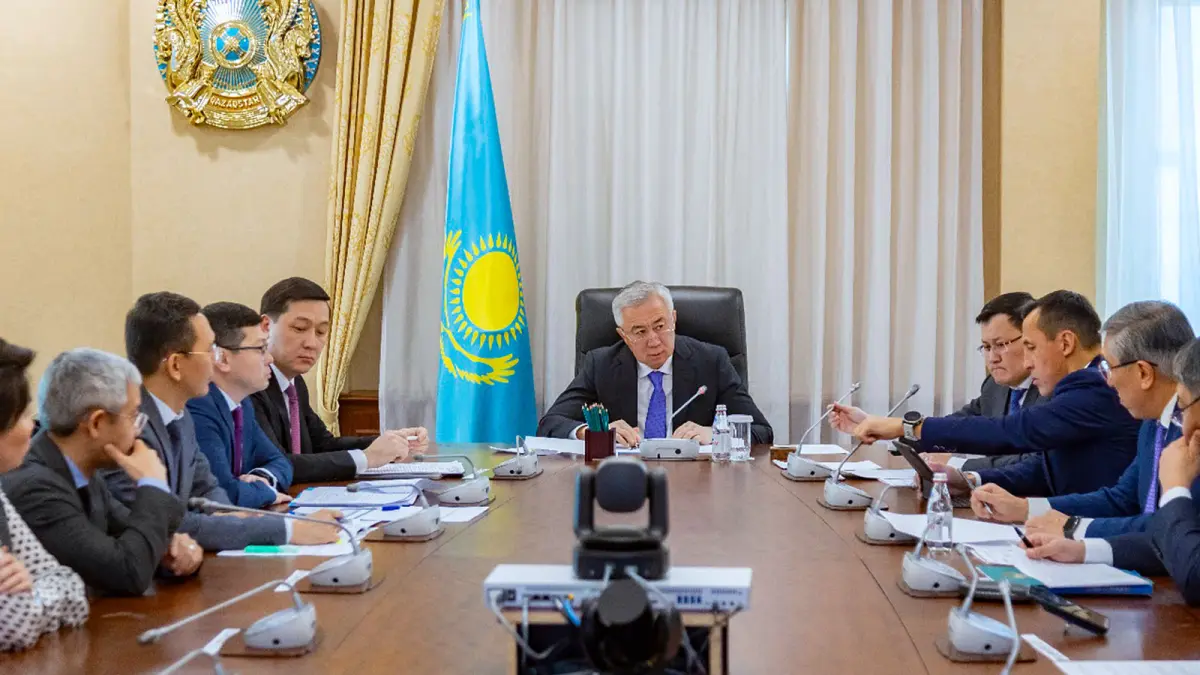
Astana, 20 November. The Project Office for implementing the Tax Code approved two amendments: one exempting citizens from individual income tax (IIT) when problem debts are forgiven, and one granting tax breaks to light industry.
The meeting, the thirtieth, was chaired by Deputy Prime Minister and Minister of National Economy Serik Zhumangarin, the Government said.
The first amendment concerns borrowers whose problem debt is forgiven by a bank or a microfinance organisation (MFO). It is proposed to exempt individuals from IIT on such forgiveness “without additional requirements for borrowers, but within the established limits”. According to the Government, it is practically impossible to provide in law for every life circumstance in which a borrower cannot pay, so a single approach was chosen. At present a written-off debt can count as income on which a citizen pays tax. At the same time it is proposed to halve the write-off limits: from 10% to 5% of the loan portfolio a year for banks and from 20% to 10% for MFOs. If a lender writes off more than the limit, it will recognise income on the excess and itself withhold IIT on it as a tax agent.
The second amendment is aimed at light industry companies. To obtain the breaks, a company will sign an agreement with the Ministry of Industry and Construction on increasing localisation and then a special investment contract. Under it, the company can pay no or less land tax, property tax, land-use fees and corporate income tax (CIT). If the contract is terminated through the company’s fault, “the tax preferences will be cancelled from the beginning of the tax period in which the violation was committed”. The measure is tied to the Comprehensive Plan for the Development of Light Industry for 2026–2030.
At the same meeting Saltanat Abdikarimova, representing the association of light industry companies, said garment makers pay value added tax (VAT) on imported fabric immediately and in full, while payment for finished goods arrives months later, sometimes after nine months. The State Revenue Committee proposed considering the existing mechanism for paying VAT on raw material imports in instalments. That proposal was only discussed and is not among the approved amendments.
Both approved amendments, according to the Government, will go into the general package of changes to the Tax Code; the localisation measures will also require changes to sectoral legislation. The statement does not say when the package will be submitted to the Kurultai or from what date the rules will apply.
What it means: The state proposes not to tax debt forgiven to a citizen, but also not to let lenders write off too much: the limits are halved, and above them the bank or MFO itself will withhold the tax. For light industry, tax breaks will be tied to localisation commitments.
Who benefits: For borrowers with problem loans, the amendment removes tax on the forgiven amount. Banks and MFOs get a tighter write-off ceiling, while light industry companies get tax breaks in exchange for localising production.
Background: The new Tax Code has been in force since 1 January 2026; the Project Office under the Government collects and discusses amendments to it, which then go forward as a package.



